
Springtime brings with it fresh life, blooming flowers, and in some parts of the country, incredible storms. The old expression that March comes in like a lion and goes out like a lamb holds particularly true in the Southeast and Midwest, where spring storms are accompanied by damaging, dangerous tornadoes.
Meteorological science has advanced in amazing ways. People now have a much better idea when dangerous weather is on the way, but only if they pay attention — and even then, it can sometimes be hard to hear the alert if there’s a lot going on in the home.
Smart lights can alert you to severe weather, and the visual aspect of your lights changing color will warn you to take cover — or to at least be on the lookout for the potential of dangerous weather. The key lies in linking your smart lights to the National Weather Service through a tool like IFTTT.
RSS feeds might save your life
When nature acts out, all you can do is take cover. An EF5 tornado has wind speeds over 200 miles per hour and sometimes as high as 320 miles per hour. These twisters can stay on the ground for miles and leave a swath of destruction in their path.
Seeking shelter is the only option available to someone in the path of one of these storms. Even a relatively “weak” tornado can tear roofs from homes and leave thousands of dollars of damage in its wake.
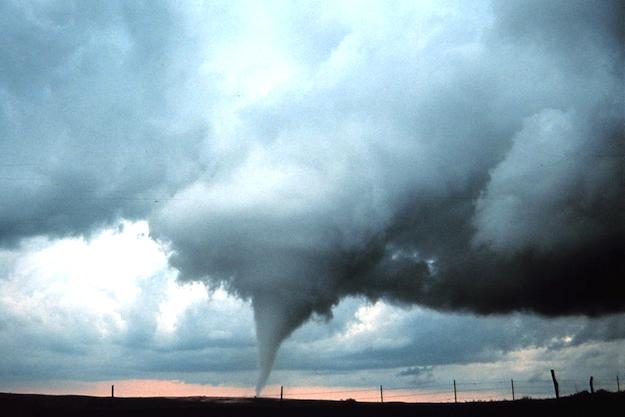
The National Weather Service provides real-time updates to the entire country regarding potential severe weather. When conditions are ripe for a tornado to form, that’s called a tornado watch. It means a tornado has the potential to appear within a series of storms. When one is actually spotted, whether in person or on Doppler radar, a tornado warning is issued.
The National Weather Service’s RSS feed is a great tool to keep on hand, if only for knowing the weather in your region. You will receive an alert whenever a weather alert is issued for your county or your zone.
It becomes even more useful if you tie it to IFTTT.
Yellow means watch out, red means duck
One of IFTTT’s triggers is an RSS feed. You will need the URL for your area, but that’s easy to find. Go to the National Weather Service website and scroll down until you find your state. Choose your state, and then choose whether to sort by zone or county.
Think of zones as more focused areas. In many cases, the county and zone will be the same, but larger counties may have separate zones. For example, Atlanta, Georgia is found in Fulton County, but Fulton County is split into two zones: North Fulton and South Fulton.
Click the code beside your county or zone name and then copy the URL. Enter this into the “Feed URL” section of IFTTT and create your trigger.


Now choose your brand of smart lights from the “Then That” list. IFTTT is compatible with a huge range of brands, including major names like Philips Hue and LIFX. Choose your lights and set the colors to change according to your preferences.
You can go simple and change your lights to yellow or red whenever an alert is issued, or you can make the recipe more complicated and change the colors to match specific types of alerts. For instance, maybe you set the colors to green for a flash flood warning, yellow for a severe thunderstorm warning, and red for a tornado warning.
If the sky is overcast (or it’s night) and the lights suddenly change colors, you know to brace yourself.
A lifesaver for the hearing impaired
Almost everyone knows the steady beep-beep-beep TVs make whenever a storm warning is issued. It grabs your attention long enough to read the ticker at the bottom of the screen showing what the threat is and what counties are in danger.
But what about those that don’t hear as well? If you or a family member has impaired hearing or is totally deaf, you might not know to look out for severe weather. It’s one thing when a storm has been in the news for a week — it’s something else entirely when these storms pop up from nowhere.

A visual alert like a changing light color will catch the attention of a deaf person when audible cues cannot. When the worst nature can offer is bearing down on a neighborhood, this feature can save a life.
Even if you are in perfect health, an additional warning system only helps make your home safer. During this time of year when storms are unpredictable and even routine rain showers sometimes turn into something much more powerful, stay tuned to your weather radio and let your smart lights act as a secondary warning system.


