Have you ever installed an outdoor security camera, only to realize it’s out of range of your Wi-Fi? Does your neighborhood often lose power during storms? Things like Wi-Fi extenders can help with hardware inside the house, but they rarely help much with outdoor devices. And, in terms of losing power: There will always be weather, whether you like it or not. While many major camera brands utilize battery power, a battery only goes so far if the Wi-Fi feeding your camera goes down. Luckily, big tech has caught on to these troubles. Enter Amazon Sidewalk.
Announced in 2019, Sidewalk is Amazon’s idea of community networking for your street, neighborhood, apartment building, etc. If your Wi-Fi drops or an outdoor smart device is too far away from your router to keep a steady connection, Sidewalk will act as a backup network that your smart home devices can tap into. The best part: Amazon doesn’t plan on charging for Sidewalk access (at least not yet).
How does it work?

The actual journey of the Sidewalk signal begins in our own homes. Devices certified as Sidewalk Bridges (predominately Ring cameras and Echo speakers) use a mere fragment of your personal network bandwidth to act as Sidewalk transmitters. The Bridge devices broadcast the Sidewalk network over a series of local low-bandwidth frequencies unless you opt to disable Sidewalk on your device. But think of it this way: The more homes in your neighborhood that are broadcasting, the stronger your neighborhood Sidewalk network will be.
Owners of existing Echo and Ring products will be offered a software update when Sidewalk goes live later this year. Once updated, these devices will be Sidewalk-enabled and will be able to use Bluetooth Low Energy (BLE) frequencies for short-range network expansion. This is great for things like easier device pairing, particularly for outdoor cameras and lights. The Ring Spotlight and Floodlight Cam, as well as the newest Echo speaker and Echo Show 10, will be able to transmit Sidewalk using BLE, as well as the 900Mhz radio spectrum. In terms of neighborhood coverage, Amazon claims that devices broadcasting over the 900Mhz spectrum will be capable of expanding a single home’s network reach by up to half a mile. Quite impressive.
What devices are compatible?
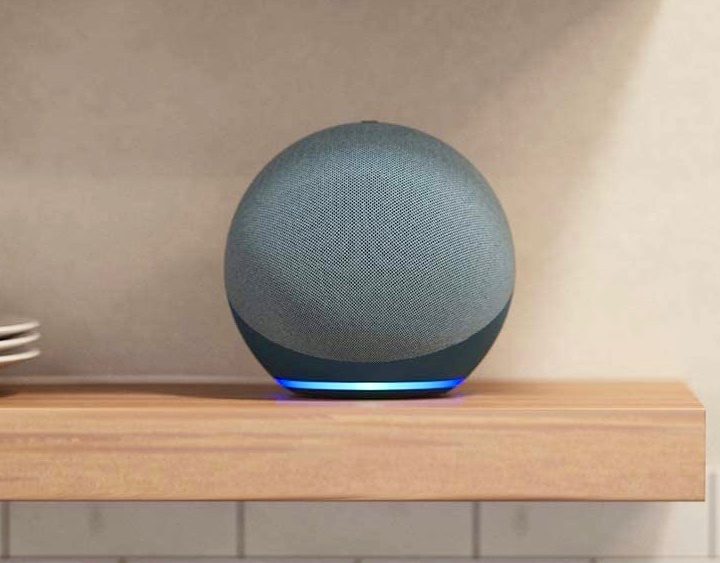
Pretty much every Amazon Echo product will be capable of broadcasting Sidewalk (with the exception of the first-generation Echo speaker and the Echo Look selfie cam). Most older devices will only be capable of short-range Sidewalk features — by way of BLE frequencies, though. The fourth-gen Echo speaker, Echo Show 10, Ring Spotlight, and Ring Floodlight Cam will be capable of both BLE and 900Mhz receiving and transmission.

As it stands, Tile will be Amazon’s first third-party Sidewalk developer. Once Sidewalk-enabled, Tile owners can use Sidewalk to keep their Tile trackers online beyond their normal network range. This will come in handy for locating things like misplaced car keys, wallets, and purses, as well as lost pets.
Privacy and encryption
With all of this data flowing around on expanded networks, it’s hard not to think of how safe our data will be. Fortunately, this was one of Amazon’s chief concerns in developing Sidewalk from the get-go. Outlined extensively in a company white paper, data being passed over the Sidewalk network is not accessible by Amazon or other entities, including neighbors that you may be broadcasting Sidewalk to. As an extra precaution, three layers of encryption are in place to safeguard any data being sent over the neighborhood network.
All Sidewalk-enabled devices and applications are also required to use the same level of encryption as the Sidewalk network. Anyone that purchases a Sidewalk Bridge device will be glad to know that Amazon is also imposing upload limits and bandwidth caps, so your personal bandwidth will never be drained or compromised.
What’s to come?

Once Sidewalk is live, we expect the next many waves of Amazon (and third-party) smart home hardware to always feature some kind of Sidewalk compatibility. What next-gen devices will be Sidewalk Bridges or only Sidewalk-enabled remains to be seen. From a community standpoint, Amazon already has plans to use Sidewalk as a study tool for the American Red Cross. Amazon aims to see if they can use Sidewalk to track blood donations from collection centers to donation sites. The data gathered will be used to determine what changes could be made to the nation’s blood supply chain.
We’ll be sure to update this piece once we see Sidewalk in action later this year.