While lidar has been around for years, it’s now more affordable and accessible than ever, so we’re seeing this technology show up on a variety of professional applications … and even in the smart home. Here’s what you should know about this technology, where it’s heading, and what products you can expect to see it in.
What is lidar technology?
Lidar stands for Light Detection and Ranging, a similar term to radar, or Radio Detection and Ranging. While radar uses radio waves and receivers, lidar uses light: A lidar system is typically composed of three important parts:
Laser: The laser sends out precisely generated light pulses. As you may remember from science class, light is bouncy — at least some wavelengths reflect off nearly every material. These light pulses are designed to reflect back when they encounter matter.
Scanner: The scanner is calibrated to detect the returning light pulses that the laser has produced, after they have been reflected off objects.
GPS receiver: The receiver calculates exactly how far the light traveled based on the position of the lidar instrument, allowing for very, very accurate mapping of a space and the position of objects.
In addition to these components, lidar can also be divided into two important application types, topographic and bathymetric:
Topographic: These lidar systems are designed to map land and open spaces, and typically use wavelengths near the infrared part of the light spectrum.
Bathymetric: These systems are designed to measure landscapes underwater, like riverbeds or the ocean floor, and they use a type of green light that easily passes through water (this is also why water has a greenish tint in nature).
Lidar was developed as a potent alternative to radar with a variety of applications. It can be useful in environments where radar doesn’t work as well, offer more precise measurements than radar can, and is generally more versatile.
What is lidar being used for today?
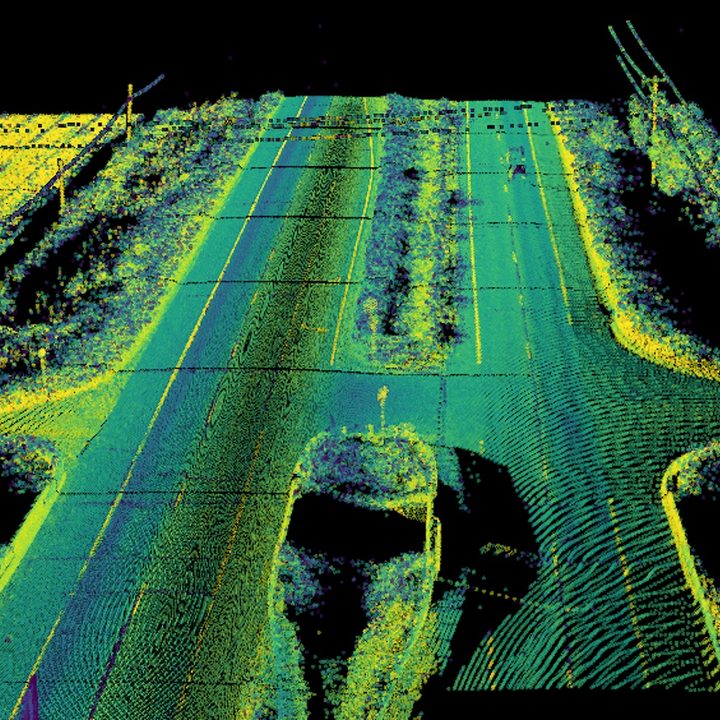
Lidar can be used both in the air on drones or other aircraft and on the ground on trucks or stationary platforms. If something on earth is being professionally measured, especially when it comes to distance, there’s a good chance that lidar will be involved. Specific uses include:
- Scanning coastlines: Lidar is used to update maps of coastlines and similar landscapes with more accurate information. Lidar is useful for all kinds of mapping, but is particularly well-suited to measure the often-complex details of a coast, and track events like erosion, flooding, etc.
- Vehicles: Lidar on vehicles can help map surrounding spaces, which is very useful for self-driving cars and related applications. Interestingly, Tesla is one of the few brands that does not use lidar for its autonomous cars (Elon Musk is apparently not a fan), but is testing out some lidar sensors for future applications. You can also find the technology on the vehicles NASA is designing to explore the moon and Mars.
- Creating 3D models: Architects and construction firms use lidar to measure spaces and construct models that can be used for planning new projects or alterations. This can also be very useful in creating visual effects for movies, shows, and video games!
- Surveying: Surveys help map out property lines and borders, so they need to be very accurate. Lidar is very helpful for this process as it excels in measuring distances.
- iPhones: Did you know that your iPhone and iPad have lidar, too? It helps make things like the Measure app more accurate.
Wait, what does lidar have to do with smart homes?
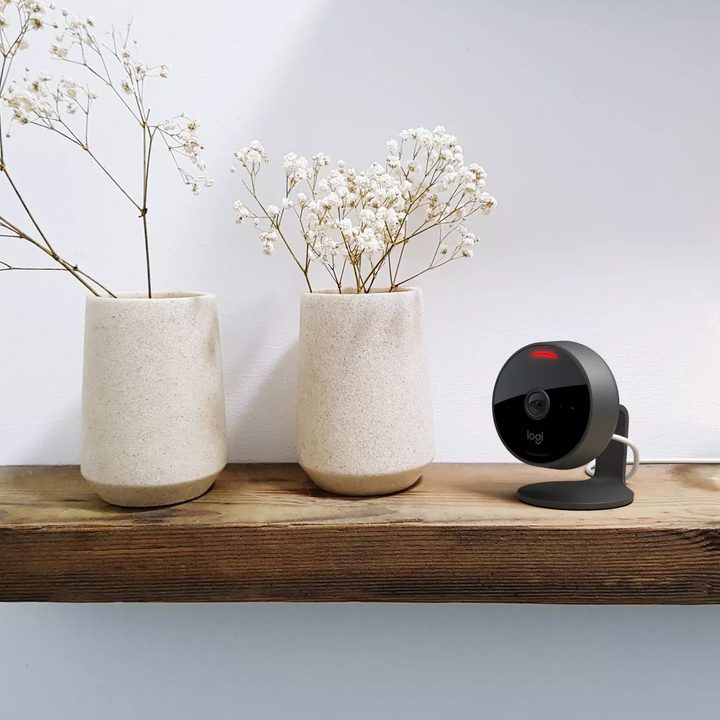
While we’ve been talking about lidar as an outdoor technology, it’s important to note that smaller versions can be used indoors as well — which brings us to smart home applications.
Because lidar can measure distance so quickly, it’s useful for any devices that need to track the price measurements of a room, where furniture is, and even where people are and how people are moving through a space.
Lidar also has some advantages over a traditional camera or motion sensor, as it’s less prone to mistakes and can work in a wide variety of weather conditions, so it’s also a potential technology for smart security cams. It’s also limited when it comes to capturing and detecting faces, which makes it a possible privacy-friendly alternative to traditional cams.
What specific kind of smart home devices use lidar?

Lidar is a fairly new entrant in the smart home world, so the number of in-house devices using LiDAR is still limited. However, a few current — and interesting — examples include:
Robot vacuums: While the popular Roombas don’t use lidar for mapping a room (yet), some robot vacuums do. One example is Samsung’s JetBot 90 AI+, uses lidar to sense the surrounding area up to 20 feet, detecting spaces and objects for better navigation. You can easily spot if it’s using a lidar sensor because of the circular protrusion that hides away the spinning sensor inside. More importantly, lidar technology is helping robot vacuums to become more efficient with cleaning.
Home sensors for the elderly: Back in 2019, IBM Research ran a pilot project that installed lidar systems in the homes of the elderly. The goal was to see how well lidar functioned as a warning system for the elderly to detect falls and problems walking without being too invasive. If this application works out, we could start seeing lidar in assisted living facilities as well as aging-in-place remodels.
Security systems: Lidar is already being used in professional and home-based security systems like Leica’s BLK247 model, which are helpful for monitoring crowded spaces, tracking complex landscapes, and even measuring social distancing. As LiDAR becomes even more affordable, we may see it appearing in more smart security systems.