
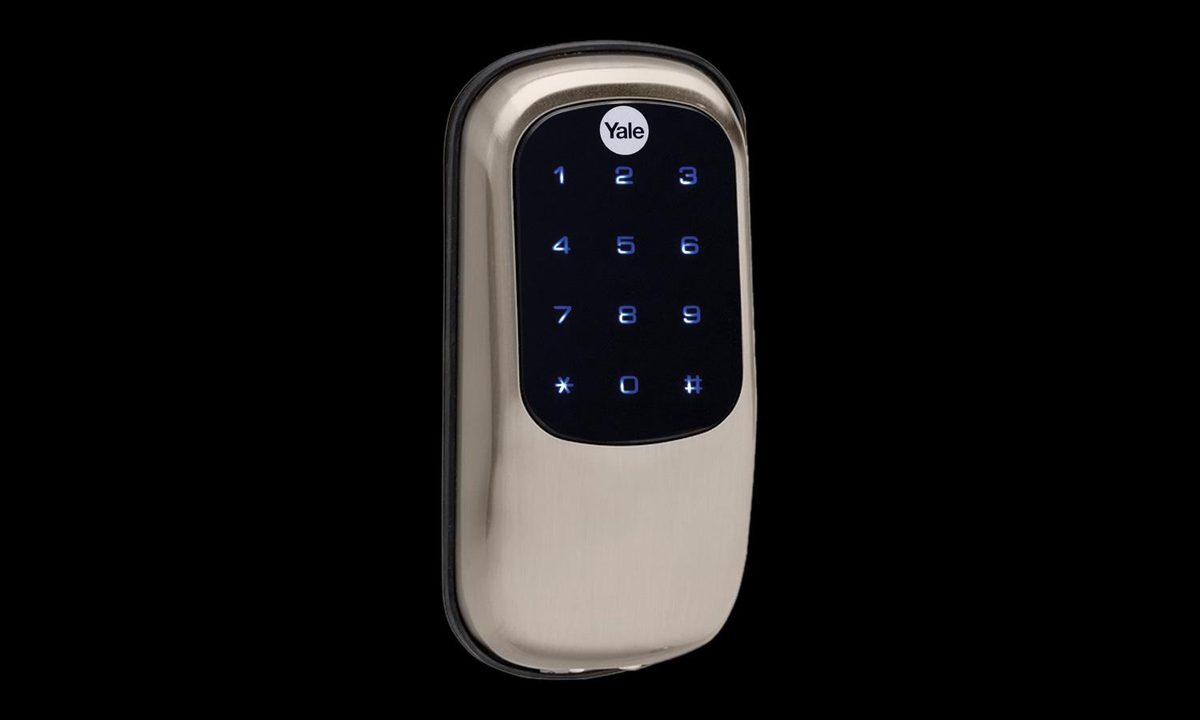
“Yale’s Real Living YRD240 Touchscreen Deadbolt is quiet, easy to install, attractive, and futureproof thanks to its standard Z-Wave integration.”
- Bright, responsive keypad
- Broad compatibility
- Quiet operation
- Relatively complex setup
- Expensive
“Why you can trust Digital Trends – We have a 20-year history of testing, reviewing, and rating products, services and apps to help you make a sound buying decision. Find out more about how we test and score products.“
New smart locks seem to hit the Web every week, but if you go to actually purchase any of them, you might find your immediate options are more limited than you realize. If you’d rather not hold out for the belated arrival of hyped-up locks like Goji, August, and others, Yale Real Living’s YRD240 Touchscreen Deadbolt offers a boatload of advanced functions, and you can get your hands on it right now.
We took one for a spin to see if it’s actually worth putting on your door.
Installation and setup
Despite all of its advanced functionality, installing this thing isn’t really any more difficult than installing a regular deadbolt. You’ll need a screwdriver and most likely a helping hand, but when all is said and done, the whole process shouldn’t take more than 20 minutes.
It’s clean, modern, and the buttons are hidden behind the sleek black face.
And that’s just to get the most basic features. If you want to squeeze all the juice you can get out of this thing, you’ll need to install the accompanying network module. Fortunately, that’s the easy part, so long as you already have a Z-Wave hub installed in your house somewhere. If you don’t, that’s a whole ‘nother can of worms you’ve got to open up.
Design
Aesthetically, we definitely dig this lock. It’s clean, modern, and the buttons are hidden behind the sleek black face, so it blends in better with your house than most keypad locks we’ve seen before. When pressed with the back of your hand, the display lights up to reveal the number pad, which can be seen easily even in full sunlight.

Functionally, the touchscreen buttons are fast and responsive, and give off a corresponding sound that lets you know each press has registered. The locking mechanism is smooth, fast, and also rather quiet, which we appreciated. Other automatic locks we’ve tried, such as Kwikset’s Kevo, led us to believe that all motorized locks are inherently noisy. Apparently that’s not the case. Yale has proven here that they can actually be quiet, which is lovely.
Another design feature we appreciated was the rubber backing behind the keypad and battery enclosure. Not only does this help protect the lock from water damage, it also protects the door itself from scuffs and scratches caused by the lock.
Features and use
There are dozens of other locks that grant you access with a code rather than a traditional key, so while the keypad on Yale’s product is definitely on the higher end of the spectrum, this feature isn’t particularly remarkable by itself.
What sets this lock apart is the optional network module, which has the ability to speak Z-Wave. If you’ve got a Z-Wave-compatible hub (they come in many forms: Wink, Staples Connect, Revolv, etc.) then you can access the full potential of the device.
As a normal code entry lock, it’s arguably one of the nicest and most thoughtfully-designed on the market.
This also makes it possible to incorporate Yale into automation flows that start with the door lock -– things like having your lights come on when your door unlocks, or making your security system flip on automatically when the door gets locked.
The functions you’ll have access to will vary depending on the particular Z-Wave hub and accompanying control app your using, but basically anything Z-Wave compatible is fair game, and likely linkable to your lock.
Thanks largely to rapidly expanding cross-compatibility between smart devices, and Yale’s proactivity in forming partnerships with other smart-home companies, the Real Living lock works with a pretty sizable amount of other gizmos, even some without Z-Wave. The list of compatible devices is only expanding, too, which means that, instead of becoming obsolete, this thing will become more capable over time.
Conclusion
If you’re in the market for a smart lock, or even just a regular code-lock, Yale Real Living’s YRD240 Touchscreen Deadbolt is definitely worth your consideration. As a normal code entry lock, it’s arguably one of the nicest and most thoughtfully-designed on the market. The keypad is bright and responsive, aesthetically pleasing, and the lock operates quietly. Should you ever decide to dip your toes into the world of home automation, all you need to do is pop in the network module and connect it to any Z-Wave compatible hub. It’s ready to become a smart lock at a moment’s notice.
As a smart lock, even when considered against other smart locks that are currently available, Yale is still a pretty solid choice. It doesn’t have the nifty one-touch activation features that Kevo offers, but the addition of Z-Wave gives it a much broader range of functions. This lock plays well with others, so if you’re in the market for a deadbolt that can be incorporated into an existing home automation setup, this one is definitely a worthy candidate.
Highs
- Bright, responsive keypad
- Broad compatibility
- Quiet operation
Lows
- Relatively complex setup
- Expensive


