  1. Home
  2. Mobile
  3. Legacy Archives

Android accounts for more than half the smartphone market in China

Add as a preferred source on Google

Android speed run fastWe’ve reported in the past that China is one of the fastest growing markets for smartphones, with demand seemingly multiplying on a daily basis. So naturally, this is one big market that most, if not all, players in the mobile world have their eyes on.

And now, according to a study from Kantar Worldpanel ComTech, and later reported by CNET, Google’s Android operating system is crushing the competition in the country, being the platform running on 51.4 percent of all active smartphones by the end of Q1, which is a 2.8 percent growth over its position at the end of the 2012’s fourth quarter.

Recommended Videos

Samsung devices are proving to be the fastest growing of the Android-run products in that market, accounting for 15.2 percent of all active devices. Craig Yu, the consumer insight director for Kantar Worldpanel ComTech, noted that the company’s Galaxy S4 sold a whopping 10 million units around the world in just a month. But China is a market that largely favors the more affordable smartphones, and Yu predicts that “the launch of Galaxy S4 Mini in the not too distant future will greatly increase its product reach in urban China.”

Trailing behind Android is Nokia’s Sybian, accounting for 23 percent of the market. While still impressive, it’s share is a drop of 2 percent from the previous quarter. This may be a temporary high, predicts Kantar, as Nokia is planning to phase out its older OS, which could cause it to drop down to third place, or even lower.

But for now, iOS is the bronze medalist, with just 19.9 percent of the market share. Perhaps if we finally do see the predicted affordable iPhone Mini introduced to the market, Apple may start to climb even higher. As Yu pointed out, the increase in smartphone use in the area will continue to climb as more affordable options become available.

Joshua Pramis
Spending a childhood engrossed in such technologically inspiring television shows like Voltron, Small Wonder, and Power…
Snapchat Planets Meaning: Order, Rankings, and How Friend Solar System Works
Snapchat Planets turns your best friends list into a solar system, and yes, your orbit says a lot
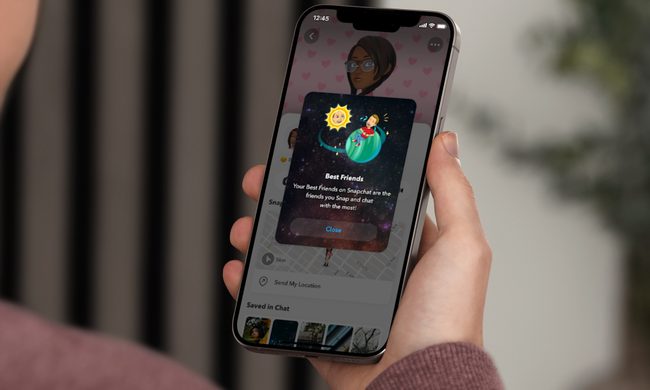
Snapchat Planets being shown on the Snapchat app on iPhone.

Snapchat+ includes several exclusive features, but few have generated as much curiosity as Snapchat Planets. Part of the app's Friend Solar System, it transforms your Best Friends list into a planetary ranking, assigning each of your top eight friends a planet based on how often you interact.

From Mercury, which represents your closest friend, to Neptune, which represents your eighth closest, the system offers a quick visual snapshot of your interactions. But what do the different planets actually mean, and how does Snapchat decide who gets which one?

Read more
How to use WhatsApp Web
We'll show you how to use WhatsApp on your desktop or laptop
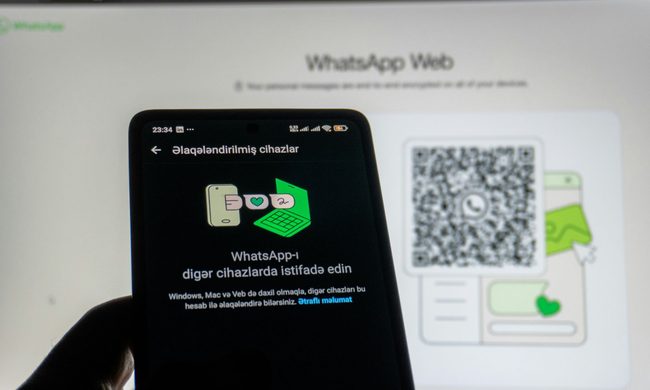
WhatsApp Web

As one of the most popular messaging services, you’ve already heard of WhatsApp. From its humble beginnings in 2009—two years before Apple introduced iMessage—to its acquisition by Facebook (now Meta) in 2014, WhatsApp has become the dominant messaging platform around the globe.

In recent years, it's grown even more potent with new features like video messages, self-destructing voice messages, the ability to edit sent messages, and more. We even finally got an WhatsApp iPad app in May 2025.

Read more
What is WhatsApp? How to use the app, tips, tricks, and more
From setting it up to mastering hidden features, here is your complete guide to WhatsApp.
WhatsApp app store listing open on iPhone

There's no shortage of messaging apps out there. The past decade has given us more options than we know what to do with, largely because smartphones demanded something better than plain old SMS.

Both the App Store and the Play Store are packed with apps that promise to revolutionize the way we communicate. Most of them didn't make it. The truth is, a messaging app is only as good as the number of people using it, and most apps never cross that threshold.

Read more