  1. Home
  2. Mobile
  3. Legacy Archives

Apple hits one billion podcast subscriptions via iTunes store

Add as a preferred source on Google

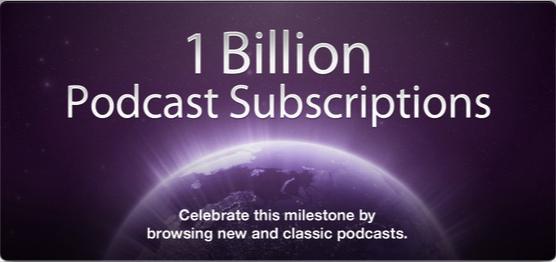
one billion podcasts appleApple on Monday announced a new milestone – one billion podcast subscriptions via its iTunes store.

The format, which allows anybody to create an audio or video show on any topic, arrived in the iTunes store eight years ago. Content producers include anyone from bedroom-based amateurs to global media organizations, between them offering a hugely diverse range of material.

Recommended Videos

“From comedy to hard news to sport to innovative educational content and so much more, podcasting has transformed the global media landscape,” Apple said in an announcement on its iTunes podcast page. “The heart of podcasting is finding your favorite voices in this exciting field, and subscribing to the best ones.” And then remembering to listen to them all. Actually, it’d be interesting to know how many enthusiastic downloaders of podcasts actually take the time to plow through them all. I mean, how many times have you excitedly subscribed to a show only to forget about it after a few listens, leaving your iPhone to gradually fill up with new episodes that sit there undisturbed until you get around to sorting them all out?

Anyway, the Cupertino company is marking the milestone by highlighting some of the most popular podcasts from across the eight years alongside a number of current and up-and-coming shows. The selection is country-specific, with US users offered classics such as Real Time with Bill Maher and Happy Tree Friends, and others including TEDTalks, The Rich Eisen Podcast and Aerial America.

Apple told Macworld this week that the iTunes store currently holds around 250,000 different podcasts in more than 100 languages that together add up to somewhere in the region of eight million episodes.

The Cupertino company launched a standalone iPod app for iOS last year, extracting it from the Music app, though it was widely criticized for being clunky and awkward to use. A recent update, however, improved the offering markedly, so much so that in his review DT’s AJ Dellinger was moved to describe it as a “fully functional and viable option for podcast addicts.”

Trevor Mogg
Contributing Editor
Not so many moons ago, Trevor moved from one tea-loving island nation that drives on the left (Britain) to another (Japan)…
Snapchat Planets Meaning: Order, Rankings, and How Friend Solar System Works
Snapchat Planets turns your best friends list into a solar system, and yes, your orbit says a lot
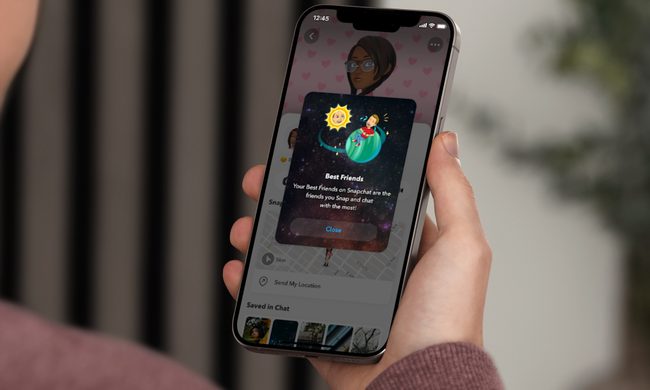
Snapchat Planets being shown on the Snapchat app on iPhone.

Snapchat+ includes several exclusive features, but few have generated as much curiosity as Snapchat Planets. Part of the app's Friend Solar System, it transforms your Best Friends list into a planetary ranking, assigning each of your top eight friends a planet based on how often you interact.

From Mercury, which represents your closest friend, to Neptune, which represents your eighth closest, the system offers a quick visual snapshot of your interactions. But what do the different planets actually mean, and how does Snapchat decide who gets which one?

Read more
How to use WhatsApp Web
We'll show you how to use WhatsApp on your desktop or laptop
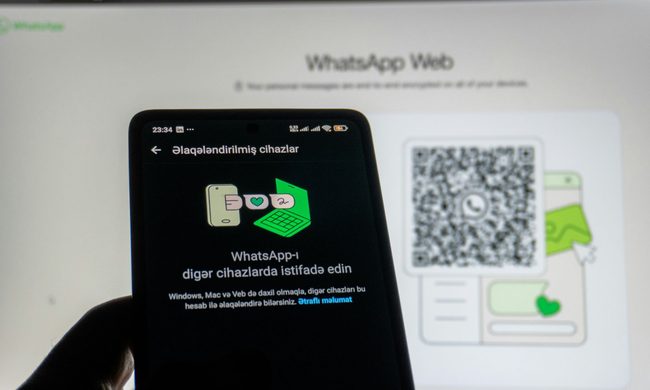
WhatsApp Web

As one of the most popular messaging services, you’ve already heard of WhatsApp. From its humble beginnings in 2009—two years before Apple introduced iMessage—to its acquisition by Facebook (now Meta) in 2014, WhatsApp has become the dominant messaging platform around the globe.

In recent years, it's grown even more potent with new features like video messages, self-destructing voice messages, the ability to edit sent messages, and more. We even finally got an WhatsApp iPad app in May 2025.

Read more
What is WhatsApp? How to use the app, tips, tricks, and more
From setting it up to mastering hidden features, here is your complete guide to WhatsApp.
WhatsApp app store listing open on iPhone

There's no shortage of messaging apps out there. The past decade has given us more options than we know what to do with, largely because smartphones demanded something better than plain old SMS.

Both the App Store and the Play Store are packed with apps that promise to revolutionize the way we communicate. Most of them didn't make it. The truth is, a messaging app is only as good as the number of people using it, and most apps never cross that threshold.

Read more