
In another long-winded blog post, Microsoft’s Steven Sinofsky has revealed the 35 teams behind Windows 8. Each of these teams is responsible for a certain aspect of Windows 8 and consists of about 25-40 people. Doing the math, that means that the Windows 8 development team is somewhere in the neighborhood of 875 – 1,400 people, some in Redmond and others scattered all around the world. This makes us wonder what the other 8,000 Microsoft Operations Group employees are doing every day, but we’re sure their working on something important, as are the 80,000 other employees at the tech giant.
Here are the 35 Windows 8 teams:
- App Compatibility and Device Compatibility
- App Store
- Applications and Media Experience
- App Experience
- Core Experience Evolved
- Device Connectivity
- Devices & Networking Experience
- Ecosystem Fundamentals
- Engineer Desktop
- Engineering System
- Enterprise Networking
- Global Experience
- Graphics Platform
- Hardware Developer Experience
- Human Interaction Platform
- Hyper-V
- In Control of Your PC
- Kernel Platform
- Licensing and Deployment
- Media Platform
- Networking Core
- Performance
- Presentation and Composition
- Reliability, Security, and Privacy
- Runtime Experience
- Search, View, and Command
- Security & Identity
- Storage & Files Systems
- Sustained Engineering
- Telemetry
- User-Centered Experience
- Windows Online
- Windows Update
- Wireless and Networking services
- XAML
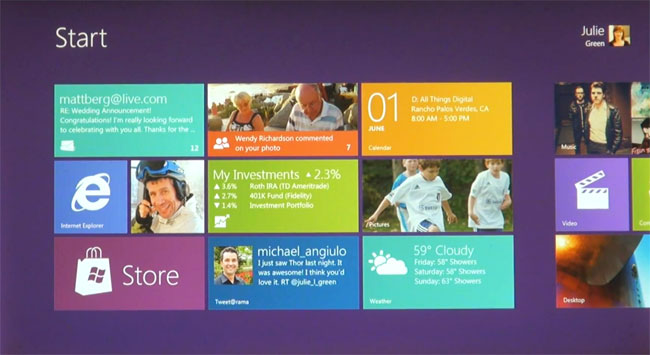
Many sites have noted that this is the first “official” confirmation that Windows 8 will have an app store of some kind. After all, there wouldn’t be an “App Store” team if there weren’t an app store. We’ve known that the app store was coming since Microsoft showed the first screenshots of Windows 8, which had a giant “Store” logo plastered all over them, looking similar to the Windows Phone app store logo. It will be interesting to see how much Microsoft pushes the store. Will it be like Apple and push almost everything through the app store or continue pushing DVDs and boxed content?
As for the rest of the groups, we’re hoping Microsoft favors the “User-Centered Experience” and “Reliability, Security, and Privacy” groups above all others, though we hope that “Storage & File Systems” gets some attention. Finally, the “Windows Update” group needs to finally think up a new and more seamless way to deliver vital and nonvital updates to users. It’s still not uncommon on Windows 7 to see updates sitting in the taskbar for weeks or months before being installed. It would also be great if the process wasn’t such a hassle, requiring a full reboot. Hopefully Microsoft takes some cues from smartphones and makes application updating, installing, and uninstalling a much more painless process.
For fun, we went back and found the teams that made up Windows 7. In a 2008 blog post, Steven Sinofsky revealed the 25 Windows 7 teams, each of which averaged 40 employees, meaning the Windows 7 team was about 1,000 people strong, likely somewhat smaller than the Windows 8 team.
Here are 23 of the 25 Windows 7 teams:
- Applets and Gadgets
- Assistance and Support Technologies
- Core User Experience
- Customer Engineering and Telemetry
- Deployment and Component Platform
- Desktop Graphics
- Devices and Media
- Devices and Storage
- Documents and Printing
- Engineering System and Tools
- File System
- Find and Organize
- Fundamentals
- Internet Explorer (including IE 8 down-level)
- International
- Kernel & VM
- Media Center
- Networking – Core
- Networking – Enterprise
- Networking – Wireless
- Security
- User Interface Platform
- Windows App Platform
Sinofsky left out 2 groups. We don’t know what they were.
Looking at the two lists next to one another, it’s clear that a lot has changed with the structure of the Windows 8 team, and much of it has to do with expanding and splitting up teams. While core items like the Kernel still have their own team, many others appear to have been split up entirely and many new teams exist. For example, the “Core user Experience” team from Windows 7 has split and become the “Core Experience Evolved” and “User-Centered Experience” teams. One of these teams is probably responsible for the Windows 7-like interface of Windows 8 and the other is working on the Live Tiles interface. The “Windows App Platform” team also appears to have split into four distinct App-related groups on the Windows 8 team. Other changes appear to be sillier in nature. The “Networking – Enterprise” team, for example, has been renamed to the “Enterprise Networking” team. What a needed change.
Without knowing exactly what these teams are actually responsible for, it’s difficult to speculate further, but the list is interesting. If any of you are more knowledgeable on Microsoft’s corporate structure, please enlighten us in the comments section.


