1. Home
  2. Mobile
  3. Legacy Archives

Bezel-less smartphones with fingerprint scanning touchscreens out before summer

Add as a preferred source on Google

Fingerprint scanning technology was a major trend at Mobile World Congress this year, and according to the CEO of CrucialTec, one of main firms producing biometric readers for mobiles, it won’t be long before the scanners make the jump from buttons to the screen itself. Speaking to the Korea Herald, CEO Charles Ahn revealed CrucialTec was on the brink of revealing a touchscreen panel with the fingerprint scanner built-in.

At the moment, we must swipe or press our fingertips against a dedicated button – the Home button on the iPhone, or the rear touch panel on the HTC One Max for example – but this would render such features unnecessary. Ahn said only two companies had the ability to produce such panels, called a Matrix-Switching Touchscreen Panel or MS-TSP, and confidently stated CrucialTec was more than a year ahead of its competition.

Recommended Videos

Amazingly, he says we should expect to see phones with a touchscreen fingerprint scanner released before July this year. If so, this would make the Galaxy S5 and the iPhone 5S look a little old. Future versions of the MS-TSP could also contain health monitoring sensors, combining another separate feature from the Galaxy S5 into one component.

However, while a touchscreen with an embedded fingerprint scanner will be cool, its introduction could bring an even cooler feature with it. Apparently, these Matrix-Switching panels will “usher in an era of bezel-free phones,” according to Ahn. He says this is due to the MS-TSP only using a single screen layer, rather than the four on most panels today. We’re already seeing phones with tiny bezels, such as the LG G2, so this could be the jolt needed to minimize them almost entirely.

CrucialTec is an interesting company, and we took a close look at its biometric scanning tech at Mobile World Congress in 2013. Ahn’s predictions are exciting, but the timeframe seems almost too good to be true. We’ll find out if it is within the next six months.

Andy Boxall
Andy has written about mobile technology for almost a decade. From 2G to 5G and smartphone to smartwatch, Andy knows tech.
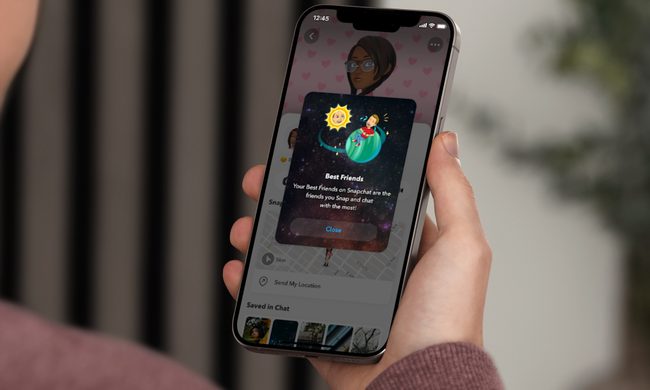
Snapchat Planets: What’s the order, and what do they mean?
Snapchat Planets turns your best friends list into a solar system, and yes, your orbit says a lot
Snapchat Planets being shown on the Snapchat app on iPhone.

Snapchat is already packed with little symbols that can be weirdly hard to decode. You have streaks, emojis, badges, scores, Best Friends, and if you use Snapchat Plus, a tiny solar system that shows where you sit in someone’s closest-friends list.

The feature is called Friend Solar System, though most people just call it Snapchat Planets. It takes your position in a friend’s Snapchat orbit and turns it into a planet. From Mercury to Neptune, these celestial bodies signify how close a person is to you.

Read more
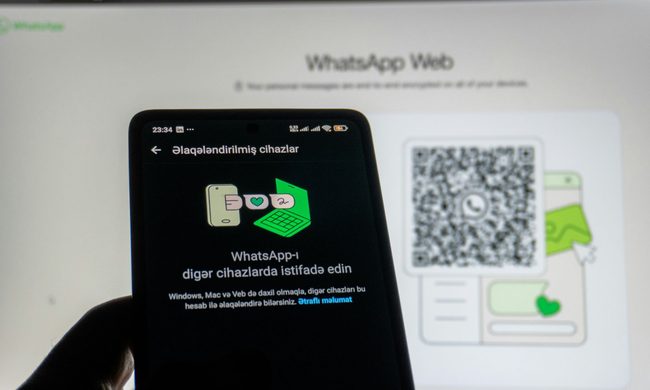
How to use WhatsApp Web
We'll show you how to use WhatsApp on your desktop or laptop
WhatsApp Web

As one of the most popular messaging services, you’ve already heard of WhatsApp. From its humble beginnings in 2009—two years before Apple introduced iMessage—to its acquisition by Facebook (now Meta) in 2014, WhatsApp has become the dominant messaging platform around the globe.

In recent years, it's grown even more potent with new features like video messages, self-destructing voice messages, the ability to edit sent messages, and more. We even finally got an WhatsApp iPad app in May 2025.

Read more
What is WhatsApp? How to use the app, tips, tricks, and more
From setting it up to mastering hidden features, here is your complete guide to WhatsApp.
Electronics, Phone, Mobile Phone

There's no shortage of messaging apps out there. The past decade has given us more options than we know what to do with, largely because smartphones demanded something better than plain old SMS.

Both the App Store and the Play Store are packed with apps that promise to revolutionize the way we communicate. Most of them didn't make it. The truth is, a messaging app is only as good as the number of people using it, and most apps never cross that threshold.

Read more