  1. Home
  2. Mobile
  3. Legacy Archives

Customize your phone with these E Ink cases

Add as a preferred source on Google

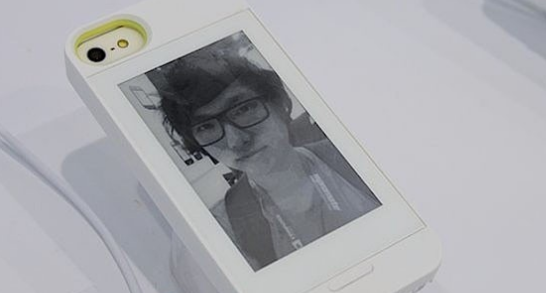
E Ink iPhone case
Image via Engadget Image used with permission by copyright holder

Some smartphone owners want to appreciate their phone in all its natural beauty, but the rest of us throw on a case; if not primarily to protect the phone, to showcase our personality. Talk about taking smartphone customization to the next level. But for the most part, we’re limited to someone else’s design. Sure, you can shell out some cash to customize your own case, but it’s a one-time deal, and to change it, you’ll have to pay up again.

Recommended Videos

Taking customization one step further, an upstart company called Gajah has developed a case with an E Ink display on the back, according to Engadget. The case, which it calls InkCase, will initially be made available for the iPhone 5, and has a 3.5-inch, 360 x 600 pixel display and Bluetooth 4.0. A Samsung Galaxy Note 2 version will carry a 4.3-inch, 600 x 800 pixel display and Bluetooth 2.1.

While additional product specs aren’t available, we imagine the cases will have similar functionality to the Popslate E-Ink cases, which were announced six months ago, but still haven’t hit the market. If true, we can expect that Gajah’s cases will be able to display any image from your phone’s gallery, allowing you to change the look of your case in a matter of seconds.

On top of that, it’s possible these cases could also take advantage of the minute amount of power it takes to run an E Ink screen to display notifications, maps, and other basic functions without having to switch your main screen on, which is a bigger drain on the battery.

The cases will roll out in China and Malaysia first, with the Galaxy Note 2 model going for $130 and the iPhone 5 model for $100. If sales are successful enough, a Galaxy S 4 model may follow. Whether the cases will make their way to the U.S. is yet to be known, but we can imagine that, if they’re a hit, other companies will eventually follow suit.

Joshua Pramis
Spending a childhood engrossed in such technologically inspiring television shows like Voltron, Small Wonder, and Power…
Snapchat Planets Meaning: Order, Rankings, and How Friend Solar System Works
Snapchat Planets turns your best friends list into a solar system, and yes, your orbit says a lot
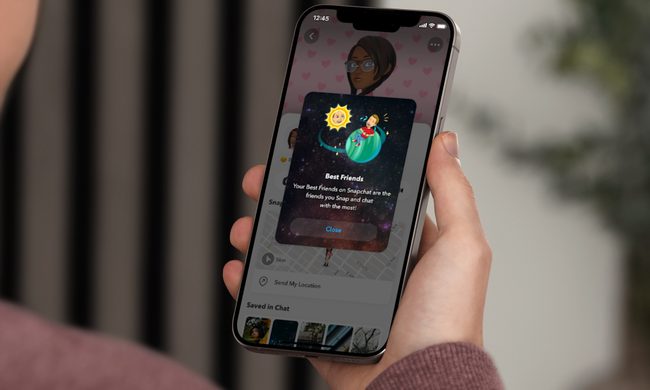
Snapchat Planets being shown on the Snapchat app on iPhone.

Snapchat+ includes several exclusive features, but few have generated as much curiosity as Snapchat Planets. Part of the app's Friend Solar System, it transforms your Best Friends list into a planetary ranking, assigning each of your top eight friends a planet based on how often you interact.

From Mercury, which represents your closest friend, to Neptune, which represents your eighth closest, the system offers a quick visual snapshot of your interactions. But what do the different planets actually mean, and how does Snapchat decide who gets which one?

Read more
How to use WhatsApp Web
We'll show you how to use WhatsApp on your desktop or laptop
WhatsApp Web

As one of the most popular messaging services, you’ve already heard of WhatsApp. From its humble beginnings in 2009—two years before Apple introduced iMessage—to its acquisition by Facebook (now Meta) in 2014, WhatsApp has become the dominant messaging platform around the globe.

In recent years, it's grown even more potent with new features like video messages, self-destructing voice messages, the ability to edit sent messages, and more. We even finally got an WhatsApp iPad app in May 2025.

Read more
What is WhatsApp? How to use the app, tips, tricks, and more
From setting it up to mastering hidden features, here is your complete guide to WhatsApp.
WhatsApp app store listing open on iPhone

There's no shortage of messaging apps out there. The past decade has given us more options than we know what to do with, largely because smartphones demanded something better than plain old SMS.

Both the App Store and the Play Store are packed with apps that promise to revolutionize the way we communicate. Most of them didn't make it. The truth is, a messaging app is only as good as the number of people using it, and most apps never cross that threshold.

Read more