1. Home
  2. Mobile
  3. Android
  4. Legacy Archives

Galaxy S5 costs $256 to produce, making it the priciest Samsung phone ever

Add as a preferred source on Google

A report from marketing research firm IHS revealed that it costs Samsung $256 to produce the Galaxy S5. You may wonder where the rest of the $650 up-front cost goes. Check out our guide to the cost of an iPhone for an idea, but a good chunk is profit, packaging, transport, marketing, and retail gets a cut as well.

According to Android Authority, this makes the Galaxy S5 the most expensive Samsung smartphone ever in terms of production costs.

Recommended Videos

“Our main takeaway is that Samsung has been moved up to the higher end of the cost spectrum. It used to used to be that its typical flagship phone sold for $600 without a contract and had a bill of materials of about $200. Now they’re inching up above $250 regularly,” said IHS analyst Andrew Rassweiler.

Its earlier versions, the Galaxy S4 and the Galaxy S3, cost $205 and $236 respectively. The most expensive component in the Galaxy S5 is its 5-inch Super AMOLED display, which costs $63 to produce. Its fingerprint scanner, which has been revealed as hackable with the use of a wood glue mold, only costs around $15. One of the phone’s cheapest component is its biofitness sensor, which only costs $1.45 to make.

Despite the Galaxy S5’s higher production value, it doesn’t really represent a significant step up in hardware from the Galaxy S4. “Inside we see mostly a lot of recycled components that we’ve seen before. There’s really nothing special inside where Samsung is pushing the envelope … There are no breakthroughs, there’s nothing earth-shattering. It’s really just a continuation of what has come before.”

Nonetheless, early indications point to the Galaxy S5 being a hit. Samsung won’t provide specific numbers for its opening weekend, except to say that sales are better than the Galaxy S4 launch last year.

Christian Brazil Bautista
Christian Brazil Bautista is an experienced journalist who has been writing about technology and music for the past decade…
Snapchat Planets: What’s the order, and what do they mean?
Snapchat Planets turns your best friends list into a solar system, and yes, your orbit says a lot
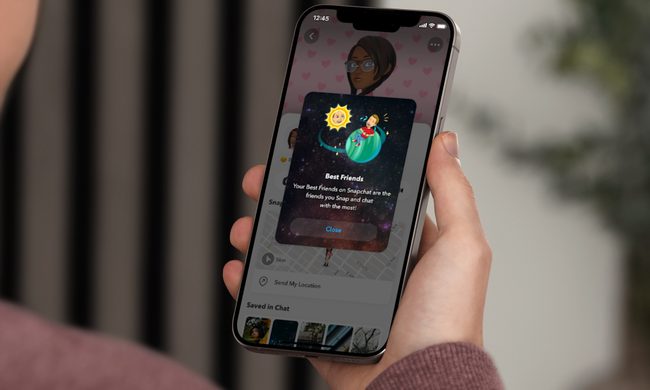
Snapchat Planets being shown on the Snapchat app on iPhone.

Snapchat is already packed with little symbols that can be weirdly hard to decode. You have streaks, emojis, badges, scores, Best Friends, and if you use Snapchat Plus, a tiny solar system that shows where you sit in someone’s closest-friends list.

The feature is called Friend Solar System, though most people just call it Snapchat Planets. It takes your position in a friend’s Snapchat orbit and turns it into a planet. From Mercury to Neptune, these celestial bodies signify how close a person is to you.

Read more
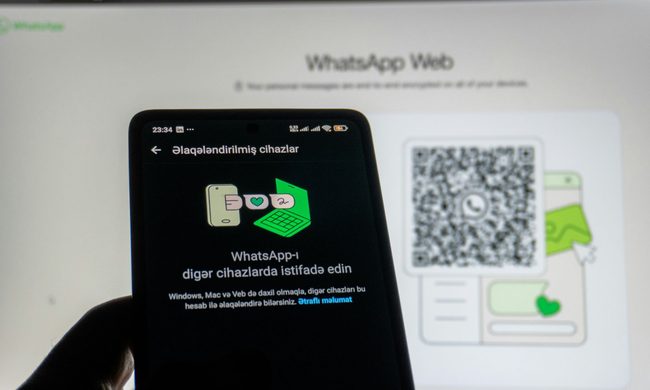
How to use WhatsApp Web
We'll show you how to use WhatsApp on your desktop or laptop
WhatsApp Web

As one of the most popular messaging services, you’ve already heard of WhatsApp. From its humble beginnings in 2009—two years before Apple introduced iMessage—to its acquisition by Facebook (now Meta) in 2014, WhatsApp has become the dominant messaging platform around the globe.

In recent years, it's grown even more potent with new features like video messages, self-destructing voice messages, the ability to edit sent messages, and more. We even finally got an WhatsApp iPad app in May 2025.

Read more
What is WhatsApp? How to use the app, tips, tricks, and more
From setting it up to mastering hidden features, here is your complete guide to WhatsApp.
Electronics, Phone, Mobile Phone

There's no shortage of messaging apps out there. The past decade has given us more options than we know what to do with, largely because smartphones demanded something better than plain old SMS.

Both the App Store and the Play Store are packed with apps that promise to revolutionize the way we communicate. Most of them didn't make it. The truth is, a messaging app is only as good as the number of people using it, and most apps never cross that threshold.

Read more