1. Home
  2. Mobile
  3. Legacy Archives

Google Glass won’t have facial recognition software, at least not yet

Add as a preferred source on Google
Google Glass
Image used with permission by copyright holder

Google’s Project Glass team recently sent out a quick update to its followers on Google+, and it seems like some of the worries about the device’s facial recognition could be put to rest for the time being.

“We’ve been listening closely to you, and many have expressed both interest and concern around the possibilities of facial recognition in Glass,” the team said. “We won’t add facial recognition features to our products without having strong privacy protections in place. With that in mind, we won’t be approving any facial recognition Glassware at this time.” They concluded the brief message by promising to evolve Glass’s policies and software in the months to come.

Recommended Videos

We applaud Google’s decision here, though we can’t help but wonder if this is more because of the response to Google Glass, or the vehement backlash against Microsoft over the Xbox One and its astoundingly invasive privacy issues. Google Glass Explorer Editions have been out there for a while now, and the potential for facial recognition has been one of the public’s principle concerns about the device.

Google has been experimenting with object recognition (related to facial recognition) for a while. For those of you out there who haven’t used Google Goggles to your phones, it’s pretty useful for identifying store-specific merchandise and such, telling you the exact name of whatever product you might be taking a picture of in seconds, and often offering links to buy it online. But Goggles isn’t restricted to merchandise – try taking a few shots of the art or statues around your town – there’s a really good chance Goggles will be able to identify who put it there, and when.

One Glass user we talked to at Google I/O told us that “spying” with would be tougher with Glass than with a phone, but it’s not really so hard to see how social network-based facial recognition software of that type in a consumer-grade sunglass device could be a little off-putting.

Saul Berenbaum
Former Digital Trends Contributor
Saul Berenbaum has been writing film and gaming reviews since college. Recently, he contributed to HardcoreDroid. Now he…
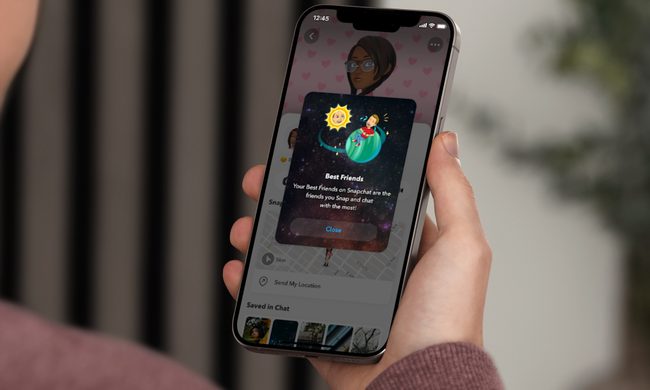
Snapchat Planets: What’s the order, and what do they mean?
Snapchat Planets turns your best friends list into a solar system, and yes, your orbit says a lot
Snapchat Planets being shown on the Snapchat app on iPhone.

Snapchat is already packed with little symbols that can be weirdly hard to decode. You have streaks, emojis, badges, scores, Best Friends, and if you use Snapchat Plus, a tiny solar system that shows where you sit in someone’s closest-friends list.

The feature is called Friend Solar System, though most people just call it Snapchat Planets. It takes your position in a friend’s Snapchat orbit and turns it into a planet. From Mercury to Neptune, these celestial bodies signify how close a person is to you.

Read more
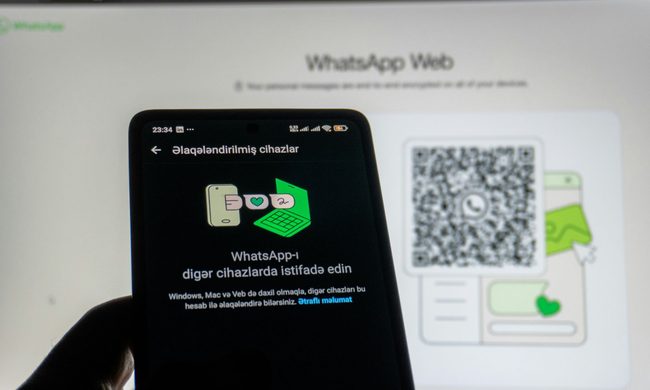
How to use WhatsApp Web
We'll show you how to use WhatsApp on your desktop or laptop
WhatsApp Web

As one of the most popular messaging services, you’ve already heard of WhatsApp. From its humble beginnings in 2009—two years before Apple introduced iMessage—to its acquisition by Facebook (now Meta) in 2014, WhatsApp has become the dominant messaging platform around the globe.

In recent years, it's grown even more potent with new features like video messages, self-destructing voice messages, the ability to edit sent messages, and more. We even finally got an WhatsApp iPad app in May 2025.

Read more
What is WhatsApp? How to use the app, tips, tricks, and more
From setting it up to mastering hidden features, here is your complete guide to WhatsApp.
Electronics, Phone, Mobile Phone

There's no shortage of messaging apps out there. The past decade has given us more options than we know what to do with, largely because smartphones demanded something better than plain old SMS.

Both the App Store and the Play Store are packed with apps that promise to revolutionize the way we communicate. Most of them didn't make it. The truth is, a messaging app is only as good as the number of people using it, and most apps never cross that threshold.

Read more