  1. Home
  2. Mobile
  3. Android
  4. Legacy Archives

Download race: Google Play Store downloads are about even with the App Store

Add as a preferred source on Google

GooglePlayLogo-01Six months ago, Google Play was making a fourth of the revenue as Apple’s iOS App Store. Now? After a 25 percent boost over last quarter, it’s nearly cut that figure in half, and is just about neck-and-neck on downloads.

It’s not like Apple’s slumping – despite a momentary slip in the market this morning, its business has been in a perpetual state of growth since the launch of the first-gen iPod. The issue here is Google Play, and how much faster it’s growing right now than the App Store. It grew 311 percent between last January and October alone, and then grew another 90 percent between then and now, reports App Annie

Recommended Videos

Interestingly, while the App Store is led in both downloads and revenue by the U.S., Japan and South Korea lead Google Play’s revenue, with the U.S. in third place. Also, while it leads in revenue, Japan is sitting in fifth on Google Play’s top countries by downloads.

This might be chalked up, at least in part, to the huge number of free or very cheap games available on Google Play – especially when the service’s games make up 40 percent of its downloads and 80 percent of its revenue.

The steps forward in mobile gaming over the last year have been impressive on their own, both in terms of ingenuity and raw processing power. At the end of the day, though, it’s a business, and business is a’ boomin’ – digital game sales alone made up an astounding $875 million, up $157 million from February. With that kind of growth, you can expect mobile gaming to be a billion-dollar-a-month industry within the next few months, or weeks. Whether or not the business model can sustain those kinds of figures is still uncertain, but given the gaming industry’s economic resilience over the last few years, it’s a pretty safe bet.

Saul Berenbaum
Former Digital Trends Contributor
Saul Berenbaum has been writing film and gaming reviews since college. Recently, he contributed to HardcoreDroid. Now he…
Snapchat Planets: What’s the order, and what do they mean?
Snapchat Planets turns your best friends list into a solar system, and yes, your orbit says a lot
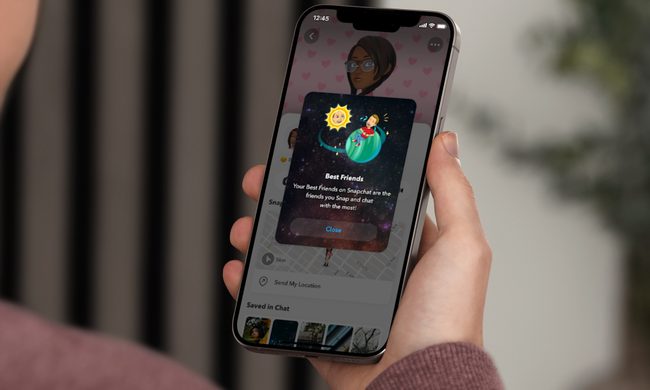
Snapchat Planets being shown on the Snapchat app on iPhone.

Snapchat is already packed with little symbols that can be weirdly hard to decode. You have streaks, emojis, badges, scores, Best Friends, and if you use Snapchat Plus, a tiny solar system that shows where you sit in someone’s closest-friends list.

The feature is called Friend Solar System, though most people just call it Snapchat Planets. It takes your position in a friend’s Snapchat orbit and turns it into a planet. From Mercury to Neptune, these celestial bodies signify how close a person is to you.

Read more
How to use WhatsApp Web
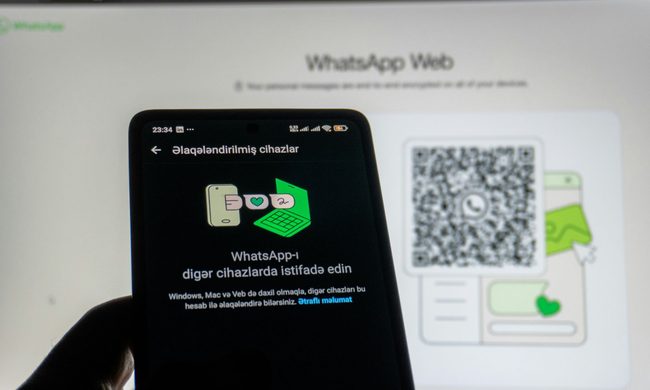
We'll show you how to use WhatsApp on your desktop or laptop
WhatsApp Web

As one of the most popular messaging services, you’ve already heard of WhatsApp. From its humble beginnings in 2009—two years before Apple introduced iMessage—to its acquisition by Facebook (now Meta) in 2014, WhatsApp has become the dominant messaging platform around the globe.

In recent years, it's grown even more potent with new features like video messages, self-destructing voice messages, the ability to edit sent messages, and more. We even finally got an WhatsApp iPad app in May 2025.

Read more
What is WhatsApp? How to use the app, tips, tricks, and more
From setting it up to mastering hidden features, here is your complete guide to WhatsApp.
Electronics, Phone, Mobile Phone

There's no shortage of messaging apps out there. The past decade has given us more options than we know what to do with, largely because smartphones demanded something better than plain old SMS.

Both the App Store and the Play Store are packed with apps that promise to revolutionize the way we communicate. Most of them didn't make it. The truth is, a messaging app is only as good as the number of people using it, and most apps never cross that threshold.

Read more