Well folks, that’s a wrap. Google I/O is set to continue until May 10, but the keynote, which is where Google shows off all its major announcements, is now over — and there were some pretty sweet announcements. For the uninitiated, Google I/O is the company’s annual developer conference, where it announces upcoming features, tools, and software products and services for everything in its ecosystem. That includes what’s new in Android, Chromebooks, Google Assistant, Android Auto, and plenty more. It’s also where developers from around the world congregate to discuss their craft, and attend workshops by Google’s finest and brightest.
Of course, as mentioned, the show isn’t completely over yet. Make sure you keep an eye on our Twitter feeds to make sure you’re up-to-date with the moment-to-moment discoveries. Follow Digital Trends, DTMobile, and our on-the-ground representative Julian Chokkattu on Twitter to make sure you’re kept well informed.
So what did we see at Google I/O? Here are all the major announcements from the show.
Android P Developer Preview 2
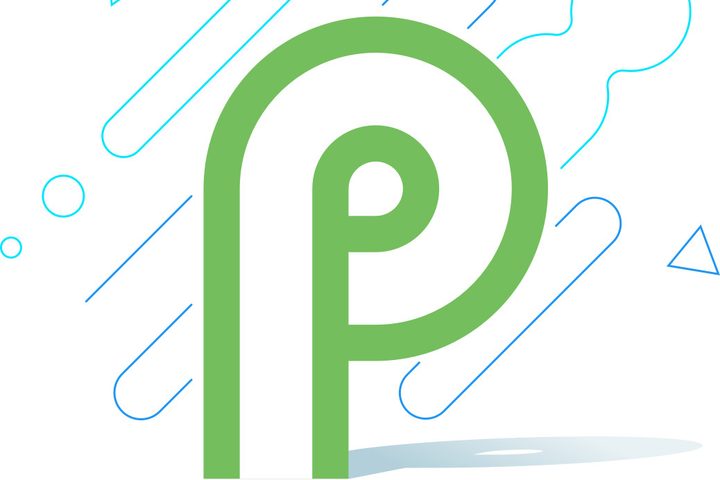
The new version of Android is normally the star of the show at Google I/O, and this year was no different. Google showed off the second developer preview of Android P, which comes with a number of awesome new features that should make any Android user happy.
So what does Android P bring to the table? First up, Google is revamping the navigation buttons at the bottom of the phone, instead adopting a single capsule-shaped button, that works in combination with gestures.
On top of that, Android P will put a heavy emphasis on helping you manage how much time you spend on your phone. For starters, it now has a Dashboard, which helps you track exactly how much time you spend using each app. With certain apps, like YouTube, you’ll even get notifications telling you it might be time to take a break from your phone. On top of that, Android P features Wind Down Mode, which sets your display to grayscale when it might be time to go to bed.
Next up, Android P improves on notifications, and allows you to interact with apps without even opening them. For example, if you search for Lyft, an option will show up for you to book a car without opening the app at all. You can check out all these changes in more depth in our Android P news article.
Read more:
Android P
New Google Assistant features

Google Assistant is pretty handy, having been named the best A.I. assistant in the world for the second year running, but we’d be fools if we told you Google is happy to stop there. In fact, at Google I/O the company showed off a host of new features coming to the Assistant.
Apart from the fact that Assistant will be coming to 30 languages in 80 different countries by the end of the year, Google also announced that the Assistant will soon be available in six different voices — with one of those being John Legend’s. On top of that, Assistant is getting a whole lot more natural. Now, you won’t have to say “Hey, Google” every time you want to interact with Assistant — just initiate the assistant the first time, then you can have a normal conversation with it. Along with that, you’ll also be able to make multiple requests at once — so if you want to “set the thermostat to 67 degrees and turn the TV on,” you’ll be able to do that in one request.
Perhaps the coolest update to Assistant is that it will now be able to book appointments for you. That’s right, you can ask Assistant to book you a haircut, and it will actually do so in the background without you having to call them yourself. Based on the demos Google showed off at I/O, the new feature sounds very natural.
Other features were announced too — like positive reinforcement to those that say “please,” and the addition of Assistant in Google Maps. Check out all the features in our news post.
Read more:
Google Assistant
Google Photos

Last year saw the announcement of a plethora of new features for Google Photos, including Photo Books, Google Lens, and even more sharing options. They were updates that gave you choices, and added quality-of-life improvements.
This year, once again, Google has added a few sweet new features to Google Photos, many of which revolve around artificial intelligence. For example, the app will now allow you to do things like colorize old black-and-white photos, fix the brightness of under-exposed photos, and “pop color,” which colors the subject of the photo and sets the background to grayscale.
Photos makes sharing a bit easier too — Google Photos will automatically recognize when users are in photos, and allow you to quickly and share multiple of them with the tap of one button.
Read more:
Google Photos
Google News
As expected, Google also announced a revamped version of Google News, which will replace both the old, somewhat outdated Google News, as well as Google Play Newsstand. The new app brings a totally new interface, as well as a few cool new features to users.
Google is putting an emphasis on artificial intelligence for the new version of Google News, and as such when you open the app you’ll be presented with news headlines that Google thinks you most want to see. In that, you’ll find a mixture of important news headlines, local news, and more. Google is also offering a “Full Coverage” section, which allows you to see multiple stories from a range of different sources.
Google News also allows you to manage your magazine subscriptions. You’ll be able to quickly and easily subscribe to magazines from the app without having to put in your credit card information for each one. That should make subscribing to content a whole lot easier.
Read more:
Google News
Gmail

Gmail was recently completely revamped, but Google announced a new feature for it at Google I/O too. Soon, Gmail will be able to write emails for you with only a few keystrokes. The feature is called Smart Compose, and it basically suggests complete phrases for you when you start typing them, pulling from your huge emailing history.
The feature operates in the background, and simply pops up as a grayed-out suggestion as you type. If you see a suggestion that you like, hit the tab button and the suggestion will become a part of your email.
Read more:
Gmail
Waymo

Waymo got a nice chunk of time on stage at I/O too. According to Waymo, the company is leveraging artificial intelligence to help self-driving cars better navigate tricky situations. As noted at the event, things like heavy snow and rain can make for a ton of noise for the car’s sensors, making it harder to navigate. Using artificial intelligence, however, cars are able to accurately ignore things like snow and better manage their driving. Waymo also claimed that it’s running the equivalent of 25,000 cars per day in computer simulations — so the system is only getting smarter.
Read more:
Waymo
Android Things

A toaster that’s connected to the internet seems like a really cool idea, until you realize the toaster’s firmware is likely to never be updated. Leaving it connected could potentially be a hacker’s dream route into your systems. But what’re you to do if you really, really want to be able to toast your bread remotely?
Android Things is Google’s solution to this problem. By uniting the Internet of Things under the Android umbrella, smart devices could be much more easily updated, as well as secured against outside attack. While Android had previously been lambasted for poor security, Google has been working hard to reverse that, making Android Things a much more attractive proposition.
Right before the event, Google announced the launch of Android Things 1.0 and the introduction of the SDK to developers. That means that developers can start taking advantage of the new platform for their products. We didn’t really hear much about Android Things on stage, but it’s still likely to be mentioned at the show in general.
Read more:
Android Things