
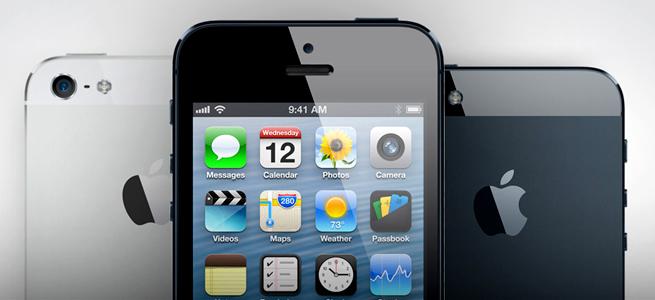
 Apple’s iPhone 5 product announcement last week left many industry watchers a bit disappointed. Whether it was the astonishing accuracy of pre-announcement leaks, missing NFC capabilities, or the lack of an overwhelming, unanticipated “wow” factor that put the iPhone 5 in territory unimagined by its competitors, overall response to the iPhone 5 by the mobile industry seems to be a resounding “meh.”
And yet it’s also easy to argue that by delivering almost exactly what was expected of them, Apple is doing what industry leaders are supposed to do. In the real world, the strategy seems to carry some serious benefits: Apple racked up two million preorders for the iPhone 5 in the first 24 hours of availability. Not all those customers are brainwashed Apple fanatics. They’re mostly leading-edge mobile technology enthusiasts who immediately see value in the iPhone 5 — and are willing to jump through extra hoops to have it first.
New iPhones have always been boring
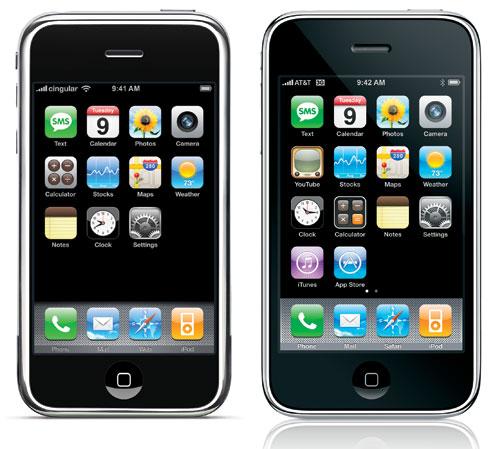
Apple did disrupt the nascent smartphone industry with the original iPhone back in 2007 — the idea of a an all-touchscreen device with no keypad, gesture-based controls, and visual voicemail was almost unheard-of in the industry. Even though the first iPhone didn’t have third-party apps, the iPhone successfully tilted the smartphone world on its head. It’s not much of an exaggeration to say that parts of the mobile industry are still trying to adapt to it.
But the original iPhone is only a slam dunk in retrospect. Virtually every distinguishing feature of the original iPhone wasn’t new — it’s just that Apple was the first to put those features together in a tightly integrated, high-quality package. Opinion was sharply divided on whether the iPhone would be a success or failure. Everybody agreed it was an innovative take on a phone, but few believed Apple would be anything more than a marginal player in the phone market.
“There’s no chance that the iPhone is going to get any significant market share,” Steve Ballmer said in 2007. “No chance.”
But guess what? When compared to the rest of the mobile industry, every iPhone since the original has been boring!
- iPhone 3G — The iPhone 3G was very similar to the original iPhone; the main additions were assisted GPS, an upgrade to 3G data from EDGE, and tri-band UMTS-HSPDA. Same form factor, same screen, same 2-megapixel camera. The big deal for the device was actually iOS 2.0 — and native apps — and it worked on the original iPhone too.
- iPhone 3GS — The iPhone 3GS amped up the device’s processor, added a three-megapixel camera with video capability, offered pre-Siri voice control, and amped up HSDPA support for better mobile broadband. The iPhone was still the same size, and offered the same screen resolution, although it was the first iPhone to (eventually) be available with either a black or white case — a move many industry watchers indeed described as “boring.” There was also disappointment the iPhone 3GS wasn’t called the iPhone 4. And yet, the 3GS was Apple’s longest-lived iPhone, and was on the market from June 2009 through just last week.
- iPhone 4 — Arguably Apple’s least-boring update to iPhone hardware: Apple kickstarted the market for high-resolution displays with the iPhone 4’s 960 by 640-pixel Retina display and also added a front-facing VGA camera to support Apple’s FaceTime video chat service. The iPhone 4 also packs “boring” upgrades to its processor, battery, and memory, but — in an important move for the U.S. market— supports CDMA, meaning AT&T’s monopoly as the only iPhone carrier in the U.S. was broken. Verizon Wireless offered the iPhone 4, and Sprint picked it up a bit more than a year later. The excitement with the iPhone 4 was mostly about the device coming to Verizon — followed by “antennagate,” which eventually resulted in Apple offering customers a free bumper case. But it can easily be argued the iPhone 4 was pretty boring, too: It packed a double-density display into the same space, and added a front-facing VGA camera. Excitement.
- iPhone 4S — The launch of the iPhone 4S was mostly notable for all the people disappointed the device wasn’t called the iPhone 5. From a design point of view, the iPhone 4S looked almost exactly like its predecessor, although it packed an 8-megapixel camera and an Apple A5 processor that helps power Siri, the attention-getting (and often slightly ditzy) voice assistant Apple debuted with the device. Siri captured most of the attention of the iPhone 4S launch, but it’s important to remember that Siri is software, not a device. Although it was exclusive to the iPhone 4S, iOS 6 is now bringing it to the iPad and even the latest iPod touch. The iPhone 4S itself was overshadowed by the death of Steve Jobs one day after the product announcement.
The pattern is clear: After the original iPhone, none of Apple’s subsequent phones have been radical departures from what came before. They’ve all been careful iterations of the previous versions. Sometimes these iterations entail massive engineering and R&D efforts — for instance, the iPhone 4S’s antenna design is substantially different than the widely-criticized iPhone 4, Siri isn’t a simple gimmick, and Apple is investing hundreds of millions of dollars in designing its own processors and subsystems. But the overall design and functionality of the iPhone remains remarkably consistent — and, every time, it’s been criticized for being boring.
Apple’s boring pattern

Most consumer electronics companies take a shotgun approach to their markets, producing a plethora of products (and variations of products) tailored at various niches, hoping enough of them are successful to generate profits. Apple is different: The company only makes a handful of products, and only enters markets it believes it can revolutionize and, hence, dominate. Domination doesn’t have to be through market share. After all, Macs have never commanded the PC market. Success can come through profits, by being the standard against which competitors are compared, or (more recently) by dominating supply chains to the extent that competitors have a tough time matching prices.
Apple’s steady, measured development of the iPhone follows the path of every major Apple product line since Steve Jobs’ return to Apple in the late 1990s. With the original iMac, Apple disrupted the traditional consumer PC market and essentially boiled it down to a choice of color. Most other PC makers quickly jumped on board with their own candy-colored all-in-one Macs. (Apple shifted to flat-screen iMacs years ago, but it’s astonishing how some major PC makers are still essentially crafting iMac knockoffs.)
Similarly, Apple didn’t invent the portable music player, but saw an opportunity to create a market-leading experience by combining portable media players with desktop software and a wide-ranging digital music store. Again, Apple’s evolution of the iPod line was slow and steady, with most devices being careful extensions of what came before. (An exception might be the iPod shuffle and nano lines, which Apple has repeatedly recrafted from the ground up.)
Apple redefined ultraportable computing with the MacBook Air, and has continued to steadily refine that design and bring key features to its other notebook lines. Then Apple essentially created the tablet market with the iPad, and has been steadily pushing it forward — it’s been on the market over two years and is only now (perhaps) starting to see serious competition. It’s been that difficult for competitors to catch up with Apple.
Being boring is valuable

Apple’s careful curation of the iPhone line reinforces the iPhone’s brand and value to consumers. The millions of people who currently own iPhones may not know all the technical changes and improvements in the iPhone 5, but they do that the iPhone 5 will be better then the iPhone they have in their hands now. And many iPhone owners know that from personal experience, because their current iPhone is better than the iPhone they had before it.
There are certainly phones from device makers like Samsung, HTC, Motorola, and Nokia that can beat the iPhone on particular specs — but there always have been, and the iPhone has always held up well in the long run. Moreover, iPhones have proven to have a longer useful life than almost anything else in the industry. If you bought an Android phone in mid-2009 and you want to run Android 4, you need to buy a new device. (If you bought a Windows Phone just a few months ago and want to run Windows Phone 8, you’ll need to buy a new device.)
Conversely, the iPhone 3GS was released more than three years ago and will run iOS 6 when it’s released September 19. The stability — dare we say dullness — of the iPhone is one of its defining strengths. The platform is consistent and consumers can rely on it. That makes the iPhone both an easier and safer choice. Consumers buying an iPhone have reasonable assurance the device isn’t going to be orphaned in short order by a device maker that’s trying to be “nimble.”
So, yes: The iPhone 5 packs few surprises, but it was never going to be a clean break from previous models. That would damage the iPhone line. And I’m betting the iPhone 6 — let’s just call it the iPhone 5S — will be pretty boring too. Maybe one day all mobile platforms will be so dull.


