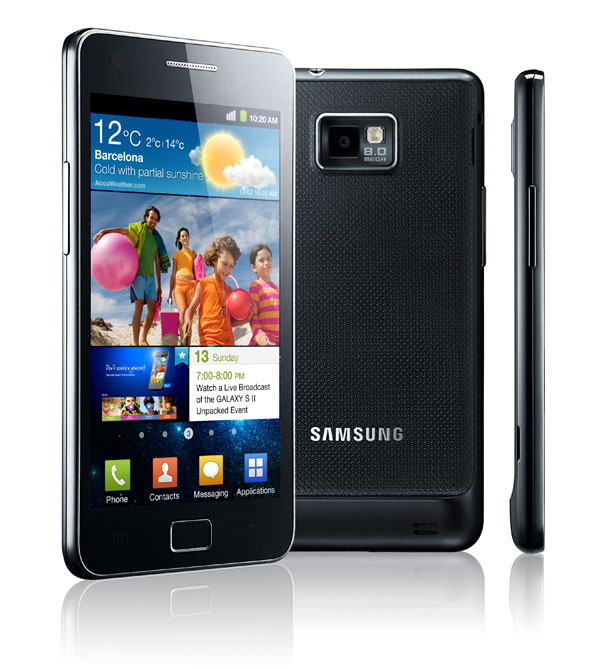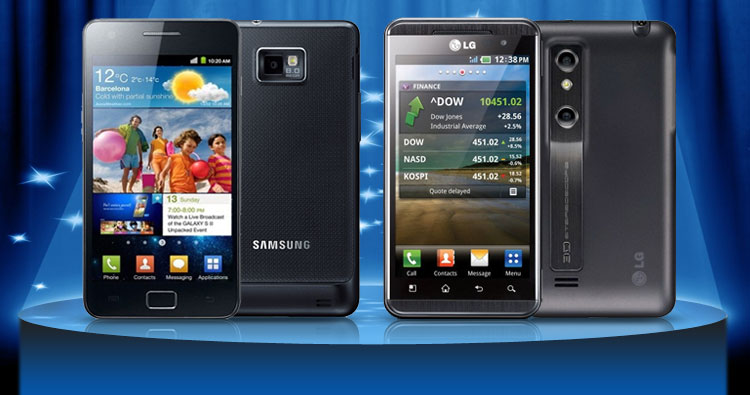

We’re two months into 2011 and the number of competing high-end smartphone continues to grow. At the Mobile World Congress, both LG and Samsung showed off their upcoming flagship Android handsets: the LG Optimus 3D and the Samsung Galaxy S II. Samsung has chosen to pack its handset with the latest version of Android and beefy stats, while LG has chosen the more experimental path of glasses-free 3D. But which one comes out on top when the numbers are crunched? Find out below!
Display
Winner: Tie
If you’re a big fan of 3D, this decision will bother you immensely. It’s difficult to make this decision without actually having the LG Optimus 3D in our hands, we think the clarity and brightness of Samsung’s Super AMOLED Plus display is astounding and rivals any display technology on the market. At 480 x 800, its pixel density is equal to the Optimus 3D. Unfortunately, rendering 3D somewhat lowers the fidelity of the image. Both screens clock in at 4.3 inches. If you don’t think 3D is a gimmick, the Optimus 3D is the winner here. If you value 2D more, The Galaxy S II has a much crisper, brighter screen.
Operating System
Winner: Samsung Galaxy S II
This isn’t really a contest. Though LG has opted for the good, stable Android 2.2, Samsung is supporting Android 2.3 (Gingerbread). Google made a number of needed enhancements to Android, most notably in the visual department. Many of the main Google apps received a visual overhaul for the Dec. 2010 update. In addition, the update also enhances Android’s battery management capabilities and multimedia functions. We’re sad that more handsets aren’t already using 2.3.

Processor
Winner: Tie
Both handsets run a 1GHz dual-core processor. While we’re sure that one of these processors is faster than the other, for the general consumer, they’re about on equal. The Samsung Galaxy S II runs on the 1GHz dual-core ARM Cortex-A9 processor and the Optimus 3D is powered by a 1GHz dual-core Texas Instruments OMAP4 processor.
Storage & Memory
Winner: Samsung Galaxy S II
Both handsets are packing a decent amount of storage and memory, but the Galaxy S II double downs the Optimus 3D in both categories. Samsung’s new phone packs 16-32GB of internal storage and 1GB of RAM, which is comparable to some of the best phones on the market, like the Motorola Atrix 4G. LG has a respectable 8GB of storage, but the company skimps on the RAM. Optimus includes only 512MB of RAM, which seems a bit light for a phone hoping to display 3D.
Portability
Winner: Tie
Samsung claims the Galaxy S II is the thinnest handset yet — even skinnier than the iPhone 4. It may be a few millimeters thinner than the Optimus 3D, but does it really make a difference in the grand scheme of things? These are two 4.3-inch smartphones. For those with smaller hands (or pockets), both devices border on being uncomfortably large.
Connectivity
Winner: Tie
According to initial reports, both of these devices will be able to access AT&T and T-Mobile’s HSPA+ networks for 4G-like speeds. However, neither are capable of accessing LTE networks, the true 4G, high-speed networks that both AT&T and Verizon are heavily investing in. So while both are a pretty good deal, by the time your contract runs out in two years, they’ll both be much slower than the many 4G LTE phones that will have taken over the market. LTE speeds can rival Wi-Fi.
 Battery Life

Winner: Samsung Galaxy S II
With a slightly larger 1,650 mAh battery and a Super AMOLED Plus screen that sucks up less juice, the Galaxy S II wins this category hands down. The Optimus 3D has a standard 1,500 mAh battery. However, Samsung’s win isn’t a home run. Like all current smartphones, both of these devices will have to be charged every night, sometimes sooner. If you can afford it, buy an extra battery with your next phone.
Cameras
Winner: LG Optimus 3D
The Optimus 3D may only have a 5-megapixel rear camera, but it packs a neat trick. Not only can the Optimus display 3D images, it can also record 3D images (with autofocus) and video at 720p. If you choose to record in standard 2D, video quality rises even higher to full 1080p. The Galaxy S II is no slouch, however. Though it can’t produce a third dimension, the phone has an 8-megapixel rear camera capable of full 1080p recording as well. Better, it has an LED flash, which the Optimus 3D does not appear to have. So, for the 2D purist, the Galaxy S II may be the way to go.
Both devices have front-facing cameras, but the Galaxy S II wins this fight with a 2MP front camera. The LG Optimus 3D cannot record 3D images on its front camera.
Overall winner: Samsung Galaxy S II
While we can’t knock LG for trying something new with glasses-free 3D display and full 3D recording, we’re not sure the effect is entirely needed on a mobile phone. If you remove that one technological advantage, the Samsung Galaxy S II is a much beefier phone in many ways that we know matter. The Galaxy S II has double-quadruple the storage, double the RAM, a much brighter screen, runs a newer version of Android, has a larger battery, and better front and rear 2D cameras.