  1. Home
  2. Mobile
  3. Legacy Archives

Nokia lowers device and services forecast

Add as a preferred source on Google
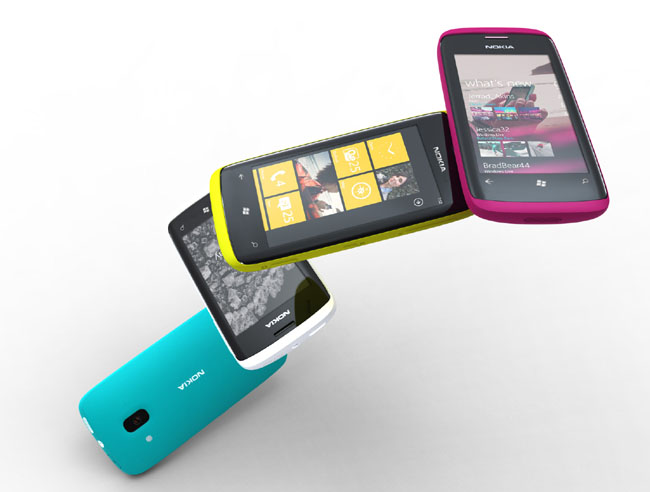
Nokia Windows Phone concepts
Image used with permission by copyright holder

Surprising almost nobody, Finland’s Nokia has lowered its financial forecast for its Devices & Services business, claiming multiple factors are causing the unit to earn less money for the company than it previous expected. Nokia isn’t setting any new targets for the group, but now says does not expect the unit’s net sales to fall between €6.1 to 6.6 billion (about US$8.8 to 9.5 billion) and the unit’s profit margin will be lower than the expected range of 6 to 9 percent. In other words, Nokia expected to earn somewhere between $530 and $850 million off its Devices and Services business this quarter, and now expects those figures to be “substantially lower”—right around a breakeven point.

Nokia attributes the lowered forecast to three primary factors, including aggressive pricing from competitors, lower average prices and margins across its own product line, and “competitive dynamics and market trends,” particularly in China and Europe. However, the bottom line is that Nokia isn’t selling as many phones as it would like.

Recommended Videos

Nokia says it is taking “immediate action” to address the shortfall, including cutting operating costs in its Devices & Services group, investing in “new innovative capabilities ” for Symbian and ramping up point-of-sale marketing. Nokia also notes that its started shipping dual-SIM devices last week (which are popular in many emerging markets). Nokia also indicated it has “increased confidence” it will ship its first Windows Phone devices in the fourth quarter of 2011.

Although Nokia has recently promised that its Symbian operating system will continue to receive updates through “at least” 2016, the company is distinctly having difficulty maintaining developers’ and partners’ interest in the now-moribund platform—and consumers are primarily interested in smartphones, where Nokia is struggling to compete with the likes of Apple’s iOS and Google’s Android. Since Nokia pegged its smartphone future on a high-stakes partnership with Microsoft, the company has transferred Symbian to closed licensing, transferred maintenance to Accenture, and announced plans to cut some 7,000 positions.

Geoff Duncan
Former Contributor
Geoff Duncan writes, programs, edits, plays music, and delights in making software misbehave. He's probably the only member…
Snapchat Planets: What’s the order, and what do they mean?
Snapchat Planets turns your best friends list into a solar system, and yes, your orbit says a lot
Snapchat Planets being shown on the Snapchat app on iPhone.

Snapchat is already packed with little symbols that can be weirdly hard to decode. You have streaks, emojis, badges, scores, Best Friends, and if you use Snapchat Plus, a tiny solar system that shows where you sit in someone’s closest-friends list.

The feature is called Friend Solar System, though most people just call it Snapchat Planets. It takes your position in a friend’s Snapchat orbit and turns it into a planet. From Mercury to Neptune, these celestial bodies signify how close a person is to you.

Read more
How to use WhatsApp Web
We'll show you how to use WhatsApp on your desktop or laptop
WhatsApp Web

As one of the most popular messaging services, you’ve already heard of WhatsApp. From its humble beginnings in 2009—two years before Apple introduced iMessage—to its acquisition by Facebook (now Meta) in 2014, WhatsApp has become the dominant messaging platform around the globe.

In recent years, it's grown even more potent with new features like video messages, self-destructing voice messages, the ability to edit sent messages, and more. We even finally got an WhatsApp iPad app in May 2025.

Read more
What is WhatsApp? How to use the app, tips, tricks, and more
From setting it up to mastering hidden features, here is your complete guide to WhatsApp.
WhatsApp app store listing open on iPhone

There's no shortage of messaging apps out there. The past decade has given us more options than we know what to do with, largely because smartphones demanded something better than plain old SMS.

Both the App Store and the Play Store are packed with apps that promise to revolutionize the way we communicate. Most of them didn't make it. The truth is, a messaging app is only as good as the number of people using it, and most apps never cross that threshold.

Read more