1. Home
  2. Mobile
  3. Legacy Archives

Noki-arrr launches the Treasure Tag, a location tracker for forgetful pirates

Add as a preferred source on Google

Noki-arrr, sorry, Nokia, has announced a new product. It’s called the Treasure Tag, and it’s perfect for forgetful pirates who don’t want to mislay their treasure chests, galleon, or parrot. Don’t worry though, landlubbers who have never even selected “pirate” as the default language on Facebook can still buy one too.

The Treasure Tag is a small, square box which falls into Nokia’s growing range of accessories rather than its Lumia line-up of smartphones. It measures 30 x 30 x 10mm, a size which makes a book of matches look a bit too big. It can be clipped to a bag, slipped into a pocket, attached to your keys, or placed inside your wallet, ready to sound an alarm if you leave any of them behind.

Recommended Videos

How does it know it has been forgotten? Treasure Tags link to your smartphone using Bluetooth or NFC. The distance between them is monitored closely, and an alarm rings out should they lose contact. If you don’t hear either alarm, or the item is stolen, the location of a Treasure Tag can be tracked through an app.

Nokia has written a dedicated Treasure Tag app for its Windows Phone hardware, and four different tags can be linked to a Lumia smartphone. Each tag can be allocated its own Live Tile, which shows a picture of the protected product, plus information on its whereabouts. Tag locations are tracked using Here Maps. Initially only for Windows Phone, Nokia says an iOS and Android app will be available from a third-party in the future.

Each Treasure Tag is powered by a standard coin-type battery which will provide six months of use before it needs to be replaced, and the little boxes will come in four colors: Yellow, white, cyan, and black. One Treasure Tag will cost $30 and you’ll be able to buy them in April. Dedicated Nokia-watchers may recall the Treasure Tag was leaked last year, showing us this product has been in development for some time.

Andy Boxall
Andy has written about mobile technology for almost a decade. From 2G to 5G and smartphone to smartwatch, Andy knows tech.
Snapchat Planets Meaning: Order, Rankings, and How Friend Solar System Works
Snapchat Planets turns your best friends list into a solar system, and yes, your orbit says a lot
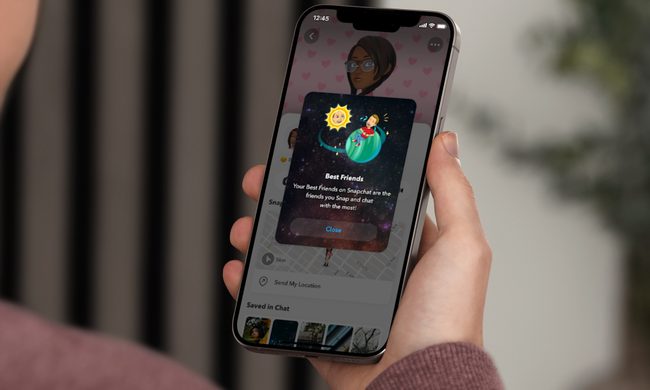
Snapchat Planets being shown on the Snapchat app on iPhone.

Snapchat+ includes several exclusive features, but few have generated as much curiosity as Snapchat Planets. Part of the app's Friend Solar System, it transforms your Best Friends list into a planetary ranking, assigning each of your top eight friends a planet based on how often you interact.

From Mercury, which represents your closest friend, to Neptune, which represents your eighth closest, the system offers a quick visual snapshot of your interactions. But what do the different planets actually mean, and how does Snapchat decide who gets which one?

Read more
How to use WhatsApp Web
We'll show you how to use WhatsApp on your desktop or laptop
WhatsApp Web

As one of the most popular messaging services, you’ve already heard of WhatsApp. From its humble beginnings in 2009—two years before Apple introduced iMessage—to its acquisition by Facebook (now Meta) in 2014, WhatsApp has become the dominant messaging platform around the globe.

In recent years, it's grown even more potent with new features like video messages, self-destructing voice messages, the ability to edit sent messages, and more. We even finally got an WhatsApp iPad app in May 2025.

Read more
What is WhatsApp? How to use the app, tips, tricks, and more
From setting it up to mastering hidden features, here is your complete guide to WhatsApp.
WhatsApp app store listing open on iPhone

There's no shortage of messaging apps out there. The past decade has given us more options than we know what to do with, largely because smartphones demanded something better than plain old SMS.

Both the App Store and the Play Store are packed with apps that promise to revolutionize the way we communicate. Most of them didn't make it. The truth is, a messaging app is only as good as the number of people using it, and most apps never cross that threshold.

Read more