1. Home
  2. Mobile
  3. Legacy Archives

Oracle puts $2.6 bln price tag on Google Java infringement

Add as a preferred source on Google
Google Android Logo
Image used with permission by copyright holder

In a filing yesterday with the U.S. District Court in the Northern District of California, database giant Oracle revealed is seeking some $2.6 billion in damages from Google for alleged Java patent infringements in Google’s Android mobile operating system. The damages figure is based on estimates from Boston University finance professor Iain Cockburn, who is serving as Oracles damages expert.

Oracle also claimed Google has intentionally misinterpreted Cockburn’s analysis of damages to Oracle in an effort to make Oracle’s case seem unfair and unreasonable. Earlier this month, Google revealed that it might be forced to pay Oracle anywhere from $1.4 billion to $6.1 billion if it were to lose the case. Google’s interpretation of potential damages was based Cockburn’s assessment. Oracle refutes several of Google’s points, and maintains Cockburn’s methodology—and $2.6 billion figure—is based on “accepted economic principles and the law of patent and copyright infringement.

Recommended Videos

Oracle sued Google last August over Android’s Java virtual machine, which Oracle claims infringes on copyrights and patents it acquired when it bought Sun Microsystems back in 2010. Oracle’s infringement claims are being reviewed by the U.S. Patent and Trademark Office; so far, some of the claims have held up, but several have been ruled invalid.

“Over the course of four years, Google engaged in three rounds of licensing negotiations with Sun in connection with Android,” Oracle wrote in its filing. “Google repeatedly rejected the reasonable licensing terms that Sun offered and ultimately chose to willfully infringe Oracle’s intellectual property and release the Java-based Android platform.”

The litigation is still in relatively early stages, although Reuters has reported a trial could get underway by November.

In an unrelated development, Oracle has also agreed to buy Pillar Data Systems, and enterprise-oriented data storage company. Pillar’s majority owner is Oracle CEO Larry Ellison. The acquisition won’t involve any up-front cash, but will be handed as a 100 percent “earn out” deal—Oracle doesn’t expect the earn-out will have a material impact on Oracle’s financial results. The acquisition was led by an independent committee of Oracle’s board of directors.

Geoff Duncan
Former Contributor
Geoff Duncan writes, programs, edits, plays music, and delights in making software misbehave. He's probably the only member…
Snapchat Planets: What’s the order, and what do they mean?
Snapchat Planets turns your best friends list into a solar system, and yes, your orbit says a lot
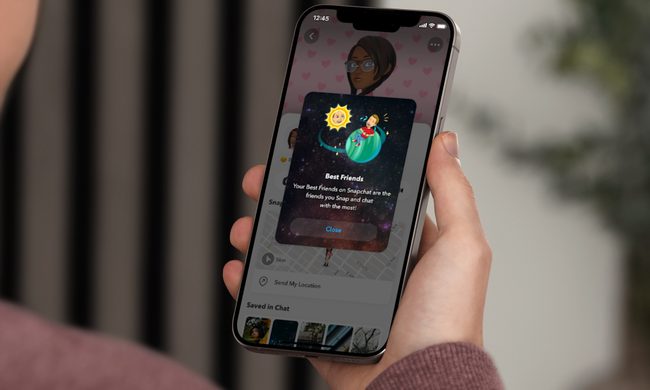
Snapchat Planets being shown on the Snapchat app on iPhone.

Snapchat is already packed with little symbols that can be weirdly hard to decode. You have streaks, emojis, badges, scores, Best Friends, and if you use Snapchat Plus, a tiny solar system that shows where you sit in someone’s closest-friends list.

The feature is called Friend Solar System, though most people just call it Snapchat Planets. It takes your position in a friend’s Snapchat orbit and turns it into a planet. From Mercury to Neptune, these celestial bodies signify how close a person is to you.

Read more
How to use WhatsApp Web
We'll show you how to use WhatsApp on your desktop or laptop
WhatsApp Web

As one of the most popular messaging services, you’ve already heard of WhatsApp. From its humble beginnings in 2009—two years before Apple introduced iMessage—to its acquisition by Facebook (now Meta) in 2014, WhatsApp has become the dominant messaging platform around the globe.

In recent years, it's grown even more potent with new features like video messages, self-destructing voice messages, the ability to edit sent messages, and more. We even finally got an WhatsApp iPad app in May 2025.

Read more
What is WhatsApp? How to use the app, tips, tricks, and more
From setting it up to mastering hidden features, here is your complete guide to WhatsApp.
WhatsApp app store listing open on iPhone

There's no shortage of messaging apps out there. The past decade has given us more options than we know what to do with, largely because smartphones demanded something better than plain old SMS.

Both the App Store and the Play Store are packed with apps that promise to revolutionize the way we communicate. Most of them didn't make it. The truth is, a messaging app is only as good as the number of people using it, and most apps never cross that threshold.

Read more