1. Home
  2. Mobile
  3. Legacy Archives

RIM buys design company to pretty up struggling BlackBerry brand

Add as a preferred source on Google
rim-blackberry-buys-tat-the-astonishing-tribe
Image used with permission by copyright holder

Despite the launch of BlackBerry 6.0, Research in Motion is still losing customers to iPhone and Android. As we reported yesterday, the smartphone maker announced that it has purchased The Astonishing Tribe (TAT), a company that specializes in mobile and tablet user interface designs. RIM will integrate the TAT team directly into its operations.

“We’re excited that the TAT team will be joining RIM and bringing their talent to the BlackBerry PlayBook and smartphone platforms,” said RIM on its blog.

Recommended Videos

The Astonishing Tribe has worked with Fjitsu, Motorola, Samsung, and Google and claims that its technology is used in more than 470 million devices around the world. In 2010, 15 percent of all phones and 20 percent of all touch phones use its technology.

“We had already thought that the [Blackberry-owned] QNX OS was excellent, but it could be even better after TAT incorporates some of its innovative 3D-like designs. TAT’s prior work on Android interfaces has been well received by reviewers and consumers,” Jefferies wrote in a research note today, reports the WSJ.

RIM’s smartphone marketshare is falling, which makes the acquisition of companies like TAT vital to the future of the brand. Google’s Android OS, Apple’s iPhone, and Microsoft’s new Windows Phone 7 are seen as the fresh alternative to BlackBerry devices, which have traditionally been more business focused. In a recent Nielsen survey, only 11-15 percent of phone owners desired a BlackBerry, about half of the percent that favored Android or iPhone.

Below we’ve embedded a cool video by TAT. It shows some concepts of what smartphones and screens may be like several years from now.

Jeffrey Van Camp
As DT's Deputy Editor, Jeff helps oversee editorial operations at Digital Trends. Previously, he ran the site's…
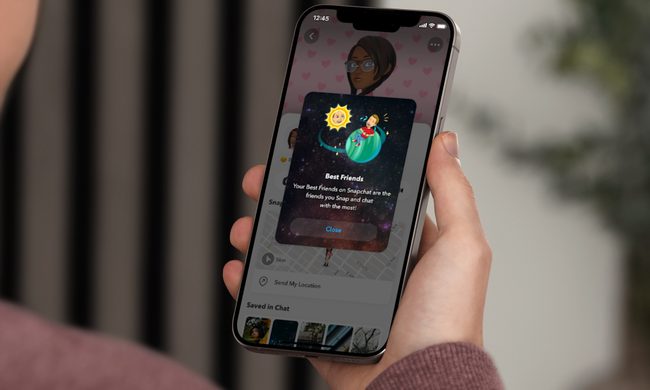
Snapchat Planets Meaning: Order, Rankings, and How Friend Solar System Works
Snapchat Planets turns your best friends list into a solar system, and yes, your orbit says a lot
Snapchat Planets being shown on the Snapchat app on iPhone.

Snapchat+ includes several exclusive features, but few have generated as much curiosity as Snapchat Planets. Part of the app's Friend Solar System, it transforms your Best Friends list into a planetary ranking, assigning each of your top eight friends a planet based on how often you interact.

From Mercury, which represents your closest friend, to Neptune, which represents your eighth closest, the system offers a quick visual snapshot of your interactions. But what do the different planets actually mean, and how does Snapchat decide who gets which one?

Read more
How to use WhatsApp Web
We'll show you how to use WhatsApp on your desktop or laptop
WhatsApp Web

As one of the most popular messaging services, you’ve already heard of WhatsApp. From its humble beginnings in 2009—two years before Apple introduced iMessage—to its acquisition by Facebook (now Meta) in 2014, WhatsApp has become the dominant messaging platform around the globe.

In recent years, it's grown even more potent with new features like video messages, self-destructing voice messages, the ability to edit sent messages, and more. We even finally got an WhatsApp iPad app in May 2025.

Read more
What is WhatsApp? How to use the app, tips, tricks, and more
From setting it up to mastering hidden features, here is your complete guide to WhatsApp.
WhatsApp app store listing open on iPhone

There's no shortage of messaging apps out there. The past decade has given us more options than we know what to do with, largely because smartphones demanded something better than plain old SMS.

Both the App Store and the Play Store are packed with apps that promise to revolutionize the way we communicate. Most of them didn't make it. The truth is, a messaging app is only as good as the number of people using it, and most apps never cross that threshold.

Read more