1. Home
  2. Mobile
  3. Legacy Archives

RIM to Restate Financials, Lose Chairman

Add as a preferred source on Google

Canada’s Research in Motion (RIM), makers of the popular BlackBerry mobile email and smartphone devices, is the latest company to be bruised by investigations into the granting of stock options and the impact of those options on corporate financial statements. In an announcement today, RIM says it will restate its financials going as far back as its 2004 fiscal year to correct reporting errors in the way stock option grants were handled; further, co-CEO Jim Balsillie is stepping down from his role as chairman of the company’s board of directors.

The announcement stems from the investigation of a special committee looking into RIM’s handling of stock option grants. The committee report indicates that all stock options granted before February 27, 2002, did not apply variable accounting and were therefore reported incorrectly. The committee did not find the errors were the result of any intentional misconduct on the part of RIM officers, but noted that option grant dates were deliberately selected to offer favorable pricing. Co-CEO Balsillie was found to have been directly involved in approving grants for the company’s IPO in 1997, including grants which were reported incorrectly; however, Balsillie’s role in approving grants decreased over time as the responsibility was shifted to other employees.

Recommended Videos

RIM says that it had planned to separate the roles of CEO and board chairman to conform to “current best practices in corporate governance” which separate the CEO and chairman roles. Balsillie will retain his positions as co-CEO and Director at RIM; John Richardson will be the new chairman of RIM’s board, which will expand from seven to nine members.

Overall, RIM expects restatement of financial earnings for fiscal 2004, 2005, 2006, and first quarter of 2007 is expected to reduce its aggregate earnings by as much as $250 million. The company will also make an adjustment of about $8 million to increase its tax expense for accounting for the options.

A number of technology companies are currently investigating the granting of stock options on their own, or after having been contacted by federal investigators.

Geoff Duncan
Former Contributor
Geoff Duncan writes, programs, edits, plays music, and delights in making software misbehave. He's probably the only member…
Snapchat Planets: What’s the order, and what do they mean?
Snapchat Planets turns your best friends list into a solar system, and yes, your orbit says a lot
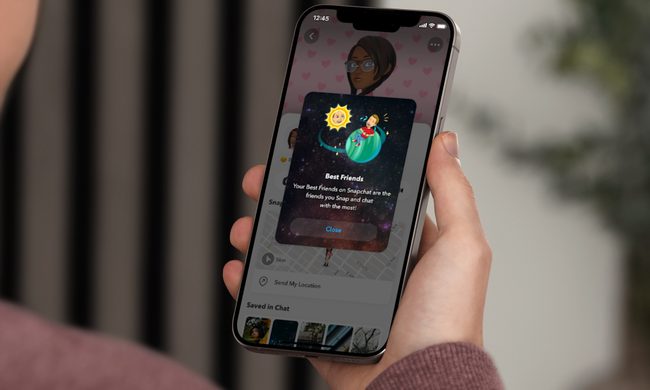
Snapchat Planets being shown on the Snapchat app on iPhone.

Snapchat is already packed with little symbols that can be weirdly hard to decode. You have streaks, emojis, badges, scores, Best Friends, and if you use Snapchat Plus, a tiny solar system that shows where you sit in someone’s closest-friends list.

The feature is called Friend Solar System, though most people just call it Snapchat Planets. It takes your position in a friend’s Snapchat orbit and turns it into a planet. From Mercury to Neptune, these celestial bodies signify how close a person is to you.

Read more
How to use WhatsApp Web
We'll show you how to use WhatsApp on your desktop or laptop
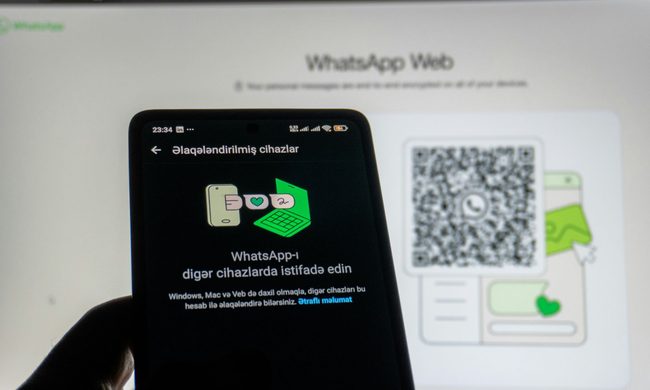
WhatsApp Web

As one of the most popular messaging services, you’ve already heard of WhatsApp. From its humble beginnings in 2009—two years before Apple introduced iMessage—to its acquisition by Facebook (now Meta) in 2014, WhatsApp has become the dominant messaging platform around the globe.

In recent years, it's grown even more potent with new features like video messages, self-destructing voice messages, the ability to edit sent messages, and more. We even finally got an WhatsApp iPad app in May 2025.

Read more
What is WhatsApp? How to use the app, tips, tricks, and more
From setting it up to mastering hidden features, here is your complete guide to WhatsApp.
WhatsApp app store listing open on iPhone

There's no shortage of messaging apps out there. The past decade has given us more options than we know what to do with, largely because smartphones demanded something better than plain old SMS.

Both the App Store and the Play Store are packed with apps that promise to revolutionize the way we communicate. Most of them didn't make it. The truth is, a messaging app is only as good as the number of people using it, and most apps never cross that threshold.

Read more