  1. Home
  2. Mobile
  3. Legacy Archives

Samsung Galaxy Note 10.1 to begin selling on March 7

Add as a preferred source on Google

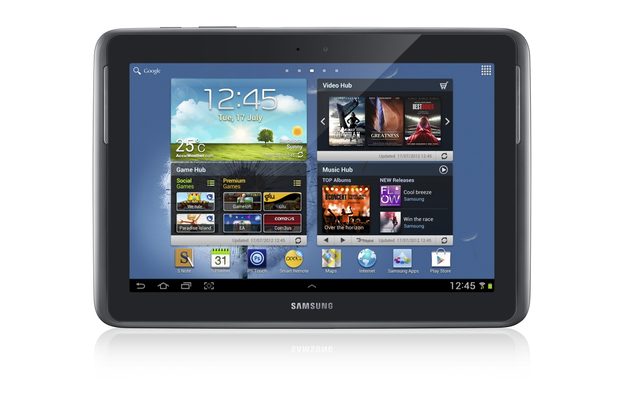
Samsung-Galaxy-Note-10_1-The next generation in Samsung tablets is here. (Or, it will be come this Thursday.) Originally showcased at this year’s CES, the South Korea-based company announced the official launch of the Samsung Galaxy Note 10.1 in a press release issued earlier today.

Based on the specs and the images we’ve seen, it looks like it will be a pretty impressive device. The Note 10.1 comes equipped with Android 4.1 Jelly Bean, and rocks a five megapixel rear-facing camera and 1.9-megapixel front-facing camera. It runs on a 1.4GHz quad-core processor and boasts a vibrant 1200×800 pixel high-definition screen.

Recommended Videos

The tablet is jam-packed full of cool features, like the ability to increase productivity with multiscreen viewing. In other words, you could have a movie playing on the left half of the screen and simultaneously surf the Web on the right side of the screen.

It can also be transformed into a universal remote control, which allows users to control just about every gadget on your home entertainment stand. To boot, it even begins to learn your programming preferences and make suggestions.

It’s not just a toy either. A key feature for businesspeople is the inclusion of Polaris Office. This program won’t just allow users to open and view Microsoft Word and Powerpoint files, but also edit them. This will be made a lot easier using the S Pen, which the company says provides the comfortability a pen offers with mouse-like precision. To boot, the Note 10.1 has beefed up security and is equipped with SAFE (Samsung for Enterprise), meaning it’s safe for users to sync up to their office network without having to worry about confidentiality.

The Galaxy Note 10.1 will be exclusive to Verizon – at least at its launch time – and will retail for $600.

Joshua Pramis
Spending a childhood engrossed in such technologically inspiring television shows like Voltron, Small Wonder, and Power…
Topics
Snapchat Planets Meaning: Order, Rankings, and How Friend Solar System Works
Snapchat Planets turns your best friends list into a solar system, and yes, your orbit says a lot
Snapchat Planets being shown on the Snapchat app on iPhone.

Snapchat+ includes several exclusive features, but few have generated as much curiosity as Snapchat Planets. Part of the app's Friend Solar System, it transforms your Best Friends list into a planetary ranking, assigning each of your top eight friends a planet based on how often you interact.

From Mercury, which represents your closest friend, to Neptune, which represents your eighth closest, the system offers a quick visual snapshot of your interactions. But what do the different planets actually mean, and how does Snapchat decide who gets which one?

Read more
How to use WhatsApp Web
We'll show you how to use WhatsApp on your desktop or laptop
WhatsApp Web

As one of the most popular messaging services, you’ve already heard of WhatsApp. From its humble beginnings in 2009—two years before Apple introduced iMessage—to its acquisition by Facebook (now Meta) in 2014, WhatsApp has become the dominant messaging platform around the globe.

In recent years, it's grown even more potent with new features like video messages, self-destructing voice messages, the ability to edit sent messages, and more. We even finally got an WhatsApp iPad app in May 2025.

Read more
What is WhatsApp? How to use the app, tips, tricks, and more
From setting it up to mastering hidden features, here is your complete guide to WhatsApp.
WhatsApp app store listing open on iPhone

There's no shortage of messaging apps out there. The past decade has given us more options than we know what to do with, largely because smartphones demanded something better than plain old SMS.

Both the App Store and the Play Store are packed with apps that promise to revolutionize the way we communicate. Most of them didn't make it. The truth is, a messaging app is only as good as the number of people using it, and most apps never cross that threshold.

Read more