  1. Home
  2. Mobile
  3. Legacy Archives

Samsung Galaxy Tab 7.7 pulled from IFA floor after injunction

Add as a preferred source on Google
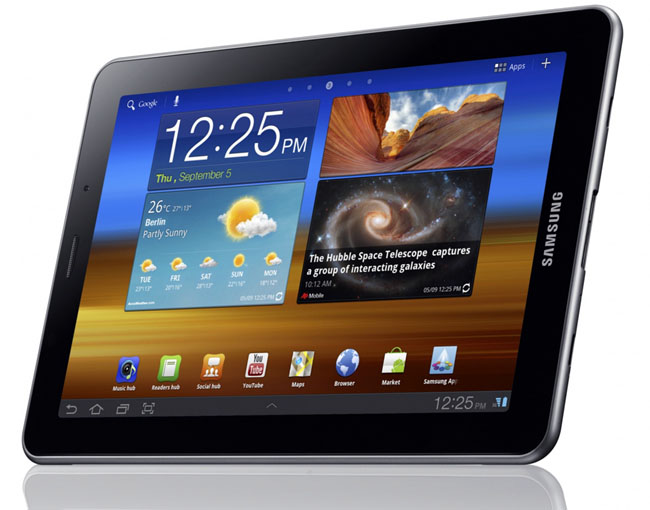
Samsung Galaxy Tab 7.7
Image used with permission by copyright holder

This week’s IFA consumer electronics show in Berlin is one of the top places for manufacturers to showcase technology as they gear up for the end-of-year holiday buying season—and now Samsung isn’t able to show off what it hoped would be one of its hot products. The South Korean electronics giant has been forced to remove demonstration units of its Galaxy Tab 7.7 Android tablet from the show floor as Apple got a second injunction barring sales and marketing of the product in Germany. Numerous reports from the show floor note that while the tablet was initially on display and labeled “not for sale in Germany,” the sample units and all mention of the Galaxy Tab 7.7 have been removed from Samsung’s exhibits.

The move follows a German court upholding a ban on the sale and marketing of the Galaxy Tab 10.1 in Germany late last month. Apple claims the Galaxy Tab tablets are essentially copies of its popular iPad line; Samsung denies the charges. Apple is pursuing the matter across several jurisdictions, including South Korea and the United States.

Recommended Videos

Bloomberg quotes a Seoul-based spokesperson for Samsung as saying the company respects the court’s decision although it believes the ruling “several limits consumer choice in Germany.” The spokesperson indicated Samsung intends to continue pursuing the case.

Apple has not commented on the matter.

The withdrawal of the Samsung Galaxy Tab 7.7 demonstration models increases scrutiny on Samsung’s Tablet efforts. Although Apple discloses its iPad sales every quarter, Samsung has yet to reveal how many tablet devices it is actually selling. According to Strategy Analytics, Samsung accounts for 16 percent of the tablet market, compared to 69 percent for the Apple iPad. However, a Lenovo executive claims Samsung sold just 20,000 Galaxy Tabs by the end of 2010, suggesting the device’s launch was far rockier than most industry watchers believed—even with Samsung trying to smooth over an alleged translation error in describing early Galaxy Tab sales.

Geoff Duncan
Former Contributor
Geoff Duncan writes, programs, edits, plays music, and delights in making software misbehave. He's probably the only member…
Snapchat Planets: What’s the order, and what do they mean?
Snapchat Planets turns your best friends list into a solar system, and yes, your orbit says a lot
Snapchat Planets being shown on the Snapchat app on iPhone.

Snapchat is already packed with little symbols that can be weirdly hard to decode. You have streaks, emojis, badges, scores, Best Friends, and if you use Snapchat Plus, a tiny solar system that shows where you sit in someone’s closest-friends list.

The feature is called Friend Solar System, though most people just call it Snapchat Planets. It takes your position in a friend’s Snapchat orbit and turns it into a planet. From Mercury to Neptune, these celestial bodies signify how close a person is to you.

Read more
How to use WhatsApp Web
We'll show you how to use WhatsApp on your desktop or laptop
WhatsApp Web

As one of the most popular messaging services, you’ve already heard of WhatsApp. From its humble beginnings in 2009—two years before Apple introduced iMessage—to its acquisition by Facebook (now Meta) in 2014, WhatsApp has become the dominant messaging platform around the globe.

In recent years, it's grown even more potent with new features like video messages, self-destructing voice messages, the ability to edit sent messages, and more. We even finally got an WhatsApp iPad app in May 2025.

Read more
What is WhatsApp? How to use the app, tips, tricks, and more
From setting it up to mastering hidden features, here is your complete guide to WhatsApp.
WhatsApp app store listing open on iPhone

There's no shortage of messaging apps out there. The past decade has given us more options than we know what to do with, largely because smartphones demanded something better than plain old SMS.

Both the App Store and the Play Store are packed with apps that promise to revolutionize the way we communicate. Most of them didn't make it. The truth is, a messaging app is only as good as the number of people using it, and most apps never cross that threshold.

Read more