  1. Home
  2. Mobile
  3. Legacy Archives

Sprint launches new Windows Phones: HTC 8XT and Samsung Ativ S Neo

Add as a preferred source on Google

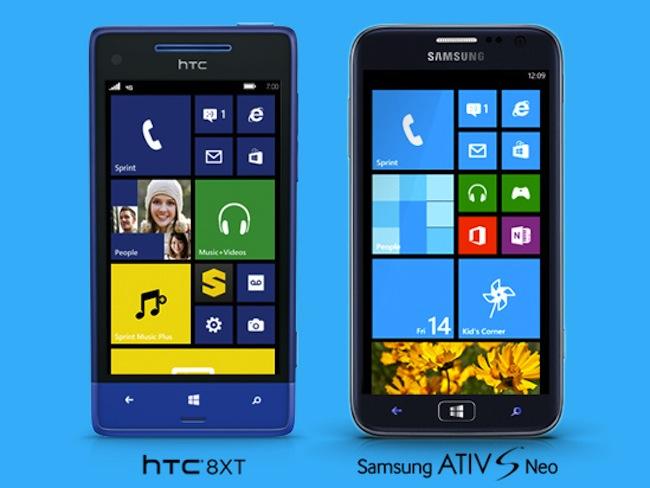
htc-8xt-samsung-ativ-s-neo-bigCheck out our review of the HTC 8XT and Samsung ATIV S Neo phone.

This morning, Sprint announced two new Windows 8 phones to help kick off the summer season. The two devices, HTC’s 8XT and Samsung’s Ativ S Neo, both come at wallet-friendly prices — with a two-year contract and mail-in rebate.

Recommended Videos

The HTC 8XT takes the One approach, introducing front-facing dual stereo speakers to the Windows Phone market, gearing itself toward music lovers. The device rocks the quality sound that comes with its Beats Audio speakers, which the company says “delivers thundering bass, soaring midrange, and crisp highs.” The phone has a 4.3-inch screen, is powered by a 1.4GHz dual-core Qualcomm Snapdragon 400 processor, comes with 1GB RAM, and has 8GB storage with a microSD card that allows for expansion of up to 64GB. It sports an 8-megapixel rear-facing and 1.6-megapixel front-facing camera. 

Samsung’s ATIV S Neo is Sprint’s latest offering for users looking to make the most of their smartphone’s camera. The camera specs are pretty run-of-the-mill — 8 megapixels in the back, 1.9 megapixels in the front — but it comes pre-loaded with a slew of camera apps. Beauty Shot helps deliver smooth-looking skin for impromptu headshots; Manga Camera adds whimsy to shots by giving everything the cartoon treatment; and Photo Editor does exactly what you think it does. It’s powered by a 1.4GHz dual-core processor and comes with 1GB RAM. Oddly enough, Sprint isn’t saying how much storage is on-board, but the device does come with a microSD slot, so we’d imagine it’s at least expandable up to 64GB, like the 8XT. 

There’s no word on the exact availability for either device, but you can sign up for updates here. Once made available, the HTC 8XT will be just $100, while the Samsung ATIV S will be $150, after a mail-in rebate and two-year agreement. 

Joshua Pramis
Spending a childhood engrossed in such technologically inspiring television shows like Voltron, Small Wonder, and Power…
Snapchat Planets: What’s the order, and what do they mean?
Snapchat Planets turns your best friends list into a solar system, and yes, your orbit says a lot
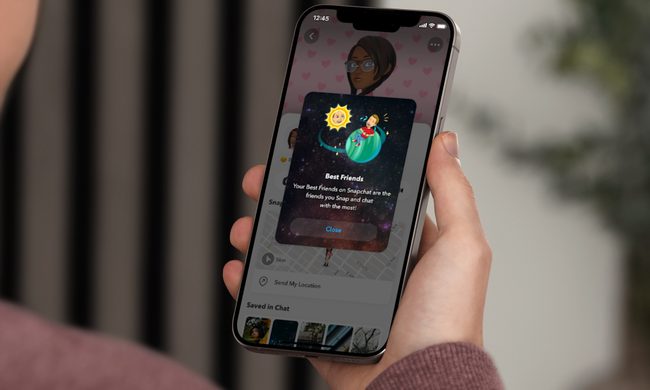
Snapchat Planets being shown on the Snapchat app on iPhone.

Snapchat is already packed with little symbols that can be weirdly hard to decode. You have streaks, emojis, badges, scores, Best Friends, and if you use Snapchat Plus, a tiny solar system that shows where you sit in someone’s closest-friends list.

The feature is called Friend Solar System, though most people just call it Snapchat Planets. It takes your position in a friend’s Snapchat orbit and turns it into a planet. From Mercury to Neptune, these celestial bodies signify how close a person is to you.

Read more
How to use WhatsApp Web
We'll show you how to use WhatsApp on your desktop or laptop
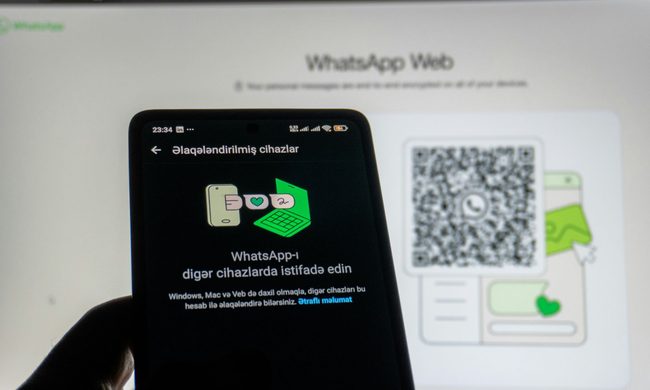
WhatsApp Web

As one of the most popular messaging services, you’ve already heard of WhatsApp. From its humble beginnings in 2009—two years before Apple introduced iMessage—to its acquisition by Facebook (now Meta) in 2014, WhatsApp has become the dominant messaging platform around the globe.

In recent years, it's grown even more potent with new features like video messages, self-destructing voice messages, the ability to edit sent messages, and more. We even finally got an WhatsApp iPad app in May 2025.

Read more
What is WhatsApp? How to use the app, tips, tricks, and more
From setting it up to mastering hidden features, here is your complete guide to WhatsApp.
Electronics, Phone, Mobile Phone

There's no shortage of messaging apps out there. The past decade has given us more options than we know what to do with, largely because smartphones demanded something better than plain old SMS.

Both the App Store and the Play Store are packed with apps that promise to revolutionize the way we communicate. Most of them didn't make it. The truth is, a messaging app is only as good as the number of people using it, and most apps never cross that threshold.

Read more