1. Home
  2. Mobile
  3. Legacy Archives

Google advertises Nexus 7 on homepage — why now?

Add as a preferred source on Google
Google advertises Nexus 7 on homepage
Image used with permission by copyright holder

It feels a bit odd to write a story about a simple advertisement. But this is just a bit too odd to ignore: Google has, for the first time, decided to promote its Nexus 7 tablet on the Google.com homepage.

This is strange for a number of reasons. First and foremost, Google has mostly shunned advertising from the clean whiteness of its search homepage. The company has never, to the best of my knowledge, ever allowed a stand-alone ad from a disconnected third-party to appear there. There have, however, been a few exceptions for its own devices. Most notably, Google broke its no-ad rule in 2010 by publishing a small ad for the Nexus One and the Motorola Droid for Verizon.

Recommended Videos

Okay, so perhaps the Nexus ad’s appearance isn’t that weird. But it begs another question: Why now? Surely Google knows that the technology blogosphere will take notice when it makes a move like this one. And if they know that, then there is good reason to believe they timed this push for the Nexus 7 with certain intentions in mind. Are they trying to squeeze out as many sales as possible before Amazon’s big event next week, during which it is expected to unveil the Kindle Fire 2, the Nexus 7’s closest rival? If I had to bet on it, that’s where I’d place my money.

It is entirely possible, of course, that the timing of this conspicuous ad has nothing to do with anything outside Google’s pre-ordained marketing push. The company has had strong success in recent weeks with its Nexus 7 television ads. Perhaps its simply attempting to ride that success out as long as possible.

I have reached out to Google to try to get some more information, simply because I’m curious. What’s behind the decision to run this ad, and why now? I will update when (read: if) I receive a response.

In case you’re curious, watch Google’s Nexus 7 “Camping” ad below:

Andrew Couts
Features Editor for Digital Trends, Andrew Couts covers a wide swath of consumer technology topics, with particular focus on…
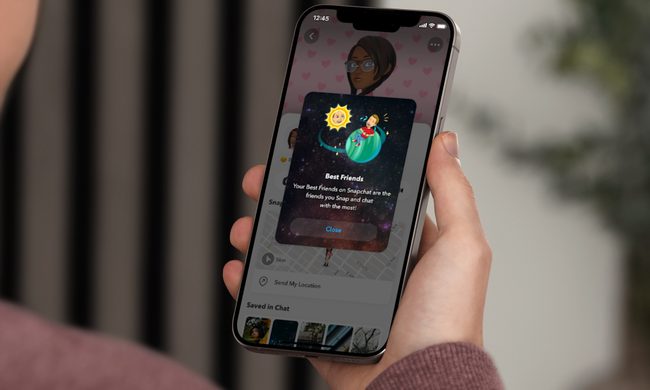
Snapchat Planets: What’s the order, and what do they mean?
Snapchat Planets turns your best friends list into a solar system, and yes, your orbit says a lot
Snapchat Planets being shown on the Snapchat app on iPhone.

Snapchat is already packed with little symbols that can be weirdly hard to decode. You have streaks, emojis, badges, scores, Best Friends, and if you use Snapchat Plus, a tiny solar system that shows where you sit in someone’s closest-friends list.

The feature is called Friend Solar System, though most people just call it Snapchat Planets. It takes your position in a friend’s Snapchat orbit and turns it into a planet. From Mercury to Neptune, these celestial bodies signify how close a person is to you.

Read more
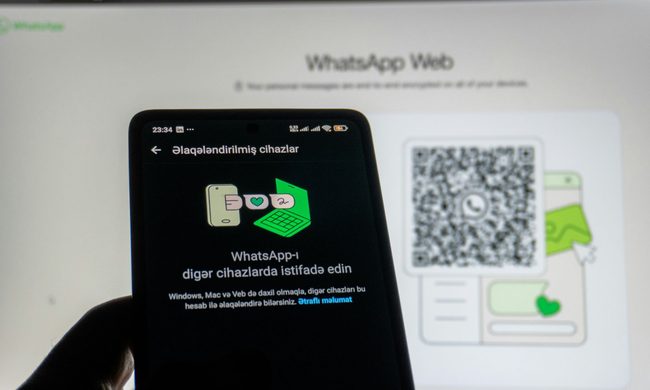
How to use WhatsApp Web
We'll show you how to use WhatsApp on your desktop or laptop
WhatsApp Web

As one of the most popular messaging services, you’ve already heard of WhatsApp. From its humble beginnings in 2009—two years before Apple introduced iMessage—to its acquisition by Facebook (now Meta) in 2014, WhatsApp has become the dominant messaging platform around the globe.

In recent years, it's grown even more potent with new features like video messages, self-destructing voice messages, the ability to edit sent messages, and more. We even finally got an WhatsApp iPad app in May 2025.

Read more
What is WhatsApp? How to use the app, tips, tricks, and more
From setting it up to mastering hidden features, here is your complete guide to WhatsApp.
WhatsApp app store listing open on iPhone

There's no shortage of messaging apps out there. The past decade has given us more options than we know what to do with, largely because smartphones demanded something better than plain old SMS.

Both the App Store and the Play Store are packed with apps that promise to revolutionize the way we communicate. Most of them didn't make it. The truth is, a messaging app is only as good as the number of people using it, and most apps never cross that threshold.

Read more