
“Why you can trust Digital Trends – We have a 20-year history of testing, reviewing, and rating products, services and apps to help you make a sound buying decision. Find out more about how we test and score products.“
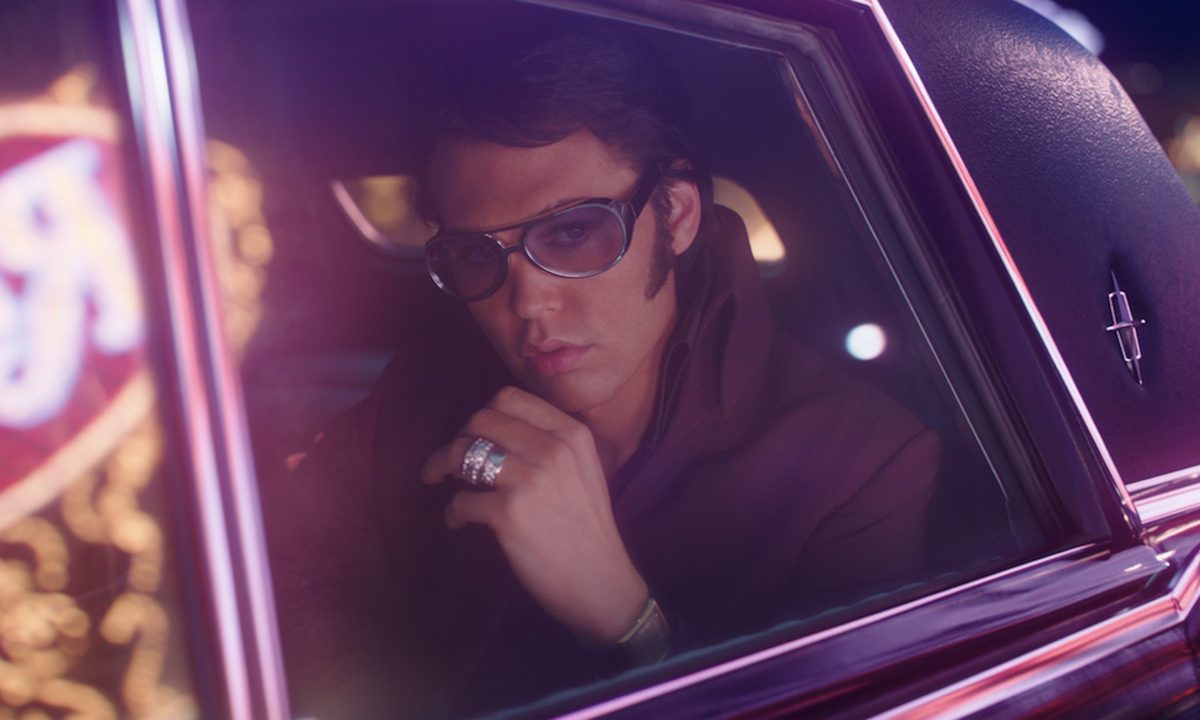
The first time we get a good look at the title character of Baz Luhrmann’s caffeinated Wikipedia spectacular, Elvis, he’s stepping out of the shadows and onto a stage in Louisiana, ready to perform for a crowd totally unaware that they’re about to witness the coronation of the future king of rock ’n’ roll. Decked out in pink from shoulders to ankles, the 19-year-old heartthrob hesitates, and the audience, smelling blood, heckles him. But then Elvis Presley (Austin Butler) launches into the opening notes of what will become his first national hit, Baby, Let’s Play House, and as he belts and strums, his body lurches and thrusts. He moves as if struck by lightning, and the electric current passes through the whole venue, jolting awake the young women in attendance, their libidos instantly sparked by his suggestive country-preacher gyrations.
Too many biopics to count include a star-is-born moment like this one. But Luhrmann, the irrepressible carnival-barker glutton behind Moulin Rouge and The Great Gatsby, stages the sequence with a hellzapoppin’ flair that pushes it past cliché, on to parody, and then beyond that still, to a fever pitch of cartoon hysteria. A thunderbolt of electric guitar embellishes the song, sacrificing historical realism on the altar of cross-era, arena-rock glory. And the girls don’t just scream. They explode into a kind of involuntary rapture, as if possessed by the spirit of Presley’s raw animal magnetism. Supercharging a stock music-drama convention, Luhrmann reaches for the heights of myth: The rise of a radio god as a one-man sexual revolution, releasing all the pent-up frustration of America’s youth and halving history in the process.
That kind of energy dominates Elvis. On paper, the movie is pure biographical boilerplate, connecting 25 years of bullet points in the life and career of the bestselling solo recording artist of all time. Yet Luhrmann is no accountant or hall-of-fame historian. Right from the start, he cuts the music biopic into a mad flurry, caricaturing its familiar beats, tackling its obligations through a scrapbook collage of headlines and crowd shots and split-screen action. Elvis is structured like a nearly three-hour sizzle reel. It doesn’t so much have scenes as suites. It moves.
Luhrmann’s MTV overdrive approach might be as strategic as it is pathological. Elvis can only cover all the ground it needs to cover at warp speed, telling elements of its decades-spanning true story through implication and shorthand. The rise to fame. The battle against scandalized moral scolds. The subsequent backlash to the compromised, pastor-friendly Elvis, which is basically the singer’s Dylan-goes-electric moment in reverse. Elvis races through all of it. Meanwhile, the King’s career in Hollywood is relegated to a single, stylish Technicolor montage. His service overseas is omitted entirely.
To the extent that this maximalist Graceland revue has a dramatic center, it’s the initially symbiotic, increasingly parasitic relationship between Elvis and his infamously exploitative manager, Colonel Tom Parker (Tom Hanks). The script, an obvious patchwork of drafts by Luhrmann and others, starts the story with Parker catching scent of the superstar at an embryonic stage. (His discovery that the million-dollar voice on the radio belongs to a white man is accompanied by a hilarious smash zoom into Hanks’s face, disguised by a fake nose and animated with shock and the lust of opportunity). Parker ends up seducing Elvis into a contract at the fairgrounds, issuing his Faustian pitch at the top of a Ferris wheel. Among other things, this is an innocence lost story: One montage of many crosscuts Elvis losing his virginity with shots of his mother fretting.
What Parker calculated was the immense commercial potential in Presley’s culture vulturing, the way he repackaged for a white audience the sound and moves of the Black artists he listened to in his youth. Elvis naturally foregrounds that aspect of the musician’s rags-to-riches story, even folding it into the Walk Hard tropes it energizes: As the King struts to the stage, Luhrmann cuts to footage of a preteen Presley spying on a barnyard performance by Arthur “Big Boy” Crudup, a truer contender for the title of rock ‘n’ roll’s father. Later, a thrillingly assembled sequence depicts Elvis literally walking between white and Black America, at home on the lawn of a plantation and on Beale Street. The film grasps the true threat conservatives saw in Elvis — their fear of not just his exaggerated sexuality but also of the Black culture on which he was lucratively capitalizing.
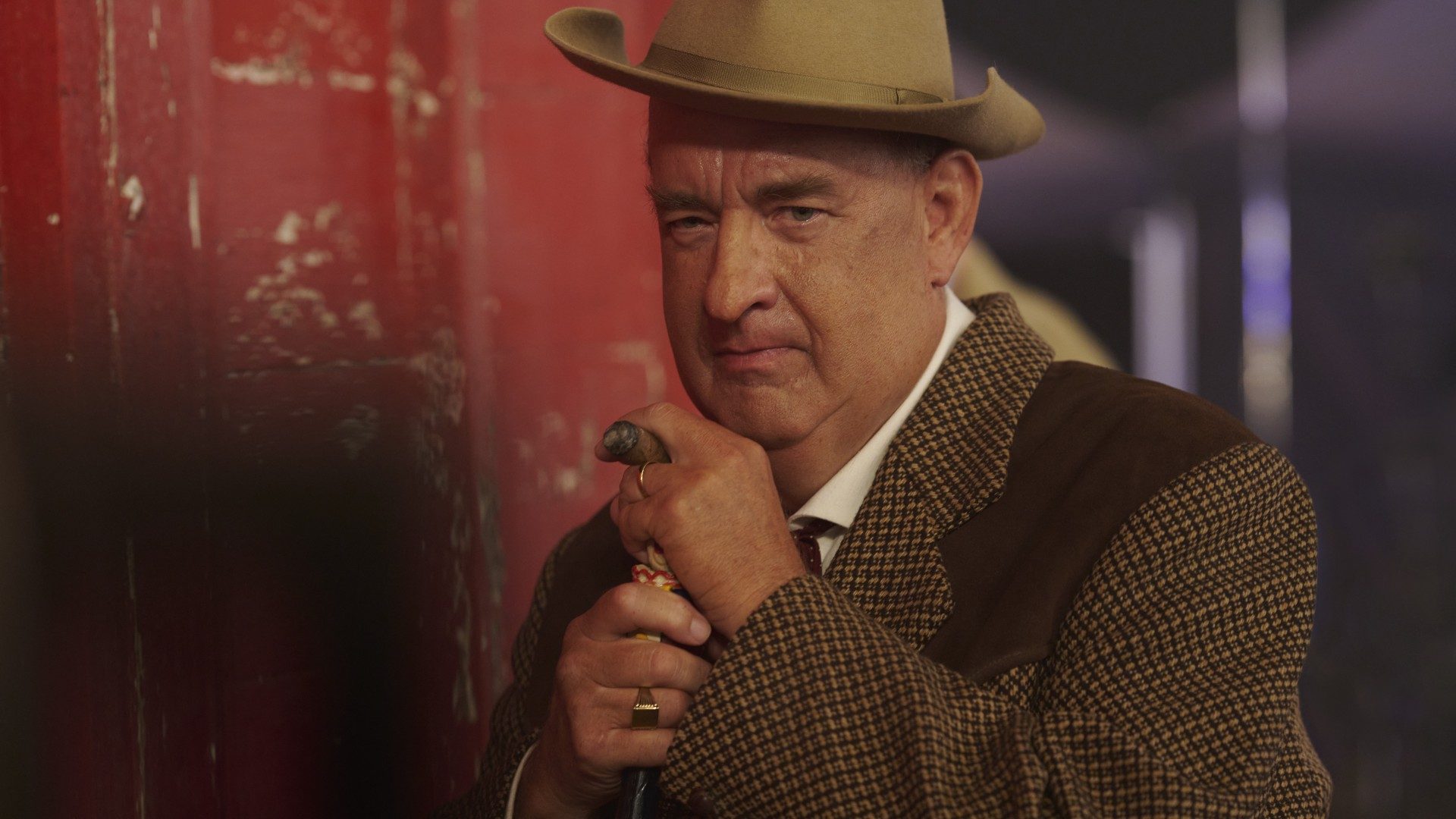
Parker narrates the film, repeatedly insisting that Elvis’s eventual decline and death were a product of his tireless devotion to putting on a show, even as what we see puts the blame more squarely on the conniving, controlling guidance of his manager. That’s a potentially ingenious angle, to frame the story around the unreliable deflections of its villain. Hanks, though, is unusually, almost impressively atrocious in the role. The casting makes sense in theory, weaponizing the essential paternal decency of our most trustworthy Hollywood star into a manipulation tactic. But even a movie this outrageously heightened can’t support the fat-suit absurdity of Hanks’s performance, which compounds ghoulish Austin Powers makeup with a truly bizarre, vaudeville Nordic accent that sounds almost nothing like how the real man really talked. Hanks is simply too ridiculous to take seriously here, and his scenes tilt the film precariously close to sketch comedy.
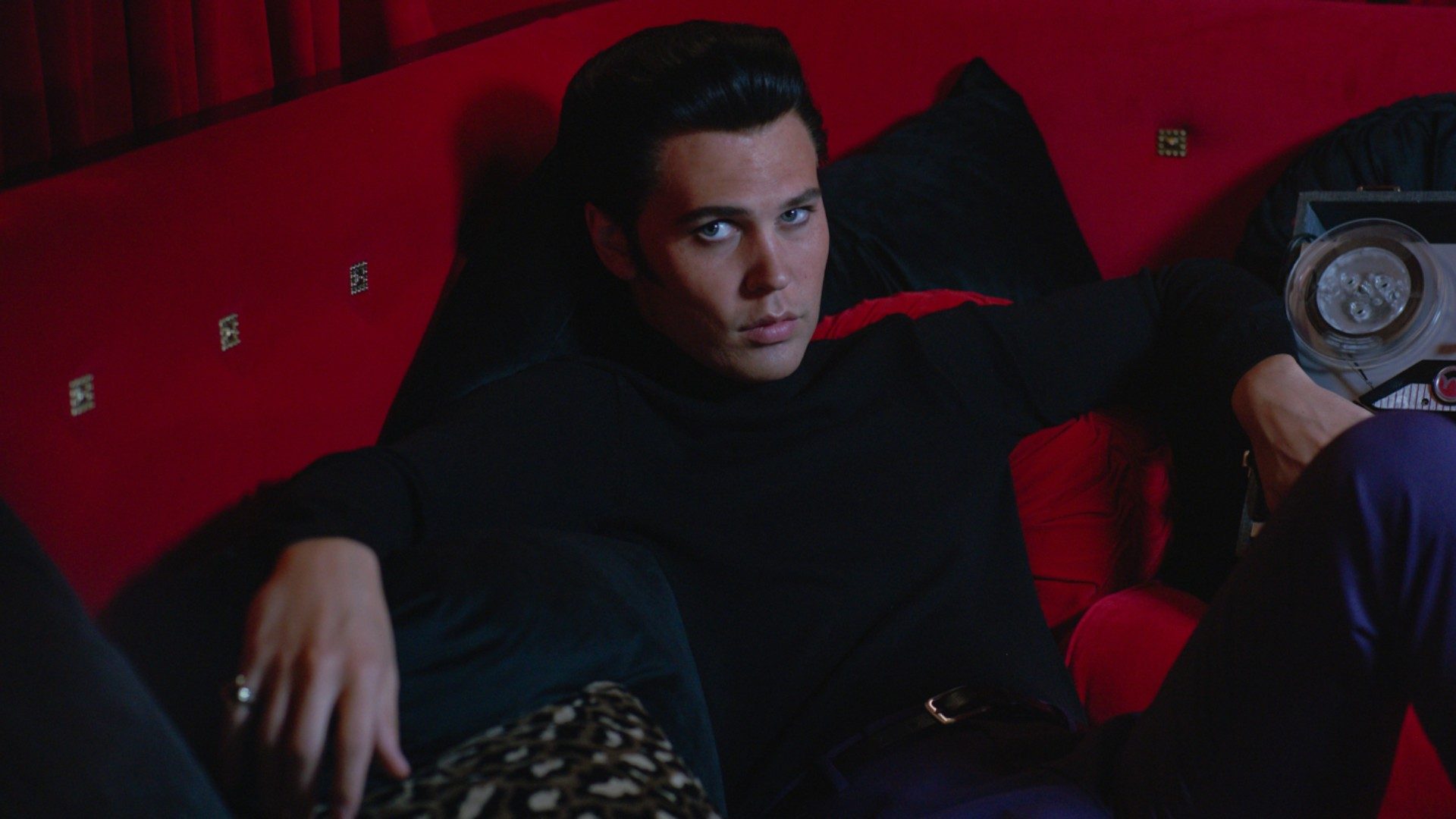
Butler, sweating profusely though a rotating wardrobe of famously fashionable getups, fares better as The King. It’s a print-the-legend performance, all swagger and pinup-boy posturing, with much more attitude — and sex appeal — than psychology. But that suits a biopic with a greater interest in the seismic legend of Elvis than who he really was under all the supernova charisma and sequined white jumpsuits. That Butler sometimes resembles not so much Elvis as any number of flash-in-the-pan acts indebted to the artist’s style only reinforces Luhrmann’s implied conception of rock history as a game of telephone, distorting the original voice with each new delivery or generation.
Elvis is everywhere, the film asserts — an idea it communicates through a soundtrack that slows down and airs out big hits like “Fools Rush In,” remixing them into a series of ghostly hymns echoing out of the pop-culture consciousness. The director of Moulin Rouge has also, of course, stocked his jukebox with anachronistic needle drops, alternating hip-hop with modern covers of The King to underscore how Elvis’s original act of appropriation is just one chapter in the twisting path of American popular music. It’s a more successfully drawn connection than the film’s numerous attempts to place Elvis against the tumultuous background of mid-century breaking news. Perhaps Hanks is really around to fortify the Forrest Gump associations of a script that periodically drifts to a television set and the assassinations reported on it.
After two-plus hours of relentless supercut summary, the film slows and runs out of steam. An essential component of the Elvis story is the downfall portion of it — those final ignoble years in Vegas, when the man ran out of comebacks, got hooked on pills, and became a prisoner to his casino residency and the vice grip Parker had on his pocketbook. It’s where the plot has to go, but in dutifully dramatizing the last act of this life, Luhrmann sucks all of the wild-man enthusiasm out of his material. The final act is a laborious slump into a tragically foregone conclusion, capped by obligatory archival footage.
Where it comes alive, before that, is on stage. Here, Butler’s sultry costume-party approximation of a luminary gels with Luhrmann’s cut-a-second restlessness to produce something like a monument to the mythology of Elvis. The movie gets by, for so much of its bloated running time, on the ecstatic, foolhardy reverie of its showmanship — the way it channels the King’s stomping stage presence through a breathless rush of image and sound, trying to whip the audience into the same frenzy that Elvis inspired in his own life. How, Luhrmann wagers, can we measure the life of this monumental, destabilizing figure through anything less than a head-spinning extravaganza? Here and there, the excess of his vision pays off, shifting from exhausting to exhilarating.
Elvis opens in theaters everywhere Friday, June 24. For more reviews and writing by A.A. Dowd, visit his Authory page.


