“This seventh, inconclusive entry has been made with a keen understanding of what makes the series such first-rate fun.”
- The part with the motorcycle
- The part with the tiny car
- At least a dozen more deliciously absurd parts
- Maybe too much of a good thing
- Maybe too many characters
- Remember when movies had endings?
“Why you can trust Digital Trends – We have a 20-year history of testing, reviewing, and rating products, services and apps to help you make a sound buying decision. Find out more about how we test and score products.“
With the exception of a uniquely slimy arms dealer played by the late, great Philip Seymour Hoffman, the villains in the Mission: Impossible movies have always been rather serviceable, even forgettable. That is, if you’d even consider them the villains. Time, altitude, gravity, probability: These are the real threats facing Ethan Hunt, the Tom Cruise-shaped pinball launched through every exhilarating espionage machine in the series.
In Mission: Impossible — Dead Reckoning Part One, a sequel whose convoluted absurdity begins with the punctuation in its title, Hunt finally faces an enemy as intangible as the laws of nature he regularly defies. The Entity, as it’s called, is a sentient computer virus — a mass of malevolent code capable of hacking every database on the planet, and reshaping the world by redefining its notions of truth. It’s a timely foe for an age of invisible danger, disinformation, and AI anxiety. In its ability to predict and effectively control the future, it’s also a rather fitting adversary for Hunt. Has the living manifestation of destiny met his match in, well, the unliving master of it?
Picking up where he left off with the previous two installments, Fallout and Rogue Nation, writer-director Christopher McQuarrie has orchestrated another thriller that derives its thrills from the steepening slope of Hunt’s predicament. Take, for example, an early sequence in an airport. Hunt and his merriest sidekicks, played by Simon Pegg and Ving Rhames, are trying to eavesdrop on the sale of a pair of mysterious keys that click together to unlock… well, something mysterious. But new players keep entering the situation, and the keys keep changing hands. A bomb appears, and so does a dead body. Suddenly, there are two running clocks, one primed to explode, and three lines of pursuit. The scene quickly becomes an exercise in how many complications you can stack and parallel planes of dilemma you can cross without losing the audience.
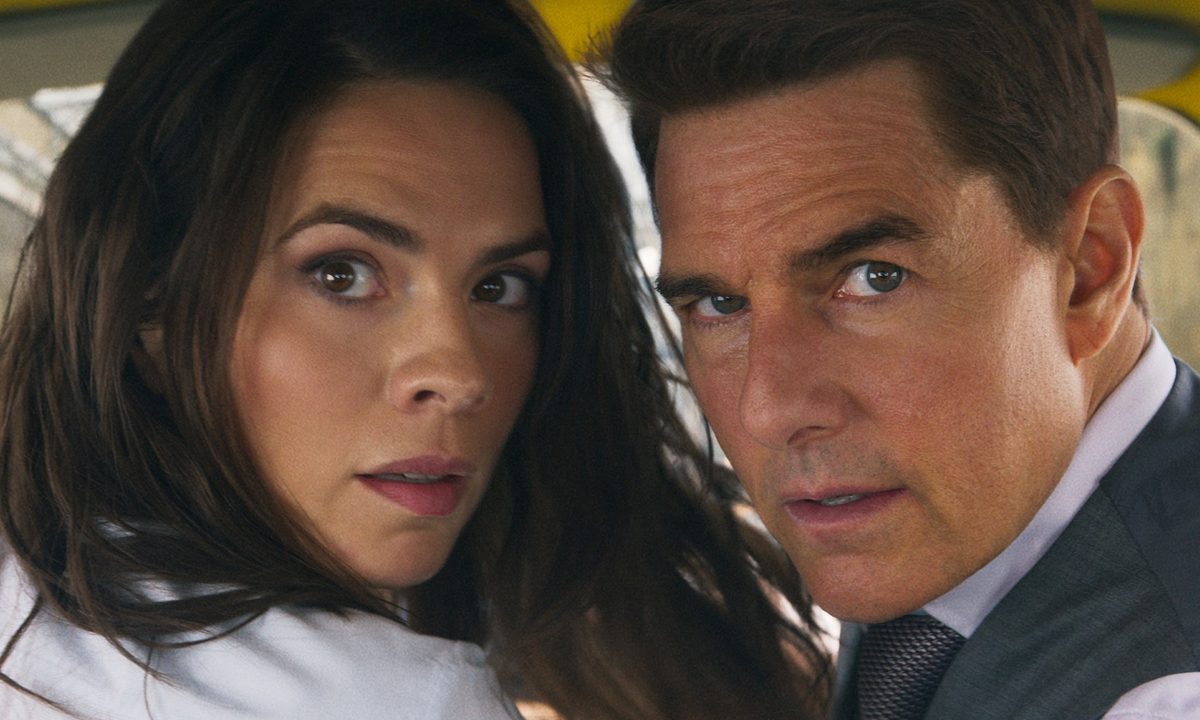
Dead Reckoning has enough exposition to crash Wikipedia, but it’s structured like farce. Everyone in the movie is chasing someone else, or the MacGuffins. The cast teems with new faces, like Hayley Atwell as a thief of uncertain allegiance whose pickpocketing skills become instrumental to a plot that’s at least 40% “who has the thing.” Amusingly in the rear is Shea Whigham, keystone cop on Hunt’s tail, always two steps behind the pileup of cars, bodies, and silicone masks. And grinning maniacally is Guardians of the Galaxy Vol. 3‘s Pom Klementieff, who’s one of the villains, a French assassin, but also a mirror for the audience, reflecting our joy back at us.

There’s a comedy, the kind that spills from disbelief, to the action scenes. As always, Cruise’s escalating feats of Evel Knievel daredevilry, which he’s now performing in his 60s, mark him as an analog hero in a world of digital superheroes. He’s like Johnny Knoxville or Jackie Chan: (Reckless en)danger(ment) is his middle name, and his shtick. Have you heard of what he does on a mountain with a motorcycle this time? How about the screwball bumper-car chase through Rome, scored to barely any music, where Hunt and Atwell’s thief, Grace, are handcuffed together in a tiny yellow Fiat?
In some ways, Mission: Impossible remains blessedly out of step with the blockbuster norm. In others, it bends towards trends, not all of them welcome. Once so self-contained you could watch them in any order, the M:I movies have embraced serialization under McQuarrie’s watch. Dead Reckoning drums up a backstory for Ethan, confusing a body in perpetual motion for a character we’ve ever cared about in the traditional sense. And like recent entries in the Fast & Furious and Spider-Verse sagas, it doesn’t so much end as just stop. Can any movie that offers a glorified “To be continued…” be called great?
Thankfully, McQuarrie also goes looking for inspiration in older entertainment, too. The opening scene catches sonar blips of The Hunt For Red October. The closing one astonishingly recalls, of all movies, The Lost World: Jurassic Park. And you can sense an attempt, in Dead Reckoning, to commune with Brian De Palma’s version of the material, the suspense contraption he built atop an old spy TV show. Its spirit is there in the talky skullduggery, the racing train, the unexpected return of an old handler, and the phantom appearances of a young Cruise — a boyish past life glimpsed in flashbacks that attempt to tie the distant yesterday of this series to its rollicking, still-vital today.
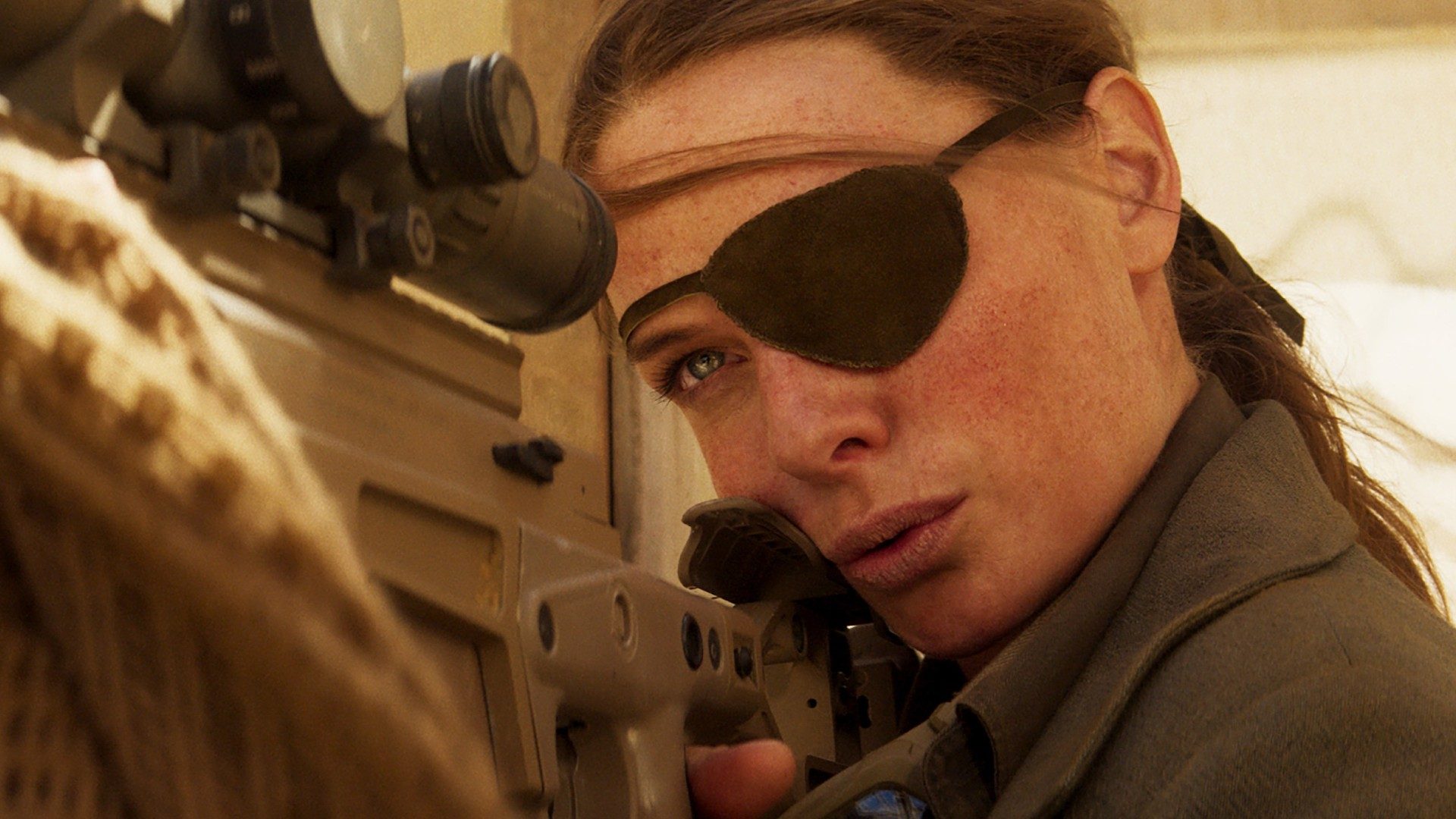
By this point, Cruise has been playing Ethan Hunt for more than 25 years. He’s fused the character’s determination to his own, rendering the distinction between them obsolete. The Mission: Impossible movies are monuments to his vanity, reckless ambition, and star power, still potent in the wake of Top Gun: Maverick. It’s forever tempting to see them as stained-glass windows into Cruise’s life. The actor practically winces when the nominal villain, a lackey of The Entity, accuses Hunt of using women. (Rebecca Ferguson’s fellow agent Ilsa Faust, back in action here, could be seen as a mirror reflection of Hunt — the dream of a perfect partner, matching him every dangerous step of the way.) And come to think of it, isn’t there something familiar about IMF, a secret org that coerces people into joining, insists they cut off all ties, and has their brightest star recruit members?
At 163 minutes, Dead Reckoning is the longest Mission: Impossible, but not the best. It’s a little too long, a little too stuffed with supporting players, and maybe at times a little too silly, to reach the Burj Khalifa heights of the franchise’s past pinnacles. Certainly, it could have used a better look — less overlit, more drenched in the shadows from which Hunt emerges.
Yet this seventh, inconclusive entry has still been made with a keen understanding of what makes the series such first-rate fun — the sublime pleasure of watching Cruise’s secret agent try to think, climb, drive, sprint, deceive, or bluff his way through some very unforgiving odds. And in his rage against the malevolent machine of Dead Reckoning, you can see the shadow of battles against the Netflixing of Hollywood, the green-screening of action, and the growing obsolescence of movie stars. Cruise, like Hunt, would never go down without a fight. “Impossible” isn’t in his vocabulary.
Mission: Impossible — Dead Reckoning Part One opens in theaters everywhere July 12. For more of A.A. Dowd’s writing, please visit his Authory page.