
“Why you can trust Digital Trends – We have a 20-year history of testing, reviewing, and rating products, services and apps to help you make a sound buying decision. Find out more about how we test and score products.“
“Had she said no, the film would never have seen the light of day,” director Todd Field said in a statement about his ambitious new drama, Tár. He was, of course, talking about the film’s star, Cate Blanchett, whose reputation as one of Hollywood’s greatest living actresses certainly precedes her at this point. Despite that fact, it would be easy to initially shrug off Field’s comment as nothing more than a pandering or superficial remark. After all, what director wouldn’t say that about the lead star of their film, especially someone of Blanchett’s caliber?
Having seen Tár, though, the truth of Field’s comment is undeniably clear. In order for it to cast any kind of spell, Tár requires a performer with Blanchett’s charismatic, towering presence. It demands someone who can not only disappear into a character, but who can do so and still be able to command every scene partner who has the misfortune of being pitted against her. Blanchett does that and more in Tár.
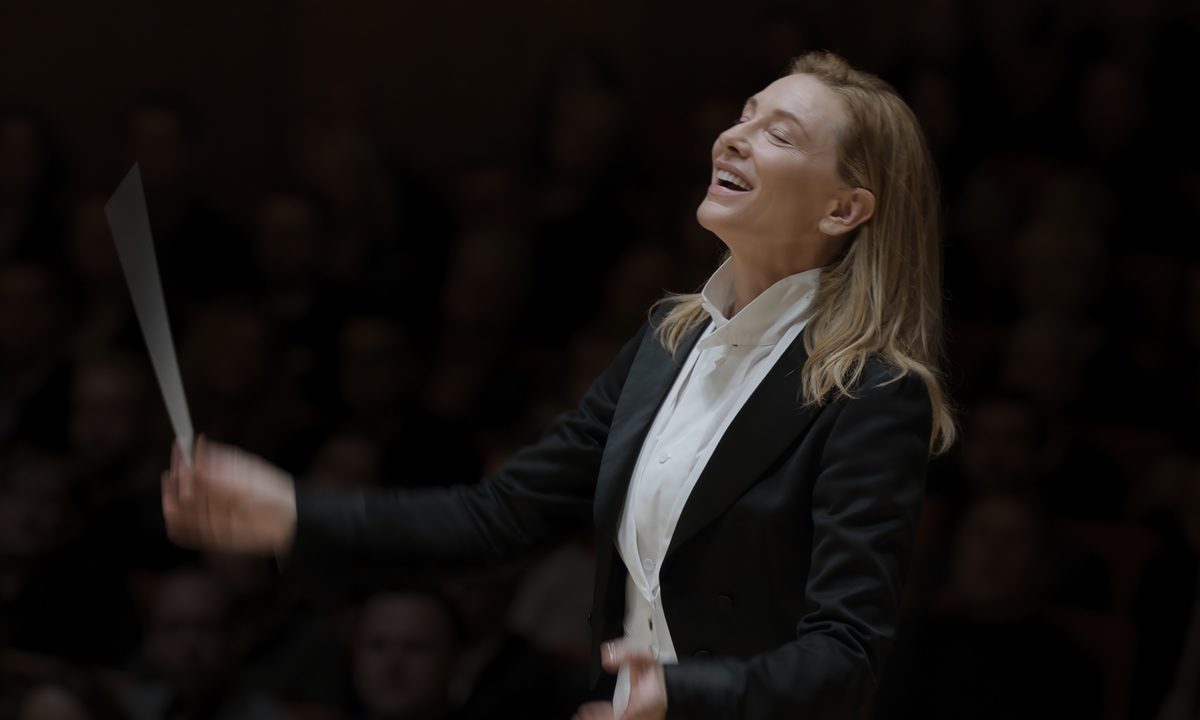
Not since she stood outside Howard Hughes’ projection room in The Aviator has Blanchett so deeply sunk herself into the skin of one of her characters, and not since Blue Jasmine has she so thoroughly and deliciously chewed up and spit out the very film in which she stars. Her performance here might be the best she’s ever given, and even if Tár feels more substantial as a character study than it does as a piece of social commentary, its merits are evident in every flick of the wrist and verbal dismantling that Blanchett delivers as its overly dignified, eponymous composer.
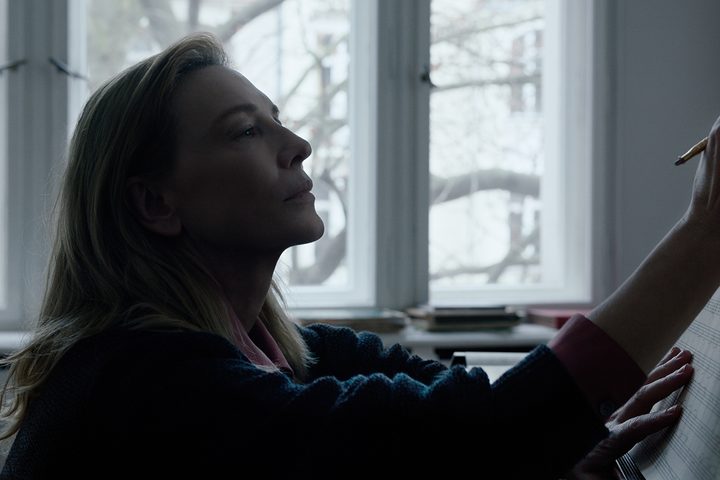
Contrary to what that latter comment suggests, Tár is by no means a straightforward film. Not only do its first 10 minutes revolve entirely around a public conversation between Blanchett’s accomplished composer, Lydia Tár, and real-life New Yorker writer Adam Gopnik, but it moves at such a steady, measured pace that it becomes impossible to predict the trajectory of its story until the landing is already underway. Anyone looking for a simple structure in Field’s script will come up empty-handed.
The film begins with Blanchett’s Lydia very much on top of the world. Having already proven herself as one of the world’s most formidable and inspiring composers, she’s not only on the verge of releasing a new memoir (appropriately titled Tár on Tár), but she’s beginning rehearsals for a performance of Gustav Mahler’s Symphony No. 5, which has eluded her throughout her entire career. The film’s opening conversation between Gopnik and Blanchett is, therefore, an effective, extremely tongue-in-cheek way for Tár to establish both Lydia’s accomplishments and her standing within her field.
From there, Field spends the bulk of Tár’s formidable 158-minute runtime following Lydia as she prepares for her and her German orchestra’s performance of Mahler’s composition. Along the way, we’re introduced to the most important figures in Lydia’s life, including her wife .Sharon (Nina Hoss). and her assistant. Francesca (Noémie Merlant), as well as Olga Metkina (Sophie Kauer), the blunt young Russian cellist who catches Lydia’s eye early on in the film. Through her interactions with these characters and their rehearsals together, Field slowly but surely plants the seeds for Tár’s surprising yet inevitable third-act turn.

The fewer details that are given about Tár’s conclusion, including its memorably acidic final shot, the better. However, Field does work early on to fill Tár with a sense of slow, impending doom, and he employs a number of simple but effective techniques in order to do so. From the ominous shots of someone watching Blanchett’s Lydia from afar to the array of quiet noises that constantly catch her attention, Field gives his protagonist plenty of reasons to believe that someone — or something — is constantly standing right behind her.
The director also makes great use of Berlin’s urban sprawl. In one sequence, Lydia searches, hopelessly, in a public park for the source of one woman’s relentless screaming, while another sees her delve into the flooded halls of an abandoned, underground school. The latter sequence is when the shades of horror present in Tár come all the way to the forefront, and it leaves a disquieting mark that neither the film nor Blanchett’s Lydia is ever able to truly shake. Its sudden, bone-crunching conclusion also serves, in a way, as a perfect lead-in to Tár’s uncompromising final third, which sees Blanchett’s confident composer pay for her rampant arrogance and abuses of power in as modern a way as possible.
Unfortunately, as timely as Tár’s final moments are, they don’t quite justify the film’s 2-and-a-half-hour runtime. For a film that feels, at times, as weighty and metaphysical as anything else you’ll see this year, it’s undeniably odd to see it arrive at the decisive, straightforward conclusion that it does. In the end, there’s an unavoidable sense of disconnect between the nuanced, abstract beast that Tár is throughout so much of its runtime and the thesis on cancel culture and #MeToo that it ends up turning into.

Part of that disconnect is the result of the operatic, muscular visual style that Field brings to Tár. Here, Field fully embraces the kind of widescreen aesthetic that can make every room and environmentthat Blanchett’s Lydia moves through feel massive and open. The director’s use of long, unbroken takes also allows him to highlight Blanchett’s own inherent magnetism. By cutting as little as possible whenever his star is on-screen, Field is able to present Lydia’s considerably commanding presence as nakedly — and, therefore, powerfully — as possible.
This technique gives Blanchett the chance to dominate a film in a way that very few actors are ever allowed to, and she doesn’t let it pass her by. Even in the moments when Lydia’s grasp on her situation is starting to slip, Blanchett’s vise-like grip over Tár is ever-present. The film is, without question, the kind of one-woman show in which very few other performers are given the chance to shine. In the case of Tár, the only other actor who manages to make much of an impression is Hoss, whose quiet performance as Lydia’s vulnerable but wiser-than-she-lets-on wife emerges as the perfect counterweight to Blanchett’s ferocious lead turn.
It’s Blanchett’s performance that makes the biggest and most impactful impression in Tár, though. Her work here manages to bring a broader appeal to a film with interests and references so niche that it might have otherwise felt like too much of an inside joke to make any kind of a lasting mark. Whether or not Blanchett’s performance is powerful enough to truly wrangle together all of Tár’s ideas into one compelling piece is another matter altogether. What she and Field have achieved here is certainly worth applauding, but Tár’s highs also feel too compelling and considered for it to devolve into the cancel culture-focused treaty on the toxicity of power that it ultimately becomes. Then again, maybe that’s the whole point.
Tár hits theaters in New York and Los Angeles on Friday, October 7. It will expand nationwide throughout the month.


