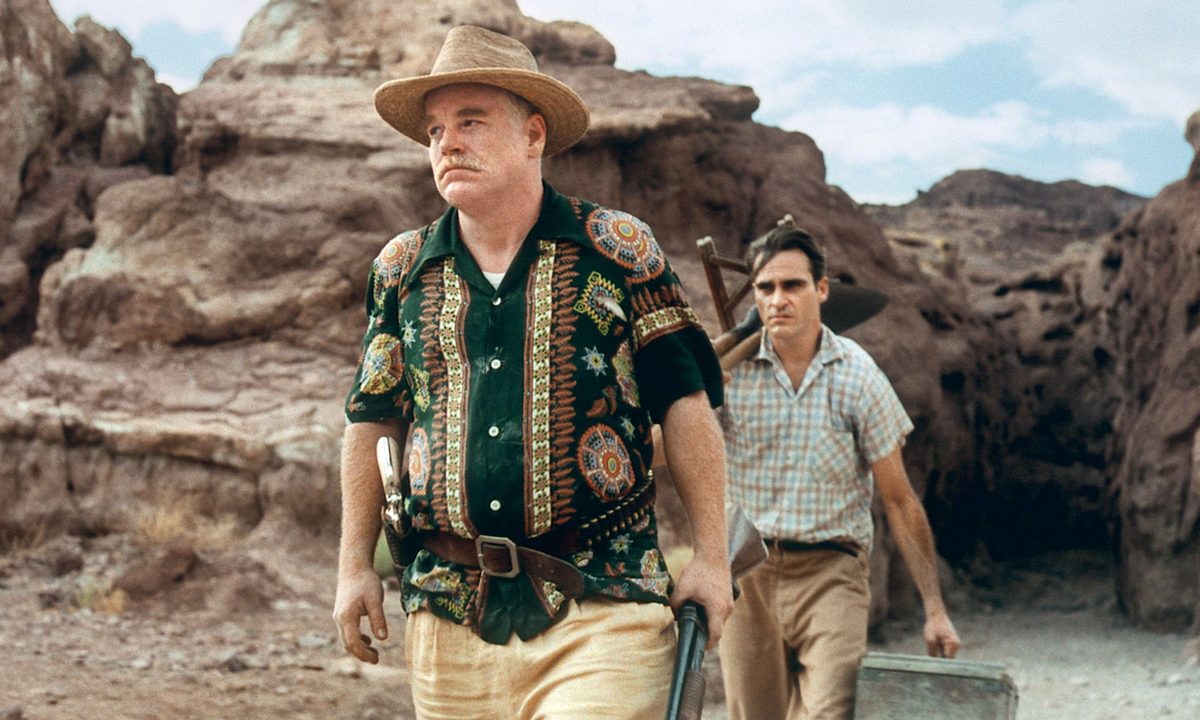
Since Boogie Nights was released over 30 years ago, Paul Thomas Anderson has been stamped as one of America’s greatest filmmakers. Thankfully, he’s largely lived up to that reputation, churning out plenty of great movies and a few masterpieces over the course of his career. He’s collaborated with Daniel Day-Lewis on two of his best performances, and it sounds like One Battle After Another is yet another display of his cinematic prowess.
Looking back on his career, PTA has made one movie that stands above the rest. The Master is his best work, and it might be a film that gets less credit than it deserves. Here’s what makes it so special.
It’s a movie only PTA could direct

Over the course of his career, Anderson has made movies with a wide array of different tones. He’s made strange comedies, epics, and straightforward dramas. The Master leans into the qualities of Anderson’s filmmaking that feel most core to who he is.
The most remarkable thing about this movie, which follows a World War II veteran who finds himself enthralled by a cult leader in what is basically the early days of Scientology, is that every scene is suffused with a strange tension.
There are moments when that tension seems to make sense. Philip Seymour Hoffman’s Lancaster Dodd is an explosive personality, and he explodes at any moment. What’s more impressive is the way that unease permeates the entire running time, even when nothing on its surface seems all that malevolent.
PTA is one of only a couple of directors who can manage tone so beautifully, orchestrating scenes that feel both silly and terrifying and understanding that those two feelings can actually reinforce one another.
It features three all-time great performances

Anderson is known for working with some of the best actors in Hollywood, and he’s also known for getting remarkable performances out of them. The Master might represent the pinnacle of the careers of Philip Seymour Hoffman, Joaquin Phoenix, and Amy Adams, who all do some of the best work of their careers here.
As Freddie Quell, Phoenix is delivering the same kind of performance he would win an Oscar for in Joker, but with much more subtlety and nuance than he delivers there. He’s an unsettling man, but not an unsympathetic one. Meanwhile, Hoffman is a towering inferno, a man who can captivate an entire room, but doesn’t know the limits of his own intellect.
And Adams, as Peggy Dodd, Lancaster’s wife, gives the quietest of the three performances, understanding that she can be most effective through all the things that she chooses not to say.
It features one of the great scenes of the 21st century
If you’re looking for a single reason to watch The Master, it’s probably the extended interview scene that takes place between Dodd and Quell. This comes shortly after the two have met and is the first time that Quell gets a sense of Dodd’s ability to utterly captivate.
Perhaps the most fascinating thing about this intense scene is that Quell makes genuine revelations about his life and why he is so broken. If you understand that this movie is about Scientology, you begin to realize that this scene is not as much about genuine revelation as it is about a masterful con artist swindling a vulnerable man into breaking down.
Phoenix and Hoffman are both tremendous in the scene, which is also one extended buildup of tension toward a final, explosive ending. What’s so remarkable about this interview scene is the way it feels like the movie as a whole in microcosm. This is a movie set mostly in rooms, and one where you could easily start to feel your attention drift or the movie’s momentum wane.
Instead, Anderson knows exactly how to keep you on tenterhooks, and that’s never truer than in this scene. Two actors are just talking to one another, and it feels like you’re watching something miraculous unfold before your eyes.
The Master is a pretty serious movie about pretty silly people, and that balance is perfectly struck throughout the movie’s runtime. Anderson takes these characters and their emotionality seriously, even as he understands that it sometimes manifests in absurd behavior.
In a single scene, Anderson manages to create a key for understanding the entire movie. More importantly, though, the scene itself is endlessly rewatchable, a compelling short play even without any broader context.