
The dotcom bubble of 2001. The housing bubble of 2008. The TV bubble of 2015?
If the blogosphere is to be believed, we are living in a TV bubble. “Peak TV,” as FX President John Landgraf put it while speaking to the Television Critics Association over the summer, when he popularized the term. There’s too much scripted, episodic content being produced, and the output is unsustainable. The bubble is going to burst.
Or so they say.
Of course, other media critics contend our current “golden/platinum/cubic zirconium age” of television is here to stay. To them, the proverbial genie cannot be put back in the bottle. Among them stands Netflix’s chief content officer, Ted Sarandos, who refuted Landgraaf’s statements head-on while addressing the Hollywood Radio and TV Society a couple weeks ago.
Who is right? Nobody, because the “bubble” analogy is totally flawed, and there’s no “pop” in sight. Here’s why.
Netflix is built on House of Cards, not like a house of cards
The whole peak TV debate sounds eerily similar to the current debate over whether or not Silicon Valley is in another bubble. Some pundits see the inflated valuations of profitless start-ups as an alarming warning sign, while others see them as the new normal.
Except the TV biz is nothing like the tech industry. The stunning increase in scripted TV development over the last few years hasn’t been fueled by speculative venture capitalists, like the growth in Silicon Valley. The only VC sharks in the TV biz are on Shark Tank.
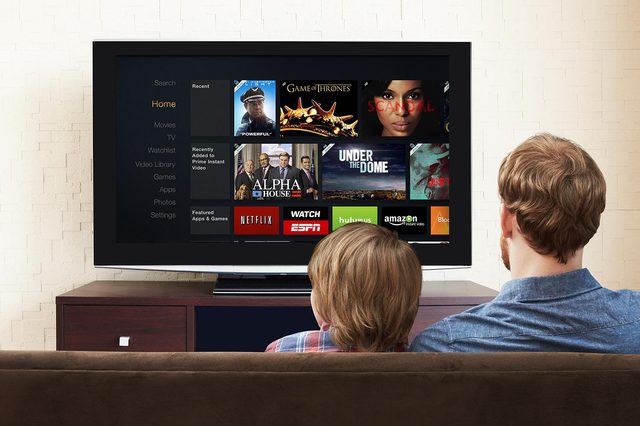
Even when you factor in the tech companies that are now major players in the TV game – like Netflix and Amazon – you’ve still got a fairly conservative business model. Netflix spent over a decade carefully expanding from “DVDs by mail” to “Netflix and chill.” Like its broadcast and cable competition, Netflix has actual profits and a business plan that can see the company through leaner times. The same goes for Amazon: We may not know viewership numbers, but it’s no secret Amazon is planning a long game.
The bubble metaphor irks me because I just don’t see the “pop.” Nothing in TV’s future would resemble the fate in store for Silicon Valley startups, should a company like Uber ($70 billion valuation, zero profits) go under.
Calling the situation “peak TV” doesn’t help either. TV isn’t oil. It’s not a limited commodity. Libraries have more old books than new books. Does that mean we hit “peak literature” at some point?
Now, there are limits when it comes to audience size. Only so many eyeballs exist to watch so many shows. The number of shows will eventually level out. They will likely even dip before they plateau. But a plateau is not a peak.
Wrong assumptions, wrong answers
Metaphors aside, I also have some problems with the underlying arguments of each side.
Bubble bursters claim the TV marketplace is too crowded, and talent is getting spread too thin. To them I say, yes, there are more “must watch” scripted series on now than ever before. Yes, there are way more shows than any one person can ever expect to watch. But personal inconvenience is not a sign of impending doom. “No one goes there anymore because it’s too crowded,” Yogi Berra famously quipped about a booming St. Louis Italian restaurant in 1959. It’s still there.
Netflix spent over a decade carefully expanding from “DVDs by mail” to “Netflix and chill.”
As for the talent issue … it’s true. More shows mean more casts and crews needed, and the current talent pool might start to get a little shallow. But why is that bad? One of the greatest things about the explosion of scripted shows this past decade have been all the new voices we never would’ve heard otherwise. Could shows like Fresh Off The Boat or Crazy Ex-Girlfriend exist in the more rigid TV schedules of 2004?
On the other hand, optimistic show shovelers claim TV producers are simply keeping up with demand, which won’t be ebbing anytime soon. That’s probably true. But demand alone can’t keep production at its current pace. There are causes of concern for TV audiences and producers, but the overall number of shows isn’t one of them.
Take this past Wednesday, for example, when Time Warner projected lower earnings than expected for 2016. TW’s stock took a dive, along with the stock of almost every cable channel. Not a good day to be in the cable business. One of the reasons for lower earnings cited by Time Warner? Cord cutting.

The good news for TV viewers is that cord cutters are mostly moving from cable to other legal alternatives. That’s keeping the revenue stream alive (if a little deflated) for producers, which means we aren’t likely to see shows start disappearing as a result.
But if cord cutters were to turn to piracy en masse? That would spell disaster for both the people who make TV shows and the people who watch them. You simply can’t crowd source shows like Mad Men to distribute via YouTube.
Demand is pointless if large swaths of people choose to satisfy that demand for free. And free doesn’t sustain the level of quality viewers associate with this new “platinum age of television.” Someone has to pay for it.
What about advertisers? They now have to deal with much-improved ad-skipping technology. And advertising doesn’t pay for shows like Game of Thones.
Another area of concern for TV lovers: The Netflix-Amazon arms race. Right now, they’re producing dozens of series according to internal metrics that aren’t public knowledge. No one outside the companies really knows what their long-term plans entail.
What happens if they decide to mutually disarm? Or, worse, what happens if one of them wins?
We already saw a bubble pop, and no one noticed
If you were to put a gun to my head ask me what the future of TV holds: I’d probably pee in my pants and be unable to speak. But if you were ask nicely, no guns, no knives, I’d say “Look at movies.”
According to Landgraf’s own data, by the end of 2015, about 400 different scripted TV series will have aired. Back in 2009, there were only 211 such shows. That’s nearly double the number. It does sound alarming.
People didn’t notice fewer movies hitting theaters because TV was filling that void.
But his numbers leave something out. They don’t talk about what was happening to the movie industry in that same span.
In 2006, the major Hollywood studios released 204 movies in theaters across the U.S. and Canada. By 2014, that number had dropped to 136. Were the early ‘00s considered “peak movies”? Did the loss of revenue trigger panic in the Hollywood studios? Did most people even notice more than 30 percent of their multiplex options disappeared into thin air?
The answers to those questions are “no,” “no,” and “no.”
People didn’t notice fewer movies hitting theaters because TV was filling that void. As audiences’ thirst for high-quality, scripted television increased, the studios shifted resources to match. Film casts and crews became TV casts and crews.
If the volume of scripted TV does start to contract, it’ll mostly be because some other medium has risen to siphon off its audience – and its talent. The shift will be gradual.

So gradual, in fact, it’s already happening. Just about every article about “peak TV” – including this one — cites the rise of Amazon, Netflix, and Hulu as contributing to the glut of new, high-quality shows. “TV” has already become synonymous with “episodic entertainment,” regardless of how it’s delivered to viewers — even when no actual television is involved at all.
So if you really want to know what I think: The “bubble” already popped.
We just didn’t notice.


