
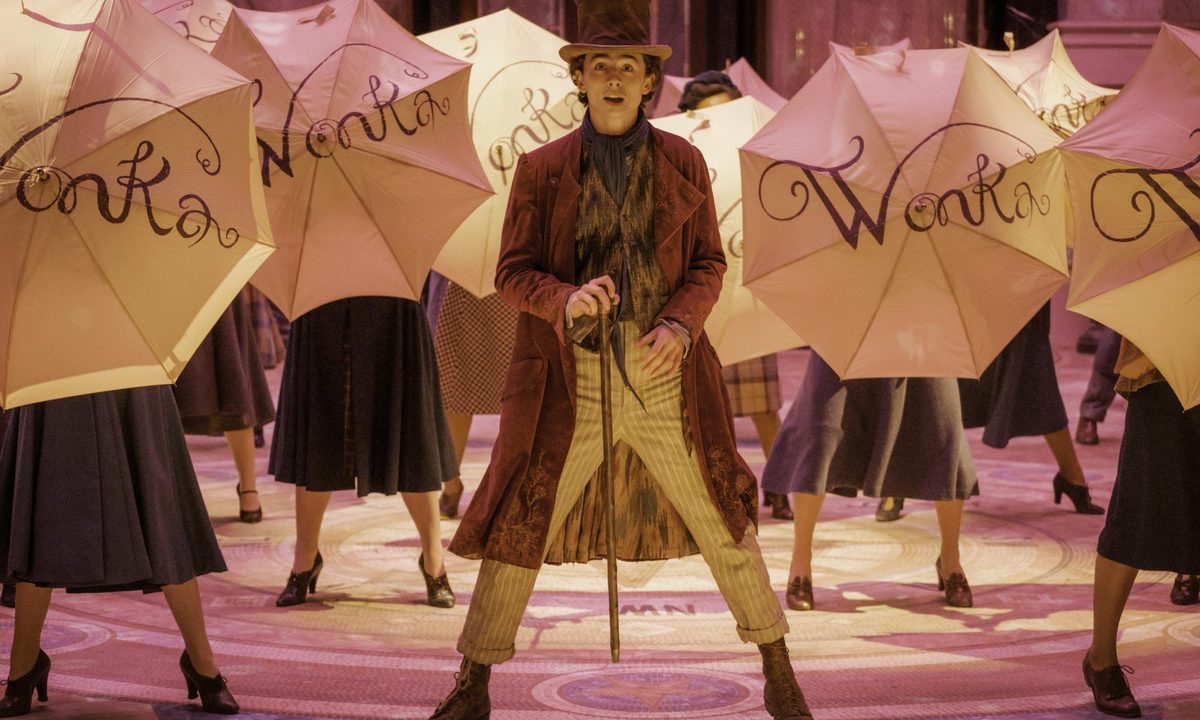
“Paul King's Wonka is a surprisingly worthwhile prequel.”
- Timothée Chalamet's charming lead performance
- Director Paul King's inimitable sense of humor and heart
- A surprisingly topical, deeply felt plot
- Several jokes throughout miss the mark
- It is, at times, too sentimental for its own good
“Why you can trust Digital Trends – We have a 20-year history of testing, reviewing, and rating products, services and apps to help you make a sound buying decision. Find out more about how we test and score products.“
Unlike its trailers, Wonka doesn’t feel the need to hide what it is. Barely a few seconds have passed in the new film before its lead, Timothée Chalamet, has climbed to the top of a steamboat and begun to sing about his lofty dreams and discouragingly limited means. Director Paul King’s previous, pitch-perfect Paddington movies may have moved and felt like musicals, but Wonka proudly is one. While watching it immediately embrace its own whimsy and earnestness in its first few minutes, though, I had a distressing thought: “Is this what moviegoers want?”
In many ways, Wonka feels like a relic of the past — and not just because it’s meant to be a prequel to Mel Stuart and Roald Dahl’s divisive 1971 classic Willy Wonka & the Chocolate Factory. The new film is the kind of warm, open-hearted, and sentimental blockbuster that one could once count on hitting theaters every December. Nowadays, even in a post-Greatest Showman and La La Land world, it’s still more likely that we’ll get an Aquaman sequel and an overly somber piece of awards bait than one playful, family-friendly musical near the end of every year. Wonka is a lot of things, but trendy? Not so much.
Fortunately, it doesn’t take long to realize that might just be the point. Wonka imagines a world in which its eponymous magician and chocolatier is not a titanic businessman, but the new kid on the block. He arrives on the scene with very few coins in his pocket, nary a chip on his shoulder, and a childhood dream that has kept him afloat for well over a decade. As the existing, ever-conspiring leaders of the chocolate industry do everything they can to stop his revolutionary goods from catching on, Wonka announces itself as a film about the necessity of, well, pure imagination in a world run by people who only want to sell you what you’ve seen and tasted a million times before.
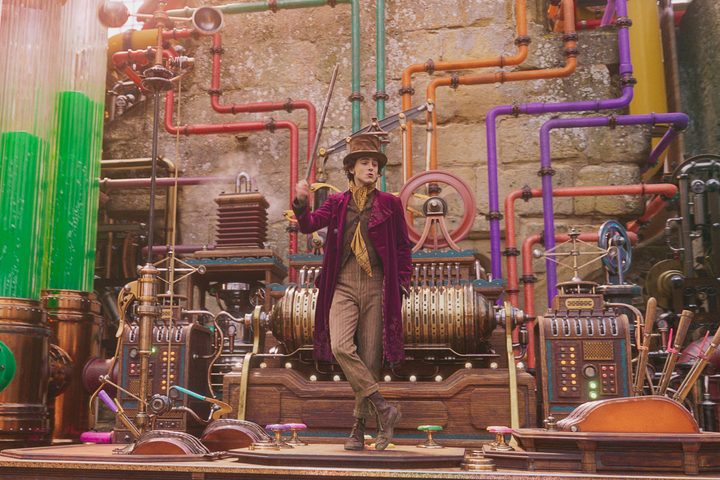
Did anyone need a movie about Willy Wonka origin story? No. As charming and winning as much of it is, Wonka doesn’t ever succeed in totally justifying its existence, either. For most of its 116-minute runtime, the film feels so much like a balm to the artificially made, insincere blockbusters of modern Hollywood that you almost forget that it’s essentially a new addition to a property that has existed since 1964. The key word is “almost.” What makes Wonka’s mercenary reasons for existing easier to stomach is the fact that it doesn’t seem all that interested in actually exploring the complex nature of its titular character. The film’s screenplay, penned by King and his Paddington co-collaborator Simon Farnaby, rounds out many of Willy Wonka’s rougher edges. Gone, for instance, is the mischievousness that seemed to border at times on nefarious.
It’s been replaced by an overall sweetness and innocence that makes Chalamet’s Wonka feel fairly distant from the versions of the character previously played by Gene Wilder and Johnny Depp, but which fits well within King’s now-established brand of absurd comedy and earnest optimism. Chalamet, for his part, gets the chance to stretch his movie star muscles more than he ever has before here. His singing and dancing skills aren’t necessarily anything to write home about, but the actor plays his version of Wonka as he’s written well. He imbues him with an endearingly nerdy edge that paints the character not as a narcissistic future tycoon, but as a lightly kooky young man who believes deeply in his own, heightened view of the world (sometimes dangerously so) and is desperate to get others to see it, too.
Like he did in Paddington and Paddington 2, King surrounds Wonka’s protagonist with an ensemble of perfectly cast supporting players. Olivia Colman and Tom Davis are delightfully devilish as a pair of con artists who have turned taking advantage of unsuspecting tourists into a full-blown, slave-wage business. Calah Lane, Jim Carter, Rakhee Thakrar, Natasha Rothwell, and Rich Fulcher, conversely, add further heart and humor to the film as Wonka’s devoted friends. Sally Hawkins, meanwhile, shines in a relatively thankless role, and her Paddington 2 co-star, Hugh Grant, gives yet another scene-stealing performance as Lofty, a determined Oompa-Loompa who gradually strikes up an unlikely friendship with Chalamet’s inventive chocolatier.
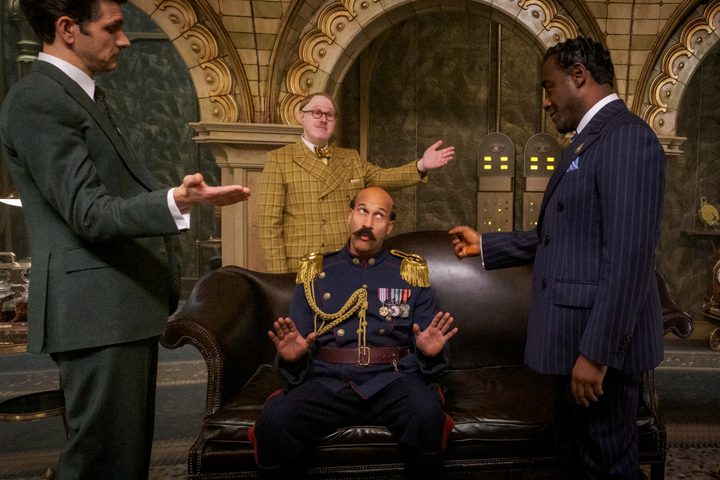
Grant’s turn as a miniature-sized Oompa-Loompa, which is brought to life in the film via a combination of CGI and motion-capture effects, is the closest that Wonka comes to touching the unsettling undercurrent of strangeness that runs throughout its Wilder-led predecessor. Even still, King captures and utilizes Grant’s performance in a way that ultimately feels in line with his unique brand of playful absurdity. What darkness there is to be found in Wonka exists solely in the conflict that blooms between Chalamet’s aspiring artist and Arthur Slugworth (a standout Paterson Joseph), Mr. Prodnose (Matt Lucas), and Mr. Fickelgruber (Mathew Baynton), the three cartoonishly evil heads of the Chocolate Cartel, which is run by and consists only of them.
When Wonka arrives in their city looking to finally realize his lifelong dream of being a world-renowned chocolatier, Prodnose, Fickelgruber, and Slugworth quickly go to work marring his reputation and using their political connections to ban him from selling any of his wares. In subsequent scenes, it’s revealed that the three public competitors have been secretly diluting their product together for years, all so that their customers subconsciously learn to expect less and less from them. As obvious as the ideas behind this particular storyline are, Wonka wisely doesn’t verbally or intellectually underline them too much, opting instead to let the emotions of its characters take center stage.
Still, in a year where the money-hoarding practices of Hollywood’s top elites and the industry’s increasingly stale output have come under unprecedented fire, Wonka’s surprisingly political plot feels inevitably topical. It doesn’t ever drag Wonka down or get in the way of its many musical moments, but it does add an interesting wrinkle to the film’s story. Some may be quick to question the validity of a Willy Wonka & the Chocolate Factory prequel arguing for the importance of new artistic ideas and voices, but it’s nonetheless refreshing to see a blockbuster of this size concern itself with such matters. Neil Hannon’s original songs don’t strengthen or reinforce the film’s themes much, nor do they linger long after Wonka is over, but they do keep the film moving forward at an engagingly fast pace from start to finish.
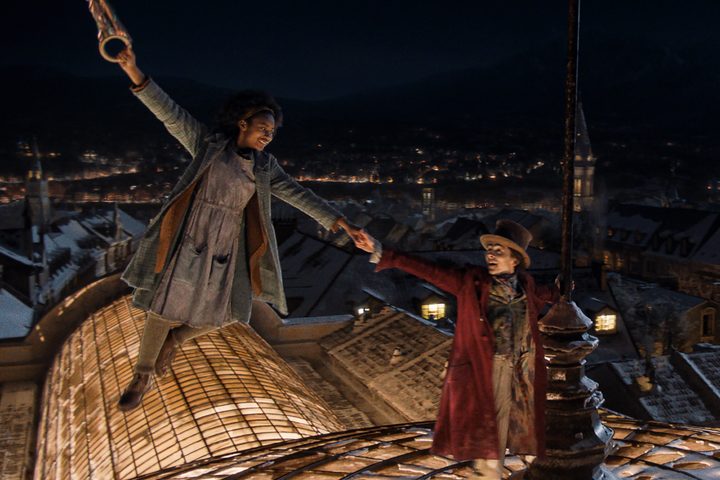
As a musical, Wonka works well. The film never quite hits the highs of either of King’s Paddington efforts, even as he proves yet again that he’s better at blocking and paying off visual gags than most other directors working today. As far as cinematic confections go, Wonka is an effectively sugary prequel that packs a more powerful punch than its wrapping suggests. Does that make it at all trendy? Definitely not. It is, however, timelier than it has any reason to be, and more worthwhile than any could have rightly expected.
Wonka is now playing in theaters nationwide.


