1. Home
  2. Phones
  3. Mobile
  4. News

5G may spur the return of smartphones locked to specific carriers

Add as a preferred source on Google

When 5G smartphones launch next year, they’ll bring a wave of improvements such as faster internet access and larger data caps. Unfortunately, they’ll also have one major downside. Most of the phones that launch with 5G capabilities will be locked to specific carriers.

While speaking with PC Mag, Gordon Mansfield, AT&T’s vice president of radio networks and device design, explained that the lock was due to the limits of technology, rather than any overt desire on the part of cell carriers.

Recommended Videos

“It’s not because there isn’t a desire and we don’t want to have cross-compatibility,” said Mansfield. ” It’s just that nobody has figured out how to cram the 28GHz 5G that Verizon and T-Mobile are using, and AT&T’s 39GHz 5G, into one box yet. And while T-Mobile and Verizon are using similar 28GHz bands, T-Mobile is also putting 5G on the 600MHz band, which Verizon is not.”

While this news is bound to be disappointing for some people, it also isn’t without precedent. When 4G devices launched, many of those early phones were locked to whichever carrier you initially bought the phone from. If you simply must have an unlocked phone, then you’re best bet will be to stick with a 4G device and wait until the technology behind 5G matures a bit more.

Fortunately, Mansfield doesn’t think that maturation process will take very long. While he didn’t give a specific time frame, he did say that AT&T was planning on launching 5G sometime within 2018.

All four major U.S. carriers plan to have their 5G networks up and running either this year or early in 2019, but so far, we don’t have a firm launch date for the first generation of 5G smartphones and tablets.

If you’re eager to get your hands on a 5G device, you’ll have to make a few decisions regarding which carrier you want to go with. While contacts and costs are part of the equation, its worth noting that the frequency used by the different carriers could affect the type of phones offered. For example, Mansfield claimed that AT&T’s use of a higher frequency would allow it to support smaller devices than some of the competition.

For more information, check out our handy primer to all things 5G.

Eric Brackett
Former Digital Trends Contributor
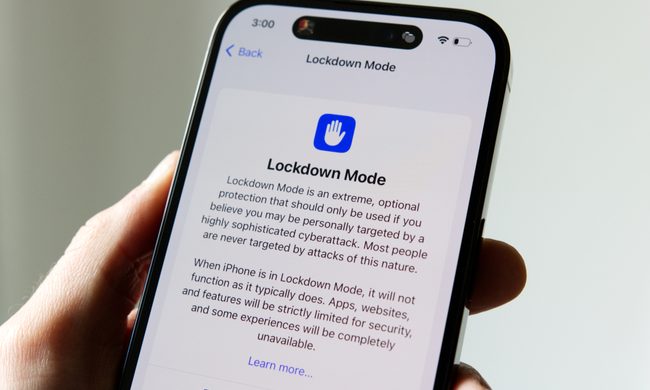
Apple says Lockdown Mode thwarted spyware attacks with a clean slate
Apple’s strongest defense is actually holding up
Lockdown Mode information page on an iPhone 14 Pro.

Apple says it has not seen a successful spyware attack on any iPhone with Lockdown Mode enabled, a claim it shared with TechCrunch.

Lockdown Mode arrived in 2022 as an opt-in feature for iPhone, iPad, and Mac. It was introduced as a stricter security mode for people at high risk of targeted attacks, such as journalists, activists, and government officials.

Read more
The Dynamic Island could shrink on the iPhone 18 series, and not just on the Pro models
One leaker, one claim, and a big question: is Apple genuinely ready to give every iPhone buyer the same design treatment as Pro owners this cycle?
Apple iPhone 17 Pro in Cosmic Orange leaning on a gray wall.

Apple’s Dynamic Island has been around long enough that most people have made their peace with it or forgotten it’s there. In fact, I’ve seen people associating the pill-shaped notch with newer iPhone models (released in the last 3 years). Now, a fresh leak suggests that the notch replacement is about to shrink, not just on the expensive models. 

What did the leaker actually say?

Read more
Apple Podcasts finally gets serious about video, adds multiple YouTube-inspired features
With offline downloads, Picture-in-Picture, and a dedicated video hub, iOS 26.4 turns Apple Podcasts into a platform creators can no longer afford to ignore.
Electronics, Phone, Mobile Phone

For years, the Apple Podcasts app supported video, at least it did technically, but nobody used it. Creators ignored it, while listeners forgot it. Meanwhile, other platforms like YouTube and Spotify quietly built empires on video podcasting. However, that changes with the iOS 26.4 update, or at least that is what Apple hopes for. 

Video podcasting exploded in popularity in recent years, with audiences gravitating toward platforms that treated the format well (as already mentioned above). Despite being an iPhone user, I personally consume podcasts on YouTube (I briefly paid for the Premium membership as well). 

Read more