
Android web browsing just overtook iPhone speed, at least based on Google’s latest results. In a recent post, it says Chrome on Android now outpaces Safari on Apple devices in key browser benchmarks, with record scores in widely used tests.
For you, that shows up as quicker page loads, smoother scrolling, and faster reactions when you tap or type, especially on newer Android phones. The company ties those gains to improvements in how modern sites render and respond during everyday use.
It marks a shift in a race where Apple has often held the edge on mobile browser speed. Google says recent work across Chrome and Android is now translating into measurable gains that you can feel.
There are still gaps worth noting. It doesn’t spell out every device comparison, and lab results don’t always match how sites behave across different networks and conditions.
Benchmark wins drive the claim
The headline rests on test results. Recent Android phones running Chrome posted new highs in Speedometer, a benchmark that simulates common tasks like loading pages, updating content, and handling user input.

Those gains come from a mix of changes. Chrome now processes JavaScript more efficiently, manages memory with tighter control, and focuses resources on what’s visible on screen first. Android also plays a role, since shared components like WebView carry those improvements into apps that rely on web content.
This wasn’t a single breakthrough. It reflects steady tuning across rendering, scripting, and loading behavior that builds up over time.
Does it change your daily browsing?
Numbers only go so far, so the real question is how your phone feels. Google links these gains to shorter load times, smoother movement through pages, and less delay when interacting with sites.
Performance still depends on context. Slower connections, heavier pages, or background activity can drag things down no matter which browser you use. Some sites are also still tuned more closely for Safari on iPhone, which can affect consistency.
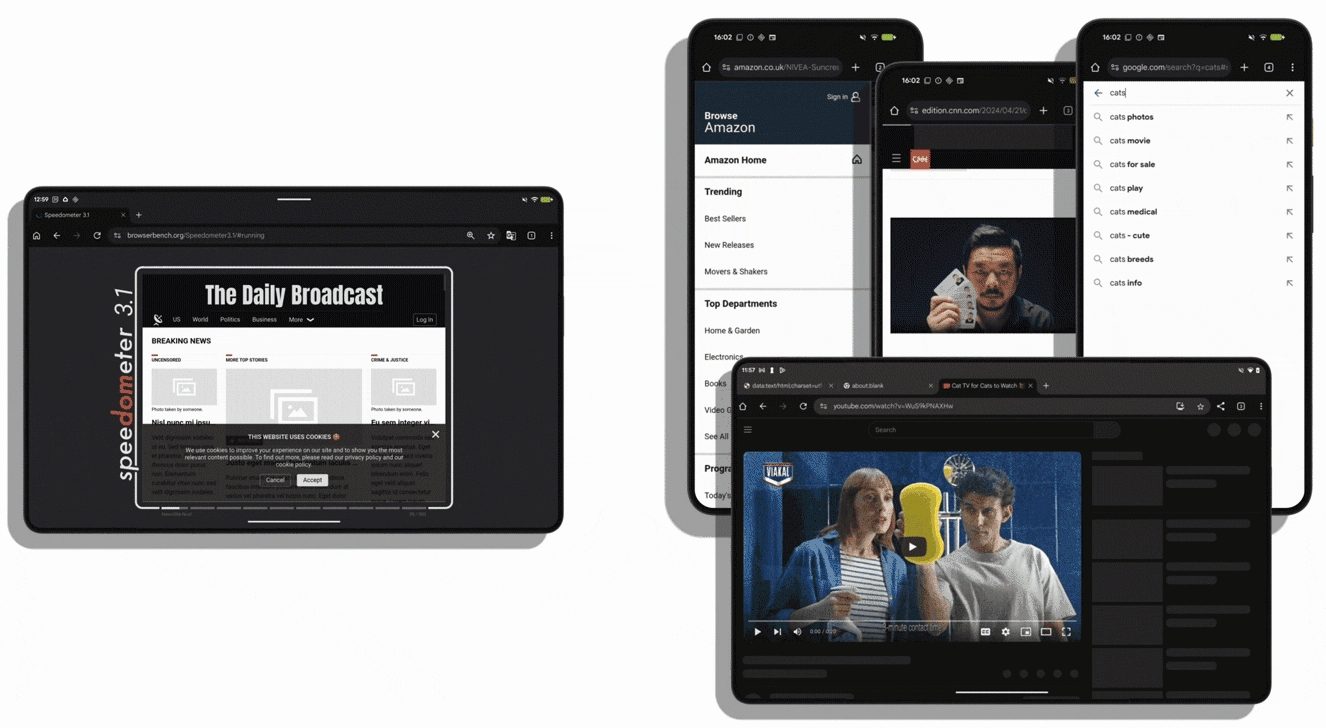
Device range matters too. While top Android phones are hitting these scores, it’s less clear how midrange or older models compare. If you’re not on recent hardware, the difference may be harder to notice.
What to watch next on mobile speed
Google is turning browser speed into something you can point to, not just a behind the scenes upgrade. If this momentum holds, faster web use could become part of how Android phones are marketed.
Apple’s response will be worth watching. Safari has long been tightly tuned for iPhone hardware, and any sustained gap in these tests is likely to push further optimization on its side.
For now, the takeaway is practical. Newer Android phones are delivering some of the quickest browser performance available in testing, but these gains can shift quickly as both platforms roll out updates.


