  1. Home
  2. Phones
  3. Mobile
  4. News

Apple joins Google in allowing alternative app store payment systems in South Korea

Add as a preferred source on Google

As a response to a South Korean law passed last year, Apple will now allow third-party developers to offer their own alternate payment services for purchases made through the App Store. The move comes after Google announced plans to do the same in late 2021.

Finally, coming into compliance with the South Korean Telecommunications Business Act, the company’s submitted plans that would allow third-party developers to support alternate payment systems. While Apple will still take service fees, it’ll be less than the 30% currently charges as the company will no longer need to process payments.

Recommended Videos

“We look forward to working with the KCC and our developer community on a solution that benefits our Korean users. Apple has a great deal of respect for Korea’s laws and a strong history of collaboration with the country’s talented app developers. Our work will always be guided by keeping the App Store a safe and trusted place for our users to download the apps they love,” Apple said in a statement as reported by the Korean Yonhap News Agency. This is a change from the company’s initial reaction, which had been to highlight all the negatives the move would have on their business.

“The Telecommunications Business Act will put users who purchase digital goods from other sources at risk of fraud, undermine their privacy protections, make it difficult to manage their purchases, and features like Ask to Buy and Parental Controls will become less effective. We believe user trust in App Store purchases will decrease as a result of this legislation — leading to fewer opportunities for the over 482,000 registered developers in Korea who have earned more than 8.55 trillion (won) to date with Apple,” an Apple spokesperson told Digital Trends in August 2021.

While preferable to the wild-west that existed prior to App Stores becoming popular, Apple and Google have found themselves under fire for forcing developers to funnel all payments through their in-built payment systems in exchange for a (variable) 30% fee. Both companies have argued that the fees justify a lot more than just payment processing  — Google’s fees fund the development of Android, for example, but that hasn’t been enough to stop courts from demanding a change to the status quo. Similar pressure from the Japanese government led the company to open up access to outside links in “reader apps.”

Michael Allison
Former Mobile News Writer
A UK-based tech journalist for Digital Trends, helping keep track and make sense of the fast-paced world of tech with a…
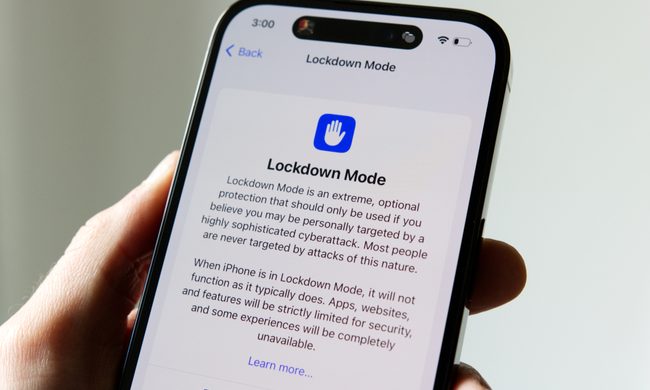
Apple says Lockdown Mode thwarted spyware attacks with a clean slate
Apple’s strongest defense is actually holding up
Lockdown Mode information page on an iPhone 14 Pro.

Apple says it has not seen a successful spyware attack on any iPhone with Lockdown Mode enabled, a claim it shared with TechCrunch.

Lockdown Mode arrived in 2022 as an opt-in feature for iPhone, iPad, and Mac. It was introduced as a stricter security mode for people at high risk of targeted attacks, such as journalists, activists, and government officials.

Read more
The Dynamic Island could shrink on the iPhone 18 series, and not just on the Pro models
One leaker, one claim, and a big question: is Apple genuinely ready to give every iPhone buyer the same design treatment as Pro owners this cycle?
Apple iPhone 17 Pro in Cosmic Orange leaning on a gray wall.

Apple’s Dynamic Island has been around long enough that most people have made their peace with it or forgotten it’s there. In fact, I’ve seen people associating the pill-shaped notch with newer iPhone models (released in the last 3 years). Now, a fresh leak suggests that the notch replacement is about to shrink, not just on the expensive models. 

What did the leaker actually say?

Read more
Apple Podcasts finally gets serious about video, adds multiple YouTube-inspired features
With offline downloads, Picture-in-Picture, and a dedicated video hub, iOS 26.4 turns Apple Podcasts into a platform creators can no longer afford to ignore.
Electronics, Phone, Mobile Phone

For years, the Apple Podcasts app supported video, at least it did technically, but nobody used it. Creators ignored it, while listeners forgot it. Meanwhile, other platforms like YouTube and Spotify quietly built empires on video podcasting. However, that changes with the iOS 26.4 update, or at least that is what Apple hopes for. 

Video podcasting exploded in popularity in recent years, with audiences gravitating toward platforms that treated the format well (as already mentioned above). Despite being an iPhone user, I personally consume podcasts on YouTube (I briefly paid for the Premium membership as well). 

Read more