
AT&T and Verizon are moving ahead with the deployment of their midband 5G spectrum as planned, rejecting a request by senior U.S. transportation and aviation officials to delay the rollout by a couple of weeks.
According to Reuters, U.S. Transportation Secretary Pete Buttigieg and Federal Aviation Administration (FAA) Chief Steve Dickson contacted AT&T CEO John Stankey and Verizon CEO Hans Vestberg late last week, asking them to delay the commercial deployment of the new frequencies for “no more than two weeks.”
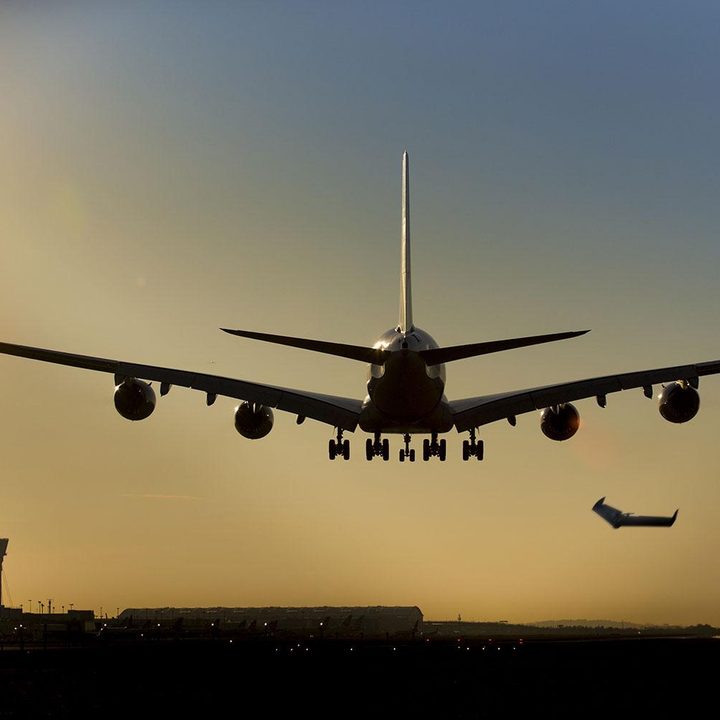
On Sunday, the wireless companies issued a joint letter, stating that they would be moving ahead as scheduled on January 5, although they did agree to avoid deploying any new 5G towers near airports for a period of six months. This would provide an “exclusion zone” similar to that used in other countries like France, they said. However, the two CEOs were emphatic that agreeing to the proposal by the U.S. Department of Transportation would be “an irresponsible abdication of the operating control required to deploy world-class and globally competitive communications networks.”
Early last year, AT&T and Verizon successfully acquired substantial chunks of new C-band spectrum put up for auction by the Federal Communications Commission (FCC). Over the past year, however, they’ve been facing concerns from a number of commercial aviation groups that these new 5G frequencies sit perilously close to those used by aircraft equipment.
Opponents of the plan have warned that such interference could cause instrument failures that could potentially lead to collisions. These concerns originally led the FAA and the U.S. Department of Transportation to call on the FCC to pause the auction to give them time to investigate the issues in greater detail.
The FCC disputed many of the claims that suggested that the new 5G frequencies posed a risk to aircraft equipment, suggesting that they were far enough away to avoid any interference. They also pointed to the use of these frequencies in about 40 other countries without incident. The spectrum auction went ahead, and AT&T and Verizon prepared to roll out the new midband 5G starting in December.
Shortly before that happened, however, both carriers agreed to delay those rollouts into early 2022 “in the spirit of good faith,” as Verizon officials put it. They agreed to work with the FAA and try to address some of its concerns, and even proposed 5G midband power limits to help avoid interference and lower the midband signal power even more near airports and helipads.
At this point, however, it would seem the carriers aren’t willing to brook any further delays. They insist that the proposed exclusion zone should be more than sufficient to quell the fears of the FAA and other aviation industry officials.
As the CEOs wrote in their joint letter to the FAA, “The laws of physics are the same in the United States and France,” so “If U.S. airlines are permitted to operate flights every day in France, then the same operating conditions should allow them to do so in the United States.”
The FAA responded in a statement to Reuters, saying that it was “reviewing the latest letter from the wireless companies on how to mitigate interference from 5G C-band transmissions,” adding that “U.S. aviation safety standards will guide our next actions.”
FAA officials also noted that the spectrum used for midband 5G in France sits farther away from those used by aircraft instruments and also operates at a lower power level than what’s authorized in the United States. Verizon has agreed to confine its spectrum to the same range during the initial rollout and create a larger exclusion zone around U.S. airports “to make up for the slight difference in power levels between the two nations.”
Aviation industry officials remain skeptical, however, suggesting that the proposed exclusion zones still aren’t large enough and that the carriers and the FCC haven’t properly addressed other safety concerns.
In a post on Twitter, Sara Nelson, president of the Association of Flight Attendants-CWA (AFA), which represents 50,000 workers at 17 airlines, suggested that her members would refuse to fly if safety questions remain unanswered.
Tagging @Verizon and @ATT. We’re all for 5G, but not at the expense of safety. We can’t/won’t fly if there’s a question. Time to stop the brinksmanship, share the information, and plan to allow 5G and aviation to coexist. We won’t allow the traveling public to be Guinea pigs. https://t.co/8Eda5mtt8C
— Sara Nelson (@FlyingWithSara) January 3, 2022
Airlines for America, a trade group that represents American Airlines, FedEx, and other carriers, has also formally asked the FCC to completely halt any midband 5G deployments around many airports, warning that thousands of flights could be disrupted. The group has threatened to take the matter to court this week if the FCC doesn’t act immediately to work with the FAA and the aviation industry to “enable the rollout of 5G technology while prioritizing safety and avoiding any disruption to the aviation system.”


