  1. Home
  2. Phones
  3. Mobile
  4. Legacy Archives

Sprint is next on FCC’s chopping block for cramming charges, as AT&T settles for $105M

Add as a preferred source on Google

The Federal Communications Commission (FCC) is on an apparent pro-consumer streak. In October, it partnered with the Federal Trade Commission (FTC) in leveling charges against AT&T, when it accused the wireless provider of capriciously throttling unlimited data plans. It threatened Verizon with an investigation if it chose to do the same. Now, the agency is turning its attention towards the transgressive industry practice known as “cramming,” in which charges from so-called premium apps are hidden in customers’ bills.

The agency has already penalized AT&T for the practice, and now, according to a report by the Wall Street Journal, it’s moving on to Sprint. Based on the report, a majority of FCC commissioners will vote in favor of fining Sprint $105 million for unauthorized charges on customers’ cellphone bills.

Recommended Videos

Related: FCC to fight ‘mystery fees’ on phone bills

The fine, which will be set aside in part to refund illicitly billed customers, ties for the largest fine dispensed in the agency’s crusade against carriers that surreptitiously bill customers for third-party services, including ring tones, text message alerts, and horoscopes. AT&T paid $105 million in October to settle identical claims. An FTC case filed against T-Mobile in July is still pending.

The nature of the services on paper is often unclear — AT&T grouped them under the euphemism “AT&T Monthly Subscriptions” — and many carriers don’t notify customers of enrollment. Carriers receive a 30 to 40 percent cut of the profits, which can amount to hundreds of millions of dollars. As many as 20 million people a year are affected, FCC Chairman Tom Wheeler says. At the behest of state attorneys general, AT&T, T-Mobile, Sprint, and Verizon stopped billing customers for third-party services in November.

Related: Senate study says phone bill ‘cramming’ is costing us millions

An agency probe, coordinated with the Consumer Financial Protection Bureau and various State Attorneys General, found evidence of “willful violation” of FCC truth-in-billing rules, which require that companies clarify service billing on statements. In a three-month window from August to October 2013, it found that Sprint received almost 35,000 complaints about unwanted charges.

According to the Journal’s sources, the agency will make its designs public in the coming weeks. It’s unclear whether or not Sprint will follow in AT&T’s footsteps and choose to settle before then.

Kyle Wiggers
Kyle Wiggers is a writer, Web designer, and podcaster with an acute interest in all things tech. When not reviewing gadgets…
Apple says Lockdown Mode thwarted spyware attacks with a clean slate
Apple’s strongest defense is actually holding up
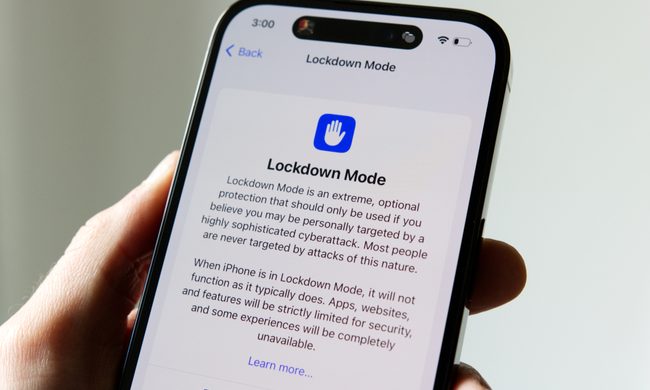
Lockdown Mode information page on an iPhone 14 Pro.

Apple says it has not seen a successful spyware attack on any iPhone with Lockdown Mode enabled, a claim it shared with TechCrunch.

Lockdown Mode arrived in 2022 as an opt-in feature for iPhone, iPad, and Mac. It was introduced as a stricter security mode for people at high risk of targeted attacks, such as journalists, activists, and government officials.

Read more
The Dynamic Island could shrink on the iPhone 18 series, and not just on the Pro models
One leaker, one claim, and a big question: is Apple genuinely ready to give every iPhone buyer the same design treatment as Pro owners this cycle?
Apple iPhone 17 Pro in Cosmic Orange leaning on a gray wall.

Apple’s Dynamic Island has been around long enough that most people have made their peace with it or forgotten it’s there. In fact, I’ve seen people associating the pill-shaped notch with newer iPhone models (released in the last 3 years). Now, a fresh leak suggests that the notch replacement is about to shrink, not just on the expensive models. 

What did the leaker actually say?

Read more
Apple Podcasts finally gets serious about video, adds multiple YouTube-inspired features
With offline downloads, Picture-in-Picture, and a dedicated video hub, iOS 26.4 turns Apple Podcasts into a platform creators can no longer afford to ignore.
Electronics, Phone, Mobile Phone

For years, the Apple Podcasts app supported video, at least it did technically, but nobody used it. Creators ignored it, while listeners forgot it. Meanwhile, other platforms like YouTube and Spotify quietly built empires on video podcasting. However, that changes with the iOS 26.4 update, or at least that is what Apple hopes for. 

Video podcasting exploded in popularity in recent years, with audiences gravitating toward platforms that treated the format well (as already mentioned above). Despite being an iPhone user, I personally consume podcasts on YouTube (I briefly paid for the Premium membership as well). 

Read more