  1. Home
  2. Phones
  3. Business
  4. Mobile
  5. News

And the largest fine in FCC history goes to … AT&T for throttling data speeds

Add as a preferred source on Google

The Federal Communications Commission (FCC) is about to drop its largest fine in history to AT&T for deceiving customers and throttling their data. The carrier will be fined $100 million.

AT&T offered unlimited data plans from 2007, and eventually stopped the practice in 2010, according to the FCC. This left millions of customers with grandfathered unlimited data plans, but AT&T decided to throttle those customers once they hit a certain threshold point each month.

Recommended Videos

“Consumers deserve to get what they pay for. The FCC will not stand idly by while consumers are deceived by misleading marketing.”

Throttling is the practice of slowing network speeds after a certain amount of data is achieved. The FCC says that AT&T’s “capped speeds were much slower than the normal network speeds AT&T advertised and significantly impaired the ability of AT&T customers to access the Internet or use data applications for the remainder of the billing cycle.”

AT&T isn’t the only carrier to throttle. Verizon has also been accused of doing so from time to time, though it’s since stopped the practice. T-Mobile is known to slow down data of its top users when the network is congested. The difference here is that T-Mobile has made this practice clear to its customers. AT&T, however, never clearly stated it in any of its marketing materials or billing statements. After thousands of complaints from customers in the dark, the FCC was forced to investigate.

AT&T made the following statement after the FCC announcement: “We will vigorously dispute the FCC’s assertions. The FCC has specifically identified this practice as a legitimate and reasonable way to manage network resources for the benefit of all customers, and has known for years that all of the major carriers use it. We have been fully transparent with our customers, providing notice in multiple ways, and going well beyond the FCC’s disclosure requirements.”

FCC Chairman Tom Wheeler said, “Consumers deserve to get what they pay for. Broadband providers must be up front and transparent about the services they provide. The FCC will not stand idly by while consumers are deceived by misleading marketing materials and insufficient disclosure.”

This isn’t the first time that AT&T ended up in hot water with the FCC. Last year, AT&T was forced to refund customers $105 million for cramming. Cramming is the practice of passing on unauthorized third-party charges for things like horoscopes and sports scores.

Robert Nazarian
Robert Nazarian became a technology enthusiast when his parents bought him a Radio Shack TRS-80 Color. Now his biggest…
Apple says Lockdown Mode thwarted spyware attacks with a clean slate
Apple’s strongest defense is actually holding up
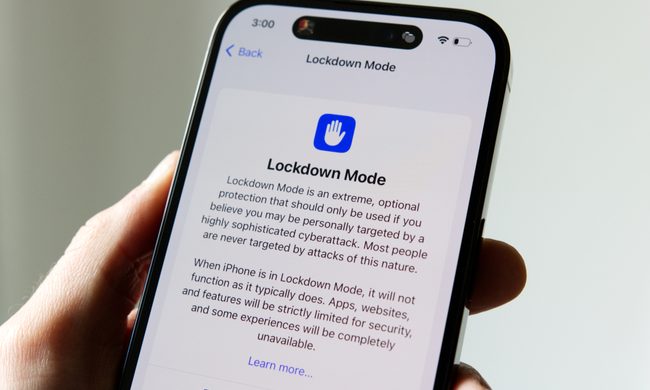
Lockdown Mode information page on an iPhone 14 Pro.

Apple says it has not seen a successful spyware attack on any iPhone with Lockdown Mode enabled, a claim it shared with TechCrunch.

Lockdown Mode arrived in 2022 as an opt-in feature for iPhone, iPad, and Mac. It was introduced as a stricter security mode for people at high risk of targeted attacks, such as journalists, activists, and government officials.

Read more
The Dynamic Island could shrink on the iPhone 18 series, and not just on the Pro models
One leaker, one claim, and a big question: is Apple genuinely ready to give every iPhone buyer the same design treatment as Pro owners this cycle?
Apple iPhone 17 Pro in Cosmic Orange leaning on a gray wall.

Apple’s Dynamic Island has been around long enough that most people have made their peace with it or forgotten it’s there. In fact, I’ve seen people associating the pill-shaped notch with newer iPhone models (released in the last 3 years). Now, a fresh leak suggests that the notch replacement is about to shrink, not just on the expensive models. 

What did the leaker actually say?

Read more
Apple Podcasts finally gets serious about video, adds multiple YouTube-inspired features
With offline downloads, Picture-in-Picture, and a dedicated video hub, iOS 26.4 turns Apple Podcasts into a platform creators can no longer afford to ignore.
Electronics, Phone, Mobile Phone

For years, the Apple Podcasts app supported video, at least it did technically, but nobody used it. Creators ignored it, while listeners forgot it. Meanwhile, other platforms like YouTube and Spotify quietly built empires on video podcasting. However, that changes with the iOS 26.4 update, or at least that is what Apple hopes for. 

Video podcasting exploded in popularity in recent years, with audiences gravitating toward platforms that treated the format well (as already mentioned above). Despite being an iPhone user, I personally consume podcasts on YouTube (I briefly paid for the Premium membership as well). 

Read more