  1. Home
  2. Phones
  3. Computing
  4. Mobile
  5. News

The FCC is trying to figure out how much trouble unwanted radio waves really cause

Add as a preferred source on Google

The radio spectrum is a mess of different waves surrounding us at all times. But just how much of a mess is it? That’s what the FCC is trying to figure out.

Many radio devices emit waves that could actually interfere with radio services, and the sum of all those interfering waves is called the “radio spectrum noise floor.” The FCC is trying to determine exactly how much that noise floor has changed from human-made devices over the past 20 years.

Recommended Videos

Many people believe that the noise floor is raised based on the number of devices emitting radio waves. However, the FCC says it hasn’t really found much data to support that idea, but it’s still in the very early stages of its study — so early, in fact, that it asked for public opinion on the parameters of what the study should be just last week.

There are regulations in place regarding how much RF energy devices can produce, but not all devices are regulated in the same way. Moreover, there are plenty of devices that aren’t made to emit radio waves, but do so anyway because of how they work — things like electric motors, light switches, power lines, and so on. These are called “incidental radiators.”

Then, of course, there are devices that are actually designed to emit radio waves, such as smartphones, Bluetooth devices, Wi-Fi routers, and so on. Despite being regulated, sometimes these devices emit waves outside of their specified frequencies, meaning that they contribute to a raised noise floor too.

After describing the idea for the study, the FCC also asked questions, such as what the major sources of noise are, what radio services are affected by a higher noise floor, and so on. At the end, it asked for ideas on how to conduct a study on RF energy noise. If you want to participate, you can submit responses here.

Christian de Looper
Christian de Looper is a long-time freelance writer who has covered every facet of the consumer tech and electric vehicle…
Apple says Lockdown Mode thwarted spyware attacks with a clean slate
Apple’s strongest defense is actually holding up
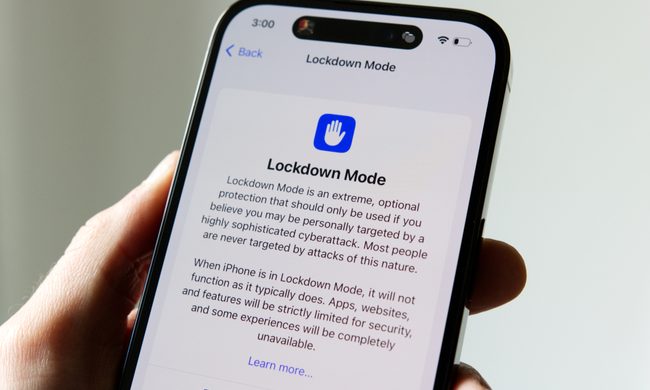
Lockdown Mode information page on an iPhone 14 Pro.

Apple says it has not seen a successful spyware attack on any iPhone with Lockdown Mode enabled, a claim it shared with TechCrunch.

Lockdown Mode arrived in 2022 as an opt-in feature for iPhone, iPad, and Mac. It was introduced as a stricter security mode for people at high risk of targeted attacks, such as journalists, activists, and government officials.

Read more
The Dynamic Island could shrink on the iPhone 18 series, and not just on the Pro models
One leaker, one claim, and a big question: is Apple genuinely ready to give every iPhone buyer the same design treatment as Pro owners this cycle?
Apple iPhone 17 Pro in Cosmic Orange leaning on a gray wall.

Apple’s Dynamic Island has been around long enough that most people have made their peace with it or forgotten it’s there. In fact, I’ve seen people associating the pill-shaped notch with newer iPhone models (released in the last 3 years). Now, a fresh leak suggests that the notch replacement is about to shrink, not just on the expensive models. 

What did the leaker actually say?

Read more
Apple Podcasts finally gets serious about video, adds multiple YouTube-inspired features
With offline downloads, Picture-in-Picture, and a dedicated video hub, iOS 26.4 turns Apple Podcasts into a platform creators can no longer afford to ignore.
Electronics, Phone, Mobile Phone

For years, the Apple Podcasts app supported video, at least it did technically, but nobody used it. Creators ignored it, while listeners forgot it. Meanwhile, other platforms like YouTube and Spotify quietly built empires on video podcasting. However, that changes with the iOS 26.4 update, or at least that is what Apple hopes for. 

Video podcasting exploded in popularity in recent years, with audiences gravitating toward platforms that treated the format well (as already mentioned above). Despite being an iPhone user, I personally consume podcasts on YouTube (I briefly paid for the Premium membership as well). 

Read more