  1. Home
  2. Phones
  3. Mobile
  4. News

FCC adopts news rules to stop phone companies from ‘slamming’ and ‘cramming’

Add as a preferred source on Google

The Federal Communications Commission has adopted new rules which should make it harder for phone companies and ISPs to take advantage of customers using dishonest sales techniques. In particular, the new rules take aim at the practices known as “slamming” and “cramming.”

Cramming occurs when phone companies add unauthorized charges to your bill at the end of the month. Among mobile carriers, these extra fees often take the form of device insurance, extra features, or bill credits that never actually materialize, despite repeated promises from sales reps. These sorts of practices are most commonly found among wireless franchise stores where sales associates work on commission and are sometimes not even employed by the company they claim to be representing. Among ISPs and cable providers, this can often take the form of switching customers to bundles without their express consent.

Recommended Videos

The FCC’s statement says that its new rules will ensure that there is “a clear ban on misrepresentations made during sales calls.” The organization has also increased the protections available to consumers who have fallen victims to such dishonest practices.

Slamming refers to dishonest tactics designed to trick unwary customers into switching to a different service provider. Under the new rules, if a salesperson is found to have been dishonest or deceptive when obtaining a customer’s permission to switch services, the customer’s consent will be revoked. Furthermore, if carriers are found to have misled third-party verification services, their access to such services will be revoked for several years. According to the FCC, unethical companies will even go so far as to call customers and ask them questions unrelated to their service and then edit those answers in a manner meant to deceive third-party verification services.

Technically speaking, these practices are already against the law, but the FCC is hoping that these new rules and guidelines will make it easier to enforce existing regulations and provide better safeguards for consumers.

Given the FCC’s successful efforts in repealing net neutrality, it is good to see the organization taking a stance that could provide real benefits to consumers. This is assuming, of course, that these new regulations are appropriately enforced.

Eric Brackett
Former Digital Trends Contributor
Apple says Lockdown Mode thwarted spyware attacks with a clean slate
Apple’s strongest defense is actually holding up
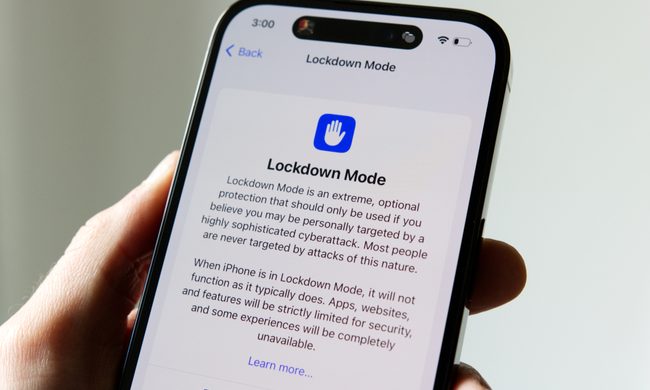
Lockdown Mode information page on an iPhone 14 Pro.

Apple says it has not seen a successful spyware attack on any iPhone with Lockdown Mode enabled, a claim it shared with TechCrunch.

Lockdown Mode arrived in 2022 as an opt-in feature for iPhone, iPad, and Mac. It was introduced as a stricter security mode for people at high risk of targeted attacks, such as journalists, activists, and government officials.

Read more
The Dynamic Island could shrink on the iPhone 18 series, and not just on the Pro models
One leaker, one claim, and a big question: is Apple genuinely ready to give every iPhone buyer the same design treatment as Pro owners this cycle?
Apple iPhone 17 Pro in Cosmic Orange leaning on a gray wall.

Apple’s Dynamic Island has been around long enough that most people have made their peace with it or forgotten it’s there. In fact, I’ve seen people associating the pill-shaped notch with newer iPhone models (released in the last 3 years). Now, a fresh leak suggests that the notch replacement is about to shrink, not just on the expensive models. 

What did the leaker actually say?

Read more
Apple Podcasts finally gets serious about video, adds multiple YouTube-inspired features
With offline downloads, Picture-in-Picture, and a dedicated video hub, iOS 26.4 turns Apple Podcasts into a platform creators can no longer afford to ignore.
Electronics, Phone, Mobile Phone

For years, the Apple Podcasts app supported video, at least it did technically, but nobody used it. Creators ignored it, while listeners forgot it. Meanwhile, other platforms like YouTube and Spotify quietly built empires on video podcasting. However, that changes with the iOS 26.4 update, or at least that is what Apple hopes for. 

Video podcasting exploded in popularity in recent years, with audiences gravitating toward platforms that treated the format well (as already mentioned above). Despite being an iPhone user, I personally consume podcasts on YouTube (I briefly paid for the Premium membership as well). 

Read more