  1. Home
  2. Phones
  3. Apple
  4. Business
  5. Mobile
  6. News

France wants to fine smartphone makers if they don’t hack into criminal’s phones

Add as a preferred source on Google

Apple’s ongoing battle against the FBI concerning encryption and privacy is such a heated issue, it was inevitable other countries and governments would soon start making their feelings known. Yann Galut, a socialist MP in France, has proposed a law that will punish companies financially if they do not provide access to phone data when asked to do so, according to a report in Le Parisien.

It’s an amendment to an existing law, that would force technology companies — not just Apple, the law applies to any relevant firm including Samsung, Google, and others — to provide codes that open up locked devices for use in police investigations. Should the request be refused, or the code not provided in a reasonable amount of time, Galut suggests a fine of a million euros (just over $1 million) should be levied.

Recommended Videos

“Only money will force these extremely powerful companies to comply,” Galut is quoted as saying, adding, “They are hiding behind supposed privacy protection, but they’re quick to make commercial use of personal data they’re collecting.”

In an effort to calm fears about government surveillance, the backdoor access codes would only be used against criminals under investigation, he said. Also, the intention is only for a prosecutor or judge to have access to the code itself, and only be available to computers used in court proceedings. There will be no general code for use by law enforcement, and the police wouldn’t have the right to use it against any regular citizen.

France’s monetary punishment is an unusual approach, but it’s not the first to try and force through an anti-encryption bill that would force companies to provide backdoor access to software. In the U.K., the proposed Investigatory Powers Bill asks for the same thing, and came under fire from Apple CEO Tim Cook at the end of 2015.

There’s no indication the French legal amendment will be passed into law, but it’s further evidence of continued pressure against data encryption methods provided by technology companies.

Andy Boxall
Andy has written about mobile technology for almost a decade. From 2G to 5G and smartphone to smartwatch, Andy knows tech.
Apple says Lockdown Mode thwarted spyware attacks with a clean slate
Apple’s strongest defense is actually holding up
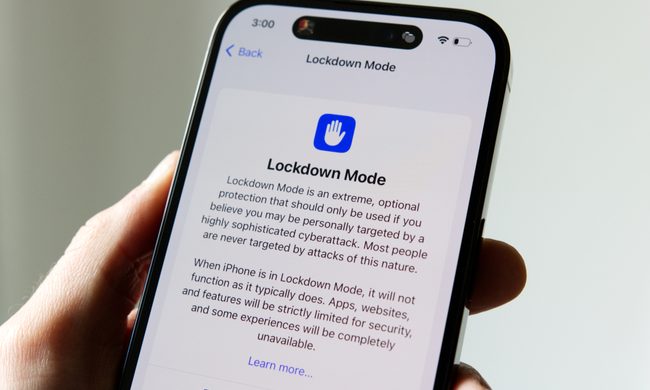
Lockdown Mode information page on an iPhone 14 Pro.

Apple says it has not seen a successful spyware attack on any iPhone with Lockdown Mode enabled, a claim it shared with TechCrunch.

Lockdown Mode arrived in 2022 as an opt-in feature for iPhone, iPad, and Mac. It was introduced as a stricter security mode for people at high risk of targeted attacks, such as journalists, activists, and government officials.

Read more
The Dynamic Island could shrink on the iPhone 18 series, and not just on the Pro models
One leaker, one claim, and a big question: is Apple genuinely ready to give every iPhone buyer the same design treatment as Pro owners this cycle?
Apple iPhone 17 Pro in Cosmic Orange leaning on a gray wall.

Apple’s Dynamic Island has been around long enough that most people have made their peace with it or forgotten it’s there. In fact, I’ve seen people associating the pill-shaped notch with newer iPhone models (released in the last 3 years). Now, a fresh leak suggests that the notch replacement is about to shrink, not just on the expensive models. 

What did the leaker actually say?

Read more
Apple Podcasts finally gets serious about video, adds multiple YouTube-inspired features
With offline downloads, Picture-in-Picture, and a dedicated video hub, iOS 26.4 turns Apple Podcasts into a platform creators can no longer afford to ignore.
Electronics, Phone, Mobile Phone

For years, the Apple Podcasts app supported video, at least it did technically, but nobody used it. Creators ignored it, while listeners forgot it. Meanwhile, other platforms like YouTube and Spotify quietly built empires on video podcasting. However, that changes with the iOS 26.4 update, or at least that is what Apple hopes for. 

Video podcasting exploded in popularity in recent years, with audiences gravitating toward platforms that treated the format well (as already mentioned above). Despite being an iPhone user, I personally consume podcasts on YouTube (I briefly paid for the Premium membership as well). 

Read more