  1. Home
  2. Phones
  3. Android
  4. Mobile
  5. News

Samsung Unpacked — and the Galaxy S11? and a new Fold? — is coming Feb. 11

Add as a preferred source on Google

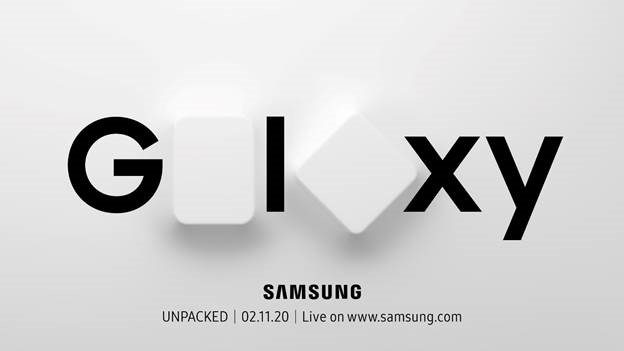
The logo for the Galaxy Unpacked 2020 event
The logo for the Galaxy Unpacked 2020 event Image used with permission by copyright holder

It’s official: The next Samsung Unpacked event is scheduled for February 11 in San Francisco, where the company is expected to announce its latest consumer electronic devices — notably the Galaxy S11 smartphone.

Recommended Videos

Samsung sent “save the date” invitations to select members of the press including Digital Trends late Saturday night to announce the date and location for the event, which will be held in the San Francisco Palace of the Fine Arts in mid-Februrary. The announcement said little about to what to expect, save for one cryptic line: “On February 11, Samsung Electronics will unveil new, innovative devices that will shape the next decade of mobile experiences.”

The invite also contained an image of the Galaxy logo, with block cubes standing in for the two letter As. The cubes resemble the white storage containers for the company’s Galaxy Buds, but the star of the show is almost certain to be the company’s next flagship smartphone, anticipated to be the Galaxy S11 phone. Samsung announced the Galaxy S10 on February 20, 2019 — Feb. 11 will mark nearly a year since that phone was released.

A key question ahead of the event: Will it fold? Samsung used its last Unpacked event to unveil its folding smartphone, cleverly named the Galaxy Fold; our review of the cutting edge device lauds its innovation and suggests consumers wait for the next model. It stands to reason that “innovative new devices for the next decade” will include the folding screens that have dominated conversations around smartphones for the last few years — and a Fold 2.

Beyond that, there have been countless rumors and suggestions about what the next-gen phone will look like. Recent leaked renders showed a larger-than-ever camera module on the back of the phone, with fully four lenses and a flash unit. It’s … big, and certain to be polarizing. But the power of the camera, if rumors hold true, will be impressive.

It is expected that the three lenses on the left side will include a monstrous 108-megapixel lens, which will use “pixel-binning” — a process that will combine nine pixels into one for much greater performance in low light. Also expected is an ultra-wide-angle lens, and the long-awaited periscope 5x telephoto zoom lens. The periscope lens is found at the bottom of the module, given away by its distinctive square opening. A periscope lens runs along the phone’s body to give the longer zoom lens the room it needs to operate and uses a periscope to redirect light into it.

Other leaks have pointed to a simply enormous battery: Fully 5,000mAh, making it far and away the largest battery on a cell phone yet to date. And it may not be the Galaxy S11 at all. Some rumors have suggested that Samsung may adopt a new naming convention for the new decade, opting to call the phone the Galaxy S20.
Whatever Samsung reveals, Digital Trends will be there to bring you all the news. Stay tuned!
Jeremy Kaplan
As Editor in Chief, Jeremy Kaplan transformed Digital Trends from a niche publisher into one of the fastest growing…
Google is giving Pixel Screenshots a cloud AI boost while keeping your data private
The update gives Pixel Screenshots more AI horsepower for searching your saved screenshots, without sending your data through standard cloud servers.
Pixel Screenshots app on a PIxel being held by someone.

Google's Pixel Screenshots app is gaining cloud-based AI processing with its latest update, expanding beyond the on-device-only approach it has used since launch.

On-device AI gets a cloud companion

Read more
You’ll soon be able to send view-once texts on WhatsApp
The feature works like view-once media, blocking copying, forwarding, and screenshots once the recipient opens the message.
WhatsApp app store listing open on iPhone

WhatsApp has long offered disappearing messages, but the feature has two notable limitations. It applies to all messages in the chat rather than individual messages, and the deletion timer starts from the moment a message is sent, regardless of whether the recipient has read it. WhatsApp is currently working to address both.

Earlier this year, it began testing an "After Reading" timer for disappearing messages that starts the deletion countdown only after the recipient opens the message. Now, WABetaInfo reports that it's also testing view-once messages, which will let users send individual texts that become inaccessible after a single read.

Read more
Google’s updated migration tool takes the pain out of iPhone to Android switching
Android Switch tool can now transfer app data, iMessages, passwords, and more
iPhone 16 Pro and Pixell 9 Pro on top of it.

Moving from an iPhone to an Android device has never been the smoothest experience. Apple did introduce some improvements with iOS 26.3, which let users move things like photos, messages, notes, contacts, passwords, and apps wirelessly. Google has now completely revamped the Android Switch, its migration tool, to make the process even more seamless for people making the jump from iOS to Android.

According to Paul Dunlop, Google's product lead for Onboarding, Settings and Switching on Android, the company has worked closely with Apple to improve the migration experience on Android 17 devices. The update introduces a wireless-first transfer process, support for migrating more types of data, seamless Google Account and eSIM transfers, and new developer tools that can preserve app data when moving between platforms. Here are all the new features coming to Android Switch.

Read more