  1. Home
  2. Phones
  3. Android
  4. Mobile
  5. News

This is how Google ensures the Play Store remains free from potential malware

Add as a preferred source on Google

Due to Android’s open nature, it’s easier for hackers to create malware on the platform. Thankfully, however, Google’s engineers work around the clock to ensure that Android remains as malware-free as possible. In fact, the company has detailed exactly how it keeps malware away from the Google Play Store and Android, even when that malware tries to fight back.

According to Google, every single Android app gets scanned for viruses, malware, and other code that could be harmful to users. Sometimes, however, malicious apps still make it through and sometimes those apps eventually make it onto users’ devices.

Recommended Videos

So how does Google combat that? Well, the company keeps a close eye on apps after they are installed and how those apps behave on a phone, ensuring that users’ data isn’t compromised. If an app starts tampering with a phone’s security protocols and cuts the connection between a phone and Google’s servers, Google can monitor how many phones are disconnecting from the server and if those lost connections often happen after the app is installed. If the number of apps that disconnect reaches a certain threshold, Google will reexamine the app to ensure that it does not contain malware.

This is not the only way that Google checks for troublesome apps but it’s one of the more effective. In fact, Google says it has caught and flagged 25,000 apps in only three families of malware using this method, with those families being Hummingbird, Ghost Push, and Gooligan. Hummingbird, you might remember, was able to get in and infect 10 million devices, but that figure could be much higher if Google wasn’t looking for malware.

None of this means that you shouldn’t be careful when downloading apps — in fact, you should only download apps that you know came from verified sources, and never hand over login details to apps that don’t seem trustworthy.

Christian de Looper
Christian de Looper is a long-time freelance writer who has covered every facet of the consumer tech and electric vehicle…
Apple says Lockdown Mode thwarted spyware attacks with a clean slate
Apple’s strongest defense is actually holding up
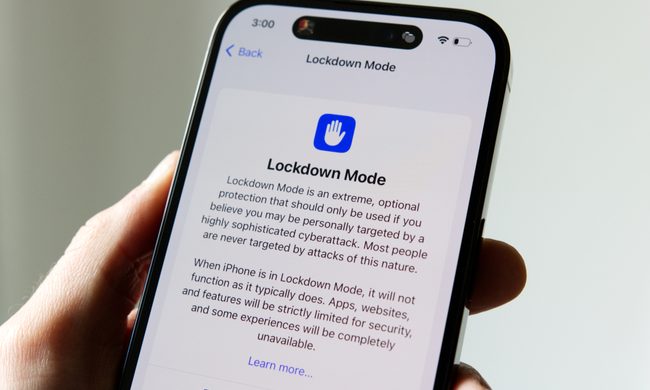
Lockdown Mode information page on an iPhone 14 Pro.

Apple says it has not seen a successful spyware attack on any iPhone with Lockdown Mode enabled, a claim it shared with TechCrunch.

Lockdown Mode arrived in 2022 as an opt-in feature for iPhone, iPad, and Mac. It was introduced as a stricter security mode for people at high risk of targeted attacks, such as journalists, activists, and government officials.

Read more
The Dynamic Island could shrink on the iPhone 18 series, and not just on the Pro models
One leaker, one claim, and a big question: is Apple genuinely ready to give every iPhone buyer the same design treatment as Pro owners this cycle?
Apple iPhone 17 Pro in Cosmic Orange leaning on a gray wall.

Apple’s Dynamic Island has been around long enough that most people have made their peace with it or forgotten it’s there. In fact, I’ve seen people associating the pill-shaped notch with newer iPhone models (released in the last 3 years). Now, a fresh leak suggests that the notch replacement is about to shrink, not just on the expensive models. 

What did the leaker actually say?

Read more
Apple Podcasts finally gets serious about video, adds multiple YouTube-inspired features
With offline downloads, Picture-in-Picture, and a dedicated video hub, iOS 26.4 turns Apple Podcasts into a platform creators can no longer afford to ignore.
Electronics, Phone, Mobile Phone

For years, the Apple Podcasts app supported video, at least it did technically, but nobody used it. Creators ignored it, while listeners forgot it. Meanwhile, other platforms like YouTube and Spotify quietly built empires on video podcasting. However, that changes with the iOS 26.4 update, or at least that is what Apple hopes for. 

Video podcasting exploded in popularity in recent years, with audiences gravitating toward platforms that treated the format well (as already mentioned above). Despite being an iPhone user, I personally consume podcasts on YouTube (I briefly paid for the Premium membership as well). 

Read more