  1. Home
  2. Phones
  3. Mobile
  4. News

Illegal robocall operation handed largest-ever fine by FCC

Add as a preferred source on Google

Running a robocall operation can be a costly business, it seems, especially if you find yourself on the end of a fine handed out by the Federal Communications Commission (FCC).

The American regulator has just announced what it says is a record-breaking $300 million fine for “the largest illegal robocall operation the agency has ever investigated.”

Recommended Videos

Operating since at least 2018, the enterprise involved a “complex scheme designed to facilitate the sale of vehicle service contracts under the false and misleading claim of selling auto warranties,” the FCC said in a release. Two of the central players, Roy M. Cox and Aaron Michael Jones, were already under lifetime bans against making telemarketing calls.

The operation placed more than 5 billion robocalls to more than 500 million phone numbers during a three-month period in 2021. It violated federal spoofing laws by using more than 1 million different caller ID numbers in an effort to disguise the true origin of the robocalls, a ruse designed to increase the chances of the target answering.

According to the FCC, the operation ignored numerous robocall prohibitions, including:

  • Making pre-recorded voice calls to mobile phones without prior consent
  • Placing telemarketing calls without written consent
  • Dialing numbers included on the National Do Not Call Registry
  • Failing to identify the caller at the start of the message
  • Failing to give a call-back number to allow call recipients to opt out of future communications
  • Violating spoofing laws by using misleading caller ID to disguise the caller in the hope of getting the person to answer

In 2022, the FCC told all U.S.-based voice service providers to stop carrying traffic linked to members of the operation, causing the robocalls to plummet by 99%.

The Ohio Attorney General’s Office then brought a lawsuit under the Telephone Consumer Protection Act against a number of entities and individuals linked to the robocalls. The FCC proposed a fine and gave the involved parties an opportunity to respond, which they failed to do, and now they face this massive penalty.

The FCC said that if they fail to pay, the case will be sent to the U.S. Department of Justice.

Commenting on the fine, the FCC’s Loyaan A. Egal said: “We take seriously our responsibility to protect consumers and the integrity of U.S. communications networks from the onslaught of these types of pernicious calls.”

Trevor Mogg
Contributing Editor
Not so many moons ago, Trevor moved from one tea-loving island nation that drives on the left (Britain) to another (Japan)…
Apple says Lockdown Mode thwarted spyware attacks with a clean slate
Apple’s strongest defense is actually holding up
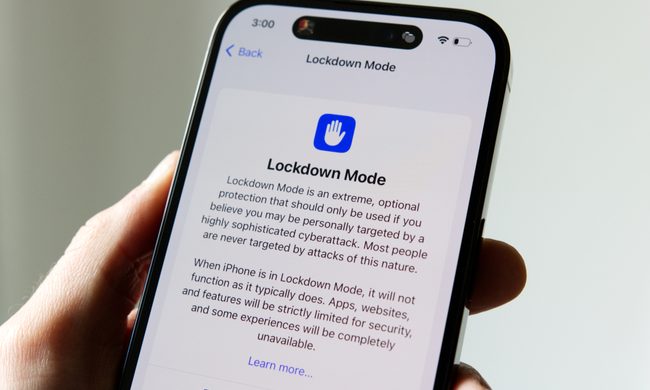
Lockdown Mode information page on an iPhone 14 Pro.

Apple says it has not seen a successful spyware attack on any iPhone with Lockdown Mode enabled, a claim it shared with TechCrunch.

Lockdown Mode arrived in 2022 as an opt-in feature for iPhone, iPad, and Mac. It was introduced as a stricter security mode for people at high risk of targeted attacks, such as journalists, activists, and government officials.

Read more
The Dynamic Island could shrink on the iPhone 18 series, and not just on the Pro models
One leaker, one claim, and a big question: is Apple genuinely ready to give every iPhone buyer the same design treatment as Pro owners this cycle?
Apple iPhone 17 Pro in Cosmic Orange leaning on a gray wall.

Apple’s Dynamic Island has been around long enough that most people have made their peace with it or forgotten it’s there. In fact, I’ve seen people associating the pill-shaped notch with newer iPhone models (released in the last 3 years). Now, a fresh leak suggests that the notch replacement is about to shrink, not just on the expensive models. 

What did the leaker actually say?

Read more
Apple Podcasts finally gets serious about video, adds multiple YouTube-inspired features
With offline downloads, Picture-in-Picture, and a dedicated video hub, iOS 26.4 turns Apple Podcasts into a platform creators can no longer afford to ignore.
Electronics, Phone, Mobile Phone

For years, the Apple Podcasts app supported video, at least it did technically, but nobody used it. Creators ignored it, while listeners forgot it. Meanwhile, other platforms like YouTube and Spotify quietly built empires on video podcasting. However, that changes with the iOS 26.4 update, or at least that is what Apple hopes for. 

Video podcasting exploded in popularity in recent years, with audiences gravitating toward platforms that treated the format well (as already mentioned above). Despite being an iPhone user, I personally consume podcasts on YouTube (I briefly paid for the Premium membership as well). 

Read more