
The midrange phone market is sparse in the U.S., with most phones costing closer to $1,000 or lower than $400 and very few well-known brands in between aside from the newly-launched Google Pixel 5a and the Samsung Galaxy A52. The Motorola Edge now joins this crowd, hitting the U.S. market at a $700 price point, though it’ll start at $200 off at launch.
It’s also worth pointing out that the Motorola Edge isn’t exactly a copycat of the Moto Edge 20 that’s being released in international markets alongside the Edge 20 Lite and Edge 20 Pro. While both models have lots of similarities, the two big differences from overseas markets are that the U.S. model has a 6.8-inch screen and a larger 5,000mAh battery. The logic behind this differentiation isn’t entirely clear, but it does give U.S. customers an edge in battery runtime compared to international buyers.


Don’t cut yourself on that Edge
The Motorola Edge comes in just one color, a flashy Nebula Blue that catches the light, shimmers, and refracts in a pleasant way. The eight-layer plastic also, unfortunately, picks up fingerprints and smudges like nobody’s business. Wiping it down between uses did little to keep the marks off, though I assume this will be less of a problem when you put it in a case.
In terms of footprint, the Moto Edge measures 169 by 76 by 8.85 millimeters and comes in the standard tall and narrow candybar form factor. It’s mostly usable with one hand, and I didn’t have much trouble reaching across the screen with my thumb, though things like the camera controls may be unwieldy if you’re trying to switch modes. The 200-gram weight is slightly heavier than other midrange phones like the Pixel 5a, but it’s still lighter than phones like the Galaxy S21 Ultra.
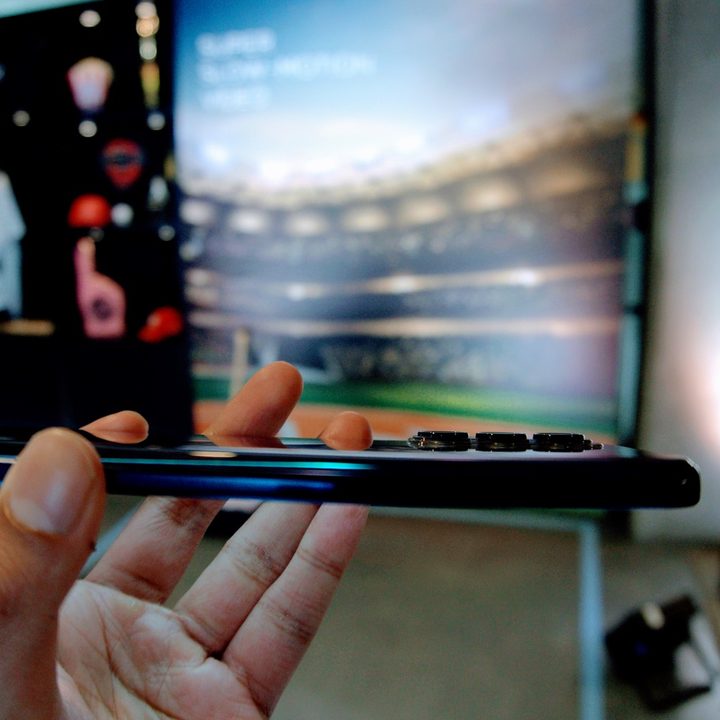
Aside from these design touches, you get a fingerprint sensor on the right with a power button, a bottom-ported speaker, and USB-C charging port. There’s no headphone jack or expandable storage, which seems like an unfortunate omission next to the Galaxy A52 5G.
On the plus side, it is IP52 water and dust resistance, so it’s protected against dust and water ingress, though less so than IP62 rated phones.
A screen and battery built for gamers
While the design of the Edge doesn’t really depart radically from previous generations, the hardware has a lot more going for it. While the Edge is a midrange phone, it decidedly lies on the higher end of that tier. In some regards, it can even go toe-to-toe with features and capabilities you’d find on much more costly flagships.
For starters, there’s a 6.8-inch LCD FHD+ screen, which sounds perfectly normal until you hear that it has a 144Hz refresh rate which is the type of spec you normally get from high-end gaming monitors. That’s a really impressive spec to get from a midrange phone, and even some of the best flagships we’ve tested like the Galaxy S21 Ultra and the Fold 3 only reach 120Hz, while none of the iPhone 12 models have a high refresh screen at all. However, the screen is flat and doesn’t curve, which makes the Edge name something of a misnomer compared to the previous model and it’s also an LCD rather than OLED so you won’t get the dense, inky blacks the panel is known for.


What the 144Hz display translates into in actual use are faster and smoother animations and transitions and buttery smooth games. Under the hood, the phone is powered by a capable Qualcomm Snapdragon 778G processor, has 6GB or 8GB of RAM, and 128GB or 256GB of storage.
While I wasn’t able to download Genshin Impact or Asphalt 9: Legends, everything did feel smooth and responsive. The demanding screen will also be helped along by the 5,000mAh battery which should last at least two days according to Motorola, though I’ll be putting it through my own tests. It also supports 30-watt TurboPower charging that can juice up for nine hours of use after 10 minutes of charging.
A new camera powerhouse?
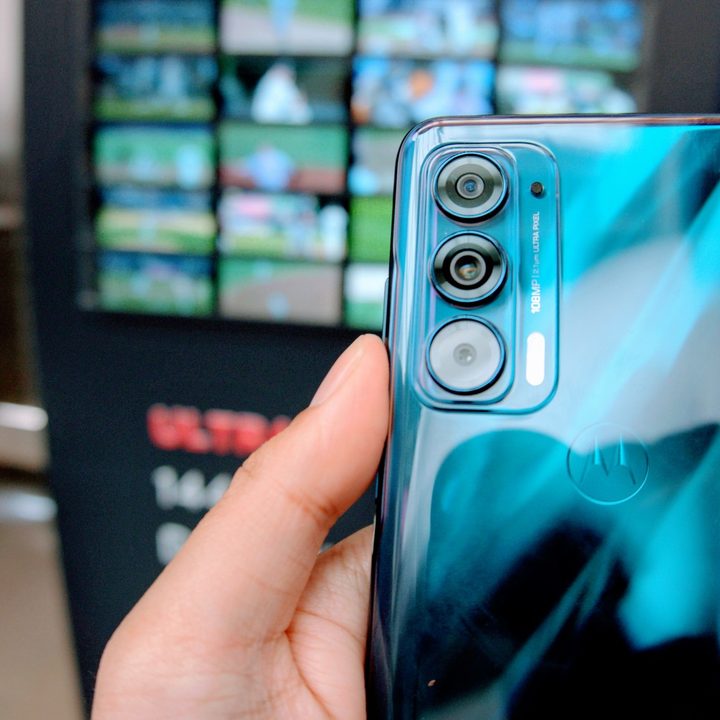
One of the more interesting parts of the Motorola Edge is its triple rear camera array. For starters, it’s big and it protrudes noticeably when laid down flat on the table. It’s part of what makes the phone’s design feel a bit dated when most manufacturers have managed to minimize the infamous camera bulge.
The rear sensors consist of a 108-megapixel (MP) primary sensor that takes advantage of pixel binning, an 8MP ultrawide camera with a 119-degree field of view, and a 2MP depth sensor. The only thing that’s missing here is a telephoto zoom, which would have been nice to have but doesn’t tend to be common on midrange handsets. I took a fair few snaps with the phone, taking advantage of both the main sensor and the ultrawide. The shots looked good, but that’s only from judging on the phone screen itself so I’ll need to do more comprehensive testing to see how it compares to the Pixel 5a in more challenging conditions.


There’s also a lot of features packed into the cameras like Spot Color, letting you highlight a particular color in a shot, Audio Zoom, allowing you to narrow the audio range when zooming in on video, Portrait Mode, slow motion, Dual Capture to capture from the front and rear cameras at the same time, and various smart chops for better HDR and A.I.-enhanced selfies in low light. I tested several of these out in the demo area and they seemed to work fairly well.
The front-facing camera is a 32MP sensor that takes crisp shots, also supports pixel binning, and has a higher megapixel count than you typically see on a selfie camera. Again, it’s something I’ll have to test more in challenging settings to see how it fares.
Software and connectivity
Out of the box, the Motorola Edge comes running Android 11, and the company guarantees at least two OS updates. The phone has the standard, customizable Motorola features and gestures like chop to turn on the flashlight and twist to launch the camera. The big feature here that Motorola is trying to sell you on is Ready For, its competitor to Samsung DeX that lets you connect the phone wirelessly to PCs, laptops, and monitors to sync files and other content.


The phone also supports sub-6GHz, C-band, mmWave 5G, Wi-Fi 6E, and Bluetooth 5.2 giving it a pretty comprehensive suite of connectivity options.
Price and availability
The unlocked Motorola Edge will be available to buy from Best Buy, B&H Photo, Amazon.com, and Motorola.com on September 2. Preorders will begin Monday, August 23. Verizon and Spectrum will also sell the phone. As mentioned, the MSRP is $700, though you briefly get a $200 discount, bringing it down to $500 for the preorder period. The phone will also reach Canadian markets in the coming months.


