As a gamer, I understand how frustrating it can be when certain games are made exclusively for one console system or PC. Console exclusivity for games has waned in the past decade to the point where gaming companies have implemented crossplay and cross-platform features for people to play together regardless of what console or PC platform they game on. Mobile exclusivity, on the other hand, is still alive and well and killing some potentially great smartphones in its wake.
OnePlus announced last Tuesday that its latest model in its 5G phone lineup, the Nord N20 5G, will be coming to T-Mobile on April 28. Not Verizon, not AT&T — just T-Mobile. As a successor to the Nord N10 and Nord N100 line from 2020, you’d think that the Nord N20 would learn from its ancestors’ mistakes and become available to everyone regardless of the mobile carrier they’re with, right? Sadly, no. Instead, OnePlus decided it wants to sell it exclusively on T-Mobile, one of the most unpopular mobile service providers in the country, with its tendency to block coverage in certain areas and throttle online connectivity after people use a certain amount of data per month.
OnePlus making the Nord N20 5G a T-Mobile exclusive demonstrates the hostility of mobile exclusivity
iPhones and Samsung smartphones are thriving because they’re sold at over 90% of major mobile carriers, including AT&T (to which the iPhone was once exclusive), Verizon, and T-Mobile. Carriers are important for other phone brands to break into U.S. sales, but they mostly sell iPhones and Samsung phones due to their popularity. OnePlus making the Nord N20 5G a T-Mobile exclusive demonstrates the hostility of mobile exclusivity and how much it needs to die in order to save people’s money, especially in today’s market.
iPhone vs. Android (or AT&T vs. Verizon)
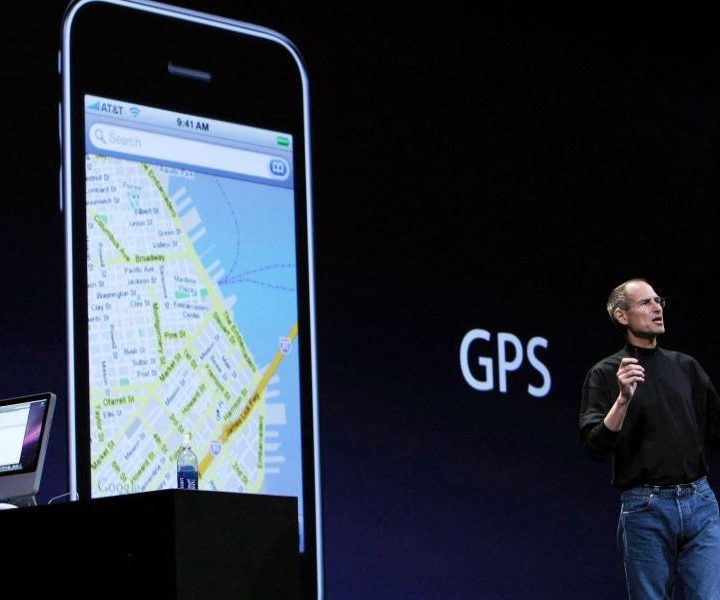
The iPhone became the most coveted phone upon its release in the summer of 2007, with its revolutionary touchscreen combining the regular cellphone, the iPod Touch, and the computer to turn into one convenient mobile device, giving people the power to send emails and surf the web while on the go. What made the iPhone even more coveted was the fact that, despite it costing $499 (for the 4GB model) 0r $599 (for the 8GB model), it was only available through AT&T with a two-year contract. It might’ve been cheaper than the current models, but it was still too expensive for some people to purchase on its own, let alone with a contract that would make them replace it with a newer model once the term was up. Even so, the iPhone was popular enough to justify its exclusivity to AT&T so that everyone and their teenager who wanted the iPhone would have no choice but to drop whatever phone they had from whichever carrier they got it from at the time and switch to AT&T.
Two years later, Motorola released the Droid, the first Android smartphone on the market, exclusively through Verizon to amp up the competition. The Droid also had a touchscreen display, but unlike the iPhone, the screen slid up to reveal the keyboard much like the SideKick (another T-Mobile exclusive device). Motorola taking a page out of Apple’s playbook on mobile exclusivity triggered a culture war between the two carriers. In other words, people were forced to choose between the iPhone or the Droid — and by extension AT&T or Verizon — whichever was more affordable to them.
By 2011, AT&T lost the iPhone exclusivity deal despite selling 4.1 million iPhones in the fourth quarter of 2010. The first carrier Apple extended iPhone availability to was, ironically, Verizon. By the end of the year, the device reached Sprint, with T-Mobile being the last to get it before 2013. The carrier expansion was thanks in large part to four U.S. senators, including John Kerry and Amy Klobuchar, calling on the FCC in the summer of 2009 to review mobile exclusivity deals between service providers and phone manufacturers and determine whether such deals are fair or not. By extending the availability of the iPhone to subscribers of other carriers, it became the king of the smartphone market.
OnePlus should learn from Apple and Android’s example
It’s one thing for smartphones to be prohibitively expensive for some people — as is the case with most iPhone devices these days — but it’s another thing to make them available at only one mobile service provider, even for those that can afford it. Politics may have played a role in Apple expanding its iPhone availability to Sprint (now defunct), T-Mobile, and Verizon on a gradual scale, but OnePlus is still part of the mobile exclusivity practice.
Unlike the iPhone in its early days, the Nord N20 5G is not a reason to switch to T-Mobile.
OnePlus needs to learn from the examples of Apple and Android and make the Nord N20 5G available to everyone using other mobile providers, not just T-Mobile. It might come with some features that the iPhone does not, but at the end of the day, it’s a mid-range smartphone that won’t serve anything other than as competition for Motorola and Samsung, its other mid-range peers. That being said, unlike the iPhone in its early days, the Nord N20 5G is not a reason to switch to T-Mobile. That exclusivity will only hurt consumers and the device itself in the long run.