“It looks great, feels great, and has been designed by the masters, but there are few reasons to buy the Mate 20 RS over the Mate 20 Pro”
- Improves on an already good design
- Leather feels classy
- All the Mate 20 Pro features
- Expensive
- Few reasons to buy over Mate 20 Pro
“Why you can trust Digital Trends – We have a 20-year history of testing, reviewing, and rating products, services and apps to help you make a sound buying decision. Find out more about how we test and score products.“
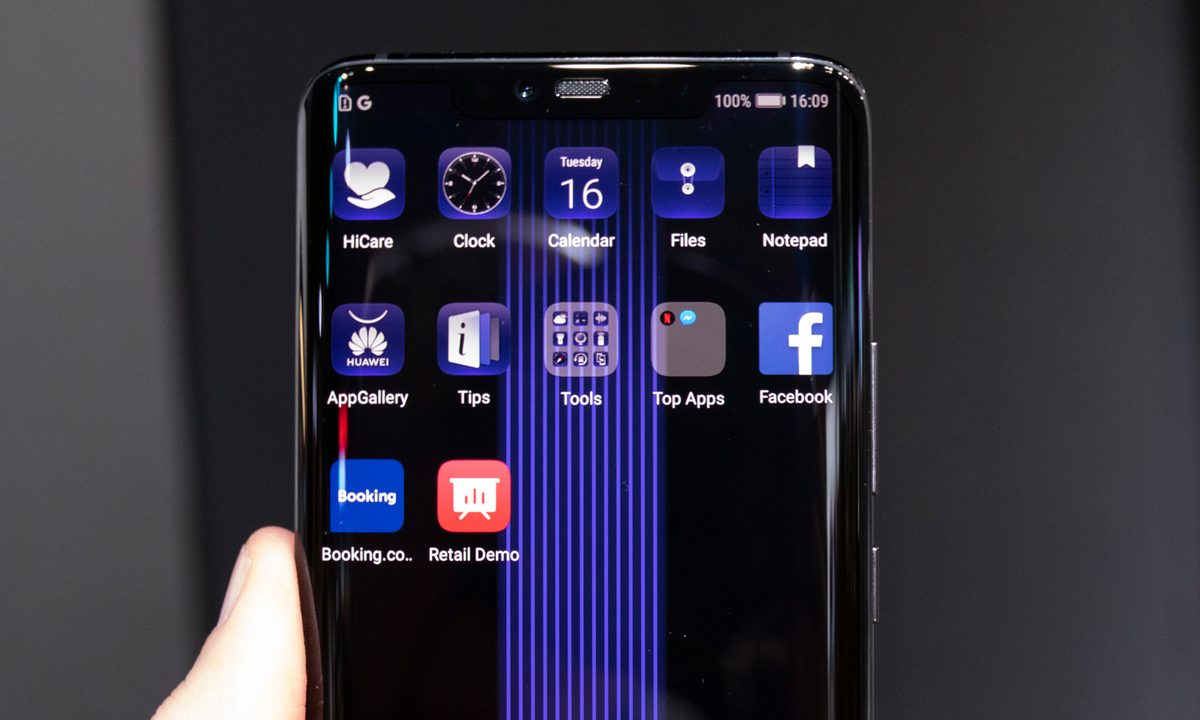
The Huawei Porsche Design Mate 20 RS is shocking, and we’re not talking about the price. It’s shocking because there is a notch above the screen, something the company avoided putting on the Mate RS earlier this year, despite its sister phone — the P20 Pro — having one. Porsche Design is not one to cave, but it appears this time it has done so.
Is it a bad thing? No, of course not. It doesn’t affect the way the phone works, and it keeps the design consistent with the Mate 20 Pro, on which the phone is based. But we suspect the real reason is that the notch plays a specific role on the Mate 20 Pro — it houses the 3D face unlock camera sensors, which is also present on the Mate 20 RS. There’s a reason for everything, but we can still imagine Porsche Design being unhappy about having to include it.
It’s a Mate 20 Pro
The phone shares a lot with the Mate 20 Pro. It has the same Kirin 980 processor, the same three-lens camera array on the back, and the same in-display fingerprint sensor. The body is also shapely and curved, fitting into your hand perfectly. It has the same Android 9.0 Pie with EMUI 9.0 software onboard, and the same 4,200mAh battery with super-fast charging, and support for wireless charging, and reverse charging. The only major difference internally is the choice of 256GB or 512GB of storage space.


- 1. Porsche Design Mate RS
What are the other differences? The back of the phone has two pieces of leather either side of an incredibly reflective piece of glass. These leather panels increase grip, and give the phone some style to match its price. A Porsche Design logo is in the center of the phone, but this time no logo appears on the front. Not only does the notch get in the way, but the lower chin has been made even smaller, giving more space for screen rather than logos.
The two models at 256GB and 512GB cost $1,955 and $2420 respectively.
In the hand the phone feels much like the Mate 20 Pro. The leather adds more tactility, and comes in a racing car red color alongside a muted black. The three panels are symmetrical and vertical, making it look like a racing stripe. The screen looks identical to the Pro, and the camera will operate in the same manner.
On the Mate RS, we were disappointed by the in-display fingerprint sensor, but have so far been more impressed with the one fitted to the Mate 20 Pro. We imagine this will continue on the Mate 20 RS, but were unable to try it out on the demo model.
Few reasons to buy over the Pro
Yes, the Porsche Design Mate 20 RS will come in a nice box, and probably have a nice case and accessories with it; but aside from the additional storage space and two strips of leather on the back, the phone offers little over the standard Mate 20 Pro. Anyone familiar with Porsche Design phones will already know the price will be different, and it costs 1,695 euros for the 256GB model, or 2,095 euros for the 512GB version. That’s $1,955 and $2,420 converted over respectively.
The Porsche Design Mate 20 RS suffers from the same problem as the Huawei Mate 10 Porsche Design — there’s no strong reason to pay so much extra for it. Yes we like the fine design, and yes, we appreciate the attention to detail; but it’s twice the price. A U.S. release is unlikely, given none of the previous models have been sold in North America. However, we’re far more saddened about the Mate 20 Pro not going on sale than a more expensive version hitting the shelves.