1. Home
  2. Phones
  3. Android
  4. Mobile
  5. News

Samsung’s new display tech makes the Galaxy S21 Ultra even more power efficient

Add as a preferred source on Google
Promotional image for Tech For Change. Person standing on solar panel looking at sunset.
This story is part of Tech for Change: an ongoing series in which we shine a spotlight on positive uses of technology, and showcase how they're helping to make the world a better place.

It’s safe to say that OLED displays are the gold standard on smartphones these days. What you might not know is that some OLED panels are better than others, and the Galaxy S21 Ultra features what may well be the best one to date.

Well, best may be subjective in some ways — but the device’s display is definitely the most power efficient. In fact, Samsung developed a new ultra-low-power OLED display for the new phone, and it reduces energy consumption by up to 16%.

Recommended Videos

The way Samsung did this is a little technical. OLED displays in general don’t require a backlight like LCD screens. Instead, each individual pixel is made from an organic carbon-based material that lights up when electricity is applied. OLED displays are made up of a range of layers, which serve different purposes. The gist of the new OLED display tech is that Samsung found a way for electrons to flow faster between these layers, while at the same time creating a brighter light.

The power-consumption savings will be put to good use, as 5G phones can take up a little more energy than non-5G phones, while other things, like more powerful chipsets, can also hoard power.

It’s important to note that the new display tech is only available on the Galaxy S21 Ultra — not the standard Galaxy S21 and Galaxy S21+. All three of the devices offer up to a 120Hz refresh rate, however, the Galaxy S21 Ultra has a 1,440p resolution. And while the standard Galaxy S21 and S21+ have refresh rates that vary between 48Hz and 120Hz, the Galaxy S21 Ultra can go as low as 10Hz, which also helps save on energy consumption.

Samsung has been a leader in display tech for a long time, and it looks like that will continue well into the future. The company says that it holds 5,000 patents that involve the use of organic materials for displays. Hopefully, this new tech will be brought to lower-end phones over the next few years, or at least to the entire Galaxy S22 series next year.

Christian de Looper
Christian de Looper is a long-time freelance writer who has covered every facet of the consumer tech and electric vehicle…
Samsung PenUp adds new stylus tricks to your Galaxy phone, if it support an S Pen
Galaxy S Pen users now have more brushes to mess around with
Samsung Galaxy S26 Ultra in hand

Samsung’s PenUp app is getting a useful creative upgrade for Galaxy users, especially those who use the S Pen for casual digital art. For those unaware, PenUp is Samsung’s app for sketching and coloring templates. It works with touch input, but the latest update should be most useful on Galaxy phones and tablets with S Pen support.

The latest PenUp update, version 3.9.22.23, adds 53 new brushes through the “Download more brushes” option. It also adds Dual brush, a new tool that lets two strokes work together for layered effects.

Read more
Apple should just give the Neo treatment to its upcoming iPhone 18e and I’ll bite
There, I said it, I want the iPhone Neo
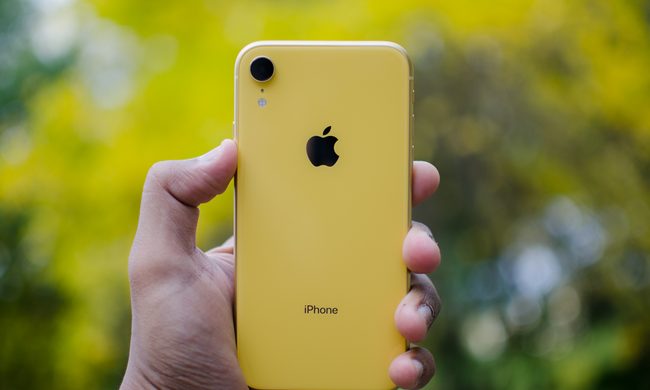
iPhone XR

For years, Apple has approached its affordable iPhones with a predictable formula: take an older flagship design, remove a few premium features, lower the price slightly, and position it as the “entry point” into the ecosystem. Financially, the strategy works. Emotionally, it often does not.

That is exactly why the upcoming iPhone 18e represents such a major opportunity for Apple. Instead of treating it as another watered-down flagship, Apple should fully embrace a “Neo” identity, one built around color, personality, experimentation, and smart hardware reuse. Apple has already executed it perfectly with the MacBook Neo. It just needs to follow that template for an affordable iPhone.

Read more
Your Android phone can now share files with any iPhone using a Quick Share QR code
Quick Share just got a trick that makes cross-platform file sharing almost painless.
iPhone receiving file via quick share qr code

Sharing files between Android and iPhone has always been a pain, but Google is quietly fixing that. The company launched a new Quick Share feature that made Android devices compatible with Apple’s AirDrop, allowing users to easily transfer files between iPhones and Android devices. 

However, not all Android devices have the hardware to support Quick Share-AirDrop compatibility, which means not all Android smartphones can access this feature. To solve this problem, Google announced a new QR code-based file-sharing system, which allows any Android device to transfer files to iPhones. 

Read more