
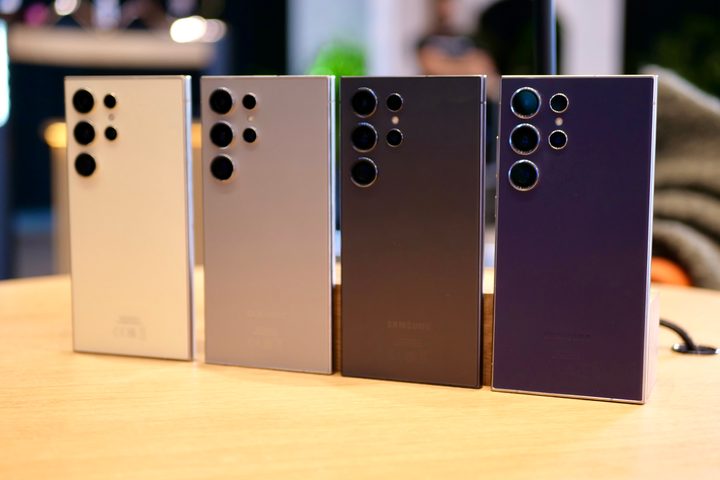
“Look, dude, I don’t know how they are going to manage the costs of licensing from AI companies and cloud partnerships, among other associated factors. Nothing comes free.” That’s what a machine learning engineer told me a few days ago when I explained to him how Qualcomm and MediaTek are bringing some neat generative AI tricks to phones.
Well, Samsung has confirmed those fears and quietly dropped the bombshell that at least some of its snazzy AI tricks for the Galaxy S24 series phones will eventually ask you to cough up some cash. That’s going to happen next year, but we don’t know how much you’ll have to pay and in what way — at least not right now.
The company unloaded a whole bunch of AI-driven features for its flagship phones at yesterday’s big Unpacked event. Google separately announced that these phones will also be running the Gemini Nano model on-device, a process that speeds up tasks as there is no cloud processing involved. Personal data also never leaves the device.

The search giant also announced that Samsung will be testing a cloud-tethered version of the Gemini Pro language model and is also among the first brands that will experiment with the most powerful Gemini Ultra model later this year. Those are long-term partnerships with few immediate benefits at this moment.
But some of those Galaxy AI features — such as real-time translation in phone calls, generative AI image manipulation, and note management — are practically amazing. It was surprising to see that even a brand like Google – which arguably sits atop the world’s largest data set, has advanced LLM innovations, and makes great devices – hasn’t pushed them to its own Pixel phones.
Samsung delivered on its “Galaxy AI” promises in a resounding fashion, paving the way for what analysts call the arrival of “AI phones.” What Samsung didn’t proudly proclaim, or even hint at, was the fact that some of these AI features will eventually cost money. Sneaky, Samsung!
“Galaxy AI features will be provided for free until the end of 2025 on supported Samsung Galaxy devices. Different terms may apply for AI features provided by third parties,” says Samsung’s official product page. That’s a rather vague explanation to wrap one’s head around.
Somebody needs to pay up, but how exactly?
It’s because Samsung hasn’t specified exactly which AI features it developed in-house and which it developed in collaboration with Google, Qualcomm, and AI labs. That’s a crucial question to ask, as that would dictate who is going to collect the AI fee from Galaxy S24 buyers.
Then there’s the question of whether AI features provided by Qualcomm as a bundle deal with its Snapdragon 8 Gen 3 chip will also trickle down to market-locked Galaxy S24 and S24 Plus variants with the in-house Exynos 2400 variant. The answer is likely no, but we’ll know soon.
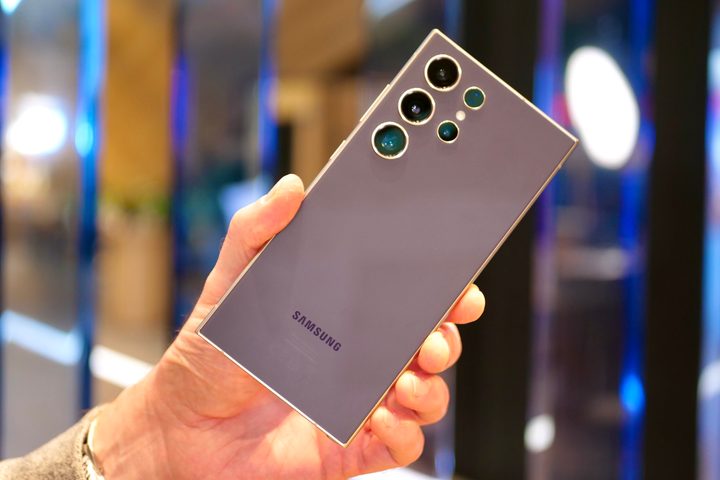
Take, for example, text-to-image generation. Qualcomm recently demonstrated an on-device pipeline where the Stable Diffusion model was able to generate an image in less than a second. There’s a pretty detailed technical paper on how Qualcomm managed to optimize the image creation workflow and bring it to devices powered by the Snapdragon 8 Gen 3 silicon.
What Qualcomm didn’t explain is how exactly the chipmaker’s partnership with Stability AI, the maker of Stable Diffusion, is unfolding financially in the background. Specifically, who is paying for the entire generative AI infrastructure at play here? Did Qualcomm absorb the cost, or did the cost of its flagship smartphone silicon once again go up because of its AI development costs and partnerships?
After all, the Galaxy S24 Ultra is a healthy $100 more expensive compared to its predecessor, so that is a possibility. And if Qualcomm is touting such generative AI tricks as a key selling point for its flagship processor, has Samsung inked a similar partnership with Stability (or any other AI lab of its ilk) to offer the same capability on Exynos-powered variants of the Galaxy S24 series phones?
It’s worryingly uncertain out there
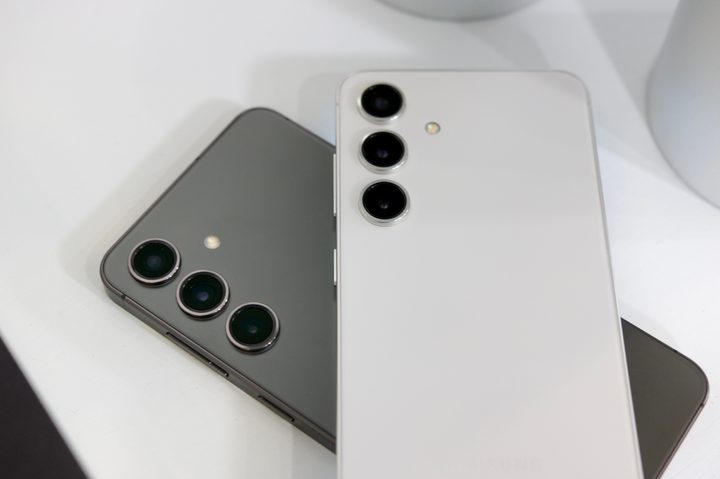
Samsung hasn’t said much about the on-device generative AI capabilities of the Exynos 2400, certainly not with the same kind of feverish marketing brouhaha as Qualcomm. The official Exynos 2400 product page mentions “on-device AI,” but doesn’t provide many details about its feature set and implementation.
“Fix photos on the fly. Turn text commands into stunning images from anywhere. Translate between languages in real time,” it says. Samsung has demoed those features already for the Galaxy S24, but there’s a lot more that the Exynos 2400 product page doesn’t say, especially when it comes to catching up with the AI tricks Qualcomm Snapdragon 8 Gen 3 has been flaunting
Digital Trends has reached out to Samsung seeking more details on exactly how much Samsung is going to charge Galaxy S24 users for using generative AI features, which of those Galaxy AI features will incur a fee, and how the road ahead for on-device AI unfolds for Galaxy smartphones.
But at the moment, it seems that on-device generative AI could very well unleash yet another subscription hell for smartphone buyers. And given how practically enticing they are, a healthy bunch of flagship phone buyers could very well pay up. It’s just disappointing that such signature features would incur an extra fee after phone buyers already paid top dollar for the hardware.


