  1. Home
  2. Phones
  3. Mobile
  4. News

Samsung made Apple AirTags before Apple did

Add as a preferred source on Google

Apple AirTags have been one of the hilarious “will they, won’t they” products of the last couple of years. While Apple waits things out to get the tech just right, it just got scooped by Samsung, which released its own $30 Galaxy SmartTag accessory alongside the Galaxy S21.

The Galaxy SmartTag is exactly what you’d expect: A small plastic disc with a hole in it that you can attach to anything you want to keep track of. The tracker has a tiny battery (which lasts for “months”) and Bluetooth LE, and at any time you can open up SmartThings Find on your phone to figure out where it is. SmartThings Find will find your other Samsung phones, tablets, and headphones.
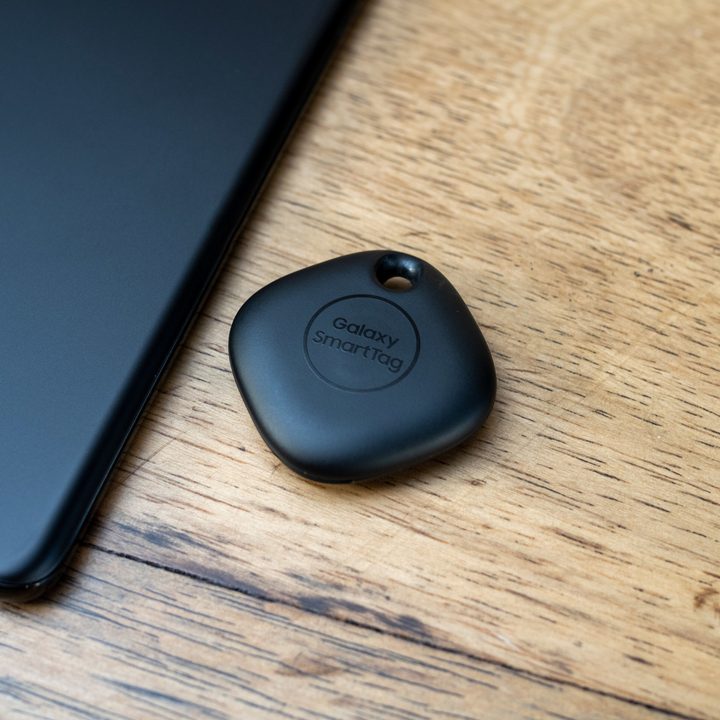
Samsung Galaxy SmartTag
Andrew Martonik/Digital Trends

Saying that Samsung scooped Apple on AirTag is a bit misleading, I admit, as the SmartTag is wholly unremarkable. This is a basic Bluetooth tracker not unlike the Tile or several other names out there — its only “advantage” is being built into Samsung’s SmartThings ecosystem. This first SmartTag only uses Bluetooth, so it can’t provide you with any directionality or proximity information — just a “hot or cold” indicating that the tag is somewhere nearby.

Recommended Videos

At its Galaxy S21 launch event Samsung also announced that it will have a $40 SmartTag+ at some point later this year that uses UWB, or ultra-wideband, as is rumored for Apple’s AirTags. UWB gives you precise direction and proximity information, provided you have a phone that has UWB — conveniently, the Galaxy S21+ and S21 Ultra do.

Were people really buying these Bluetooth trackers before? Samsung thinks so.

Everyone who will get a free SmartTag, which will immediately seed the market — although it’s unclear how many will actually care to try it out.

This sort of product has been around for several years, and anecdotally I just don’t see them being used. Tile is probably the best-known name in the business, and while it’s still around, I don’t see people using them or espousing their usefulness like they did in the first year on the market.

The SmartTag has the benefit of coming from a massive name like Samsung, and that’ll win it some sales. But the fact that this is simply the exact same product that we’ve had access to for several years, with a different brand that’s locked into Samsung’s ecosystem, I don’t see how this is going to take off.

Andrew Martonik
Andrew Martonik is the Editor in Chief at Digital Trends, leading a diverse team of authoritative tech journalists.
WhatsApp Plus is here, and you can safely ignore this subscription
WhatsApp wants a monthly fee for what other apps include by default, and that's a problem Meta can't dress up with custom icons.
WhatsApp Plus screenshots.

WhatsApp has fiercely defended its status as a free, no-nonsense online messaging app for over a decade, but a new subscription tier is muddying the waters. 

Meta is rolling out WhatsApp Plus, a paid subscription model, to a limited number of iPhone users using the latest version of the App Store. 

Read more
Apple and Google just put a lock on your green-bubble texts, and it’s about time
The green bubble finally has something to brag about. Apple and Google's unlikely alliance brings real encryption to everyday cross-platform texting.
E2EE arrives on RCS for iPhone and Android phones.

For years, texting between an iPhone and an Android device felt less like a private conversation and more like shouting across a crowded street. Well, that changes on May 11, 2026, as Apple and Google jointly launched end-to-end encryption (E2EE) for RCS messaging. 

The long-awaited feature is rolling out first in beta with iOS 26.5 (also announced today) and the latest version of Google Messages. 

Read more
The Razr Ultra 2026 is everything a flip phone should be, but I’m not paying $1,500 for it
A flip phone was never supposed to cost this much. At $1,500, the Razr Ultra finds itself in an uncomfortable fight against everything else your money can buy.
Motorola Razr Ultra

I'll be blunt: $1,500 is a lot of money to spend on the Razr Ultra, a clamshell phone that folds in half. In fact, it's a lot of money to spend on any smartphone, especially when a Galaxy S26 Ultra or iPhone 17 Pro Max costs less and still leaves a few hundred dollars in your pocket, or throwing in a couple of hundred bucks can get you a full-fledged book-style foldable. 

For me, the Razr Ultra doesn't quite make a strong case at $1,500. In isolation, it's a genuinely impressive flip phone that gets all the basics right and delivers the premium experience you'd expect at this price. The Alcantara back, the 5,000-nit display, the silicon-carbon battery, and the dual cameras on the back make it sound like a complete package.

Read more