  1. Home
  2. Phones
  3. News

Samsung is already rethinking the TriFold, and this time, it’s starting with the hinge

The TriFold may have had a short shelf life, but its successor is already being engineered to last and to fold flatter.

Add as a preferred source on Google
Samsung Galaxy TriFold folding, TriFold Phone
John McCann / Digital Trends

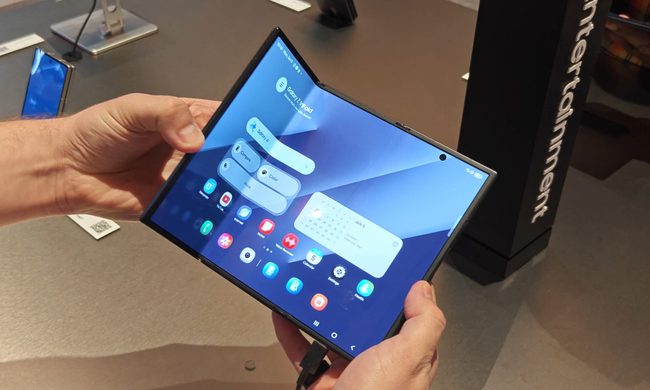
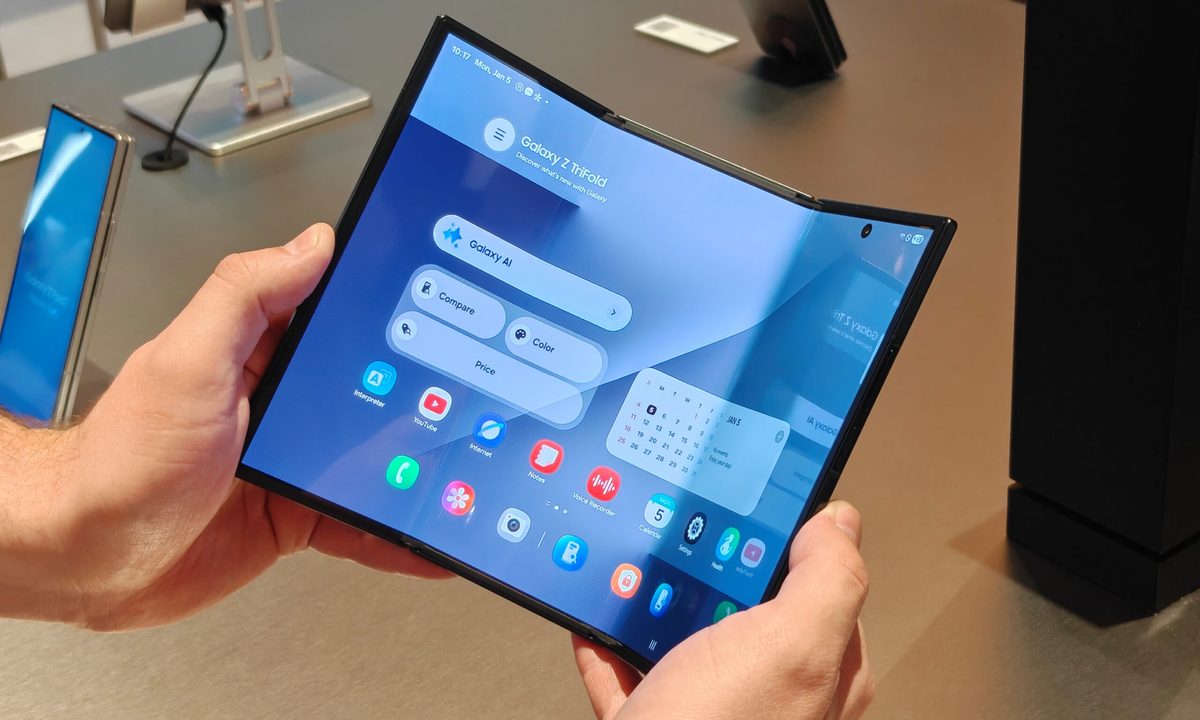
The original Galaxy Z TriFold barely spent enough time in the market to warm pockets before Samsung pulled the plug on it. The company launched the phone on January 30, 2026, as the world’s first mass-market triple-fold smartphone sold in the United States, but it was discontinued just three months later. 

However, Samsung hasn’t given up on the concept yet, as it’s already engineering a sequel and starting from the hinge. 

Why is the hinge such a big deal?

Supply chain sources now indicate that Samsung is developing an entirely new hinge solution to make the TriFold 2 meaningfully slimmer. The company could focus on “lightweight and ultra-slim design,“ according to a Korean blog called Naver

Recommended Videos

The TriFold 2’s new hinge has reportedly completed most of the verification process. The device, for now, is targeting a mid-2027 launch (if everything goes well). For buyers eyeing the foldable space, that’s a long wait, but a thinner triple-foldable could surely be worth it.

On a triple-folding phone, the hinge isn’t just a hinge; it’s the foundation that determines the entire experience. Get it wrong, and you have a chunky, fragile slab that nobody wants to carry around. 

Why do other Samsung foldables benefit too?

The original Galaxy Z TriFold measures 3.9-4.2 mm when flat and 12.9 mm when folded, which, in my opinion, is quite respectable for a three-panel device. 

Here’s where it gets really interesting for everyone, and not just for the TriFold enthusiasts. A simplified but improved version of the new hinge on the original TriFold, with some technical adjustments, could also make its way to the Fold 8 and Flip 8

In other words, the engineering effort behind an ultra-premium foldable device could trickle down to Samsung’s mainstream foldable lineup. 

Shikhar Mehrotra
For more than five years, Shikhar has consistently simplified developments in the field of consumer tech and presented them…
New Gigs app uses AI to organise your live music memories
You can now organise all your concert memories in one place
Gigs app

A new iPhone app called Gigs is aiming to change how music fans remember live events by turning scattered concert memories into a structured, searchable archive. Developed by indie creator Hidde van der Ploeg, the app uses artificial intelligence to organise past concert experiences into a personalised digital timeline.

The idea is simple: instead of letting ticket stubs, screenshots, and photos sit forgotten across devices, Gigs brings them together into one place - complete with details, stats, and memories tied to each event.

Read more
Google’s new desktop mode makes one thing clear: Samsung DeX was onto something
Android 16 finally brings a real desktop mode to Pixel phones, but Google’s long-awaited move mostly proves Samsung spent years getting the hard parts right
File, Webpage, Person

I’ve been waiting for Android to take desktop mode seriously for years. Back in 2019, I bought a OnePlus 7 Pro and wasted an embarrassing amount of time trying to brute-force its half-baked desktop mode into something useful.

The idea made perfect sense to me even then. Phones were already absurdly powerful, and the thought of carrying one real computer in my pocket felt less like science fiction and more like delayed common sense.

Read more
The MacBook Neo made me realize Apple still doesn’t know how to do a truly great cheap iPhone
MacBook Neo gave me an iPhone 17e epiphany
iPhone 17e rear camera.

Apple’s main business still revolves around the iPhone, with roughly half of the revenue being brought in by these devices. But this is why it feels so strange that the company managed to build a better entry-level Apple laptop than an entry-level iPhone.

The MacBook Neo starts at $599 in the US, with buyers getting a full aluminum build, a 13-inch hi-res Liquid Retina display, Apple silicon, and all-day battery life. Apple is clear about what it has built. This isn't a Pro machine with the powerful M series processors. But despite the various cutbacks in hardware, it still feels like a complete product.

Read more