  1. Home
  2. Phones
  3. Android
  4. Apple
  5. Business
  6. Mobile
  7. News

Samsung’s dominance slips further as phone market slumps by 6 percent

Add as a preferred source on Google
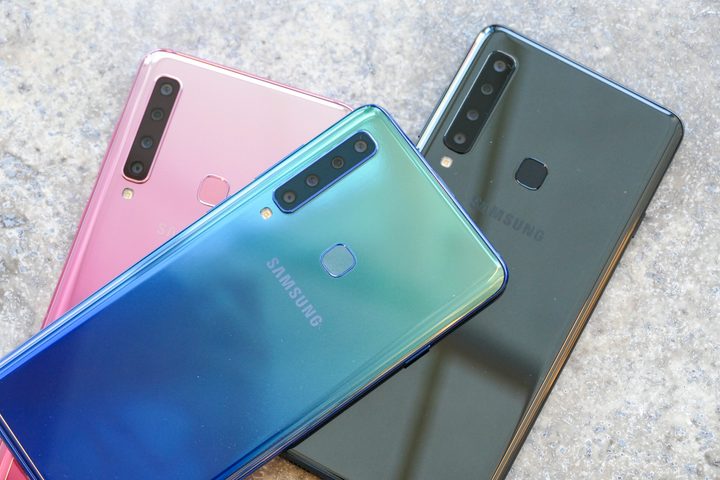
Samsung Galaxy A9 hands-on
Andy Boxall/Digital Trends

The global smartphone market has suffered a drop of 6 percent in overall sale numbers, according to a report on the third quarter of 2018 from the International Data Corporation (IDC).

Similar to the drop in smartphone sales in the first quarter of the year, the IDC points at a slowdown in the Chinese market as being one of the primary factors for the global slump. Since China accounts for roughly a third of the overall global sales for smartphones, a reduction in Chinese buying tends to hit the market hard.

Recommended Videos

“China’s domestic market continues to be challenged as overall consumer spending around smartphones has been down,” said Ryan Reith, IDC’s Worldwide Mobile Device Trackers program vice president. “High penetration levels, mixed with some challenging economic times, has slowed the world’s largest smartphone market.”

Another significant reason for the slump is a drop in sales for Samsung. While the Korean company still sits pretty atop the pile with a 20.3 percent market share, sales have fallen 13.4 percent from 83.3 million in the third quarter of 2017 to 72.2 million this last quarter. According to the report, pressure in India and Indonesia from manufacturers like Vivo, Oppo, and Xiaomi are the most likely reasons for Samsung’s drop in sales. While the Galaxy Note 9 sold well, Samsung’s lack of strong midrange and budget range devices is starting to seriously hurt the company in certain markets. However, Samsung is looking to alter that by offering more feature-packed midrange options like the Galaxy A9.

Other manufacturers did better amid the slump. After passing Apple to become the second-largest phone manufacturer, Huawei’s reach has grown by another 32.9 percent — for a total of 52 million sales in this quarter. Apple’s sales grew too, though only by 0.5 percent to 46.9 million. The IDC expects that the recent release of a new iPhone range will mean stronger sales during the holiday period.

Xiaomi also continues to grow, adding 6 million sales to its numbers from the third quarter of 2017. If it keeps up its strong growth, we could see another Chinese company surpass Apple — but that seems unlikely for at least the next few years, even with further expansion into the U.K.

This is the fourth consecutive quarter the smartphone market has shrunk, and it shows no sign of stopping. It seems most consumers are happy to wait for longer before upgrading their phone — and that delay is hurting the market as a whole. However, it might not be forever, and the IDC predicts growth will return in 2019.

Mark Jansen
Former Mobile Evergreen Editor
Mark Jansen is an avid follower of everything that beeps, bloops, or makes pretty lights. He has a degree in Ancient &…
WhatsApp Plus is here, and you can safely ignore this subscription
WhatsApp wants a monthly fee for what other apps include by default, and that's a problem Meta can't dress up with custom icons.
WhatsApp Plus screenshots.

WhatsApp has fiercely defended its status as a free, no-nonsense online messaging app for over a decade, but a new subscription tier is muddying the waters. 

Meta is rolling out WhatsApp Plus, a paid subscription model, to a limited number of iPhone users using the latest version of the App Store. 

Read more
Apple and Google just put a lock on your green-bubble texts, and it’s about time
The green bubble finally has something to brag about. Apple and Google's unlikely alliance brings real encryption to everyday cross-platform texting.
E2EE arrives on RCS for iPhone and Android phones.

For years, texting between an iPhone and an Android device felt less like a private conversation and more like shouting across a crowded street. Well, that changes on May 11, 2026, as Apple and Google jointly launched end-to-end encryption (E2EE) for RCS messaging. 

The long-awaited feature is rolling out first in beta with iOS 26.5 (also announced today) and the latest version of Google Messages. 

Read more
The Razr Ultra 2026 is everything a flip phone should be, but I’m not paying $1,500 for it
A flip phone was never supposed to cost this much. At $1,500, the Razr Ultra finds itself in an uncomfortable fight against everything else your money can buy.
Motorola Razr Ultra

I'll be blunt: $1,500 is a lot of money to spend on the Razr Ultra, a clamshell phone that folds in half. In fact, it's a lot of money to spend on any smartphone, especially when a Galaxy S26 Ultra or iPhone 17 Pro Max costs less and still leaves a few hundred dollars in your pocket, or throwing in a couple of hundred bucks can get you a full-fledged book-style foldable. 

For me, the Razr Ultra doesn't quite make a strong case at $1,500. In isolation, it's a genuinely impressive flip phone that gets all the basics right and delivers the premium experience you'd expect at this price. The Alcantara back, the 5,000-nit display, the silicon-carbon battery, and the dual cameras on the back make it sound like a complete package.

Read more